
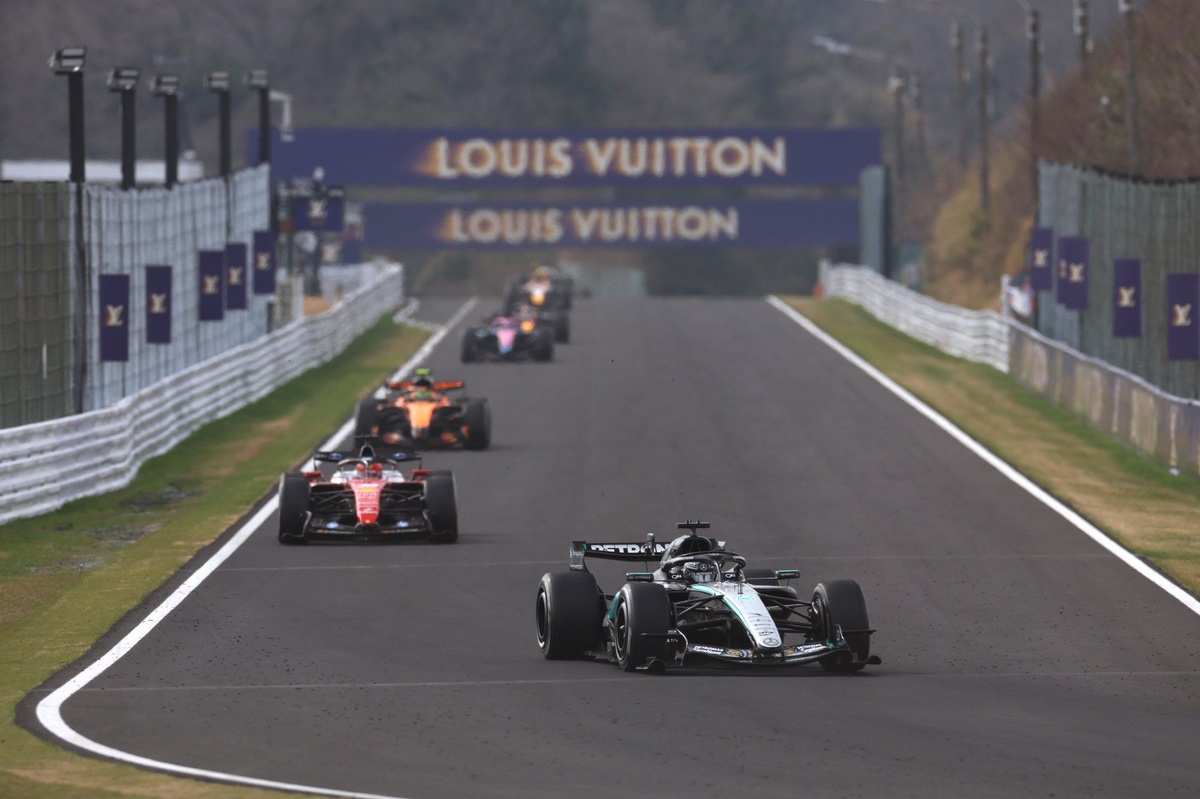
Although George Russell has had some misfortune, Mercedes sits – unsurprisingly – on the maximum score after three race weekends: three wins in as many grands prix. Although it did not clinch a 1-2 finish in Japan, where Russell fell victim to the safety car timing, Mercedes has fully lived up to the favourite status that was already attributed to the team in Bahrain.
Part of that naturally lies in the chassis and the aerodynamic platform, although Russell acknowledges that the initial advantage is also due to a better understanding of its own power unit and optimising energy management.
“I think we definitely hit the ground running in the first three races and you actually saw that with all of the PU manufacturers, or at least ourselves and Ferrari, that we as the factory team have a better understanding of the energy management compared to the customer teams,” Russell said.
The current number two in the championship standings added that he considers that initial advantage “only fair”, as a lot of work has gone into it behind the scenes and it is a benefit for factory teams, something that is often seen with regulation changes.
“And that’s only fair because we have hundreds of people working towards that and we’ve been working on the simulator towards this for three years now,” Russell said.
However, Russell knows that this advantage is not infinite. In fact, McLaren made a big step in understanding the power unit and optimising energy management in Japan. Whereas some dissatisfaction could still be heard after the season opener in Melbourne, significant improvements have been made since then together with Mercedes HPP, as Andrea Stella has explained.
“I can confirm that in terms of working together with HPP, and even in terms of developing the simulation tools together with HPP, we have made a significant step forward compared to where we were in Australia. So I think as a team we are now much more prepared.
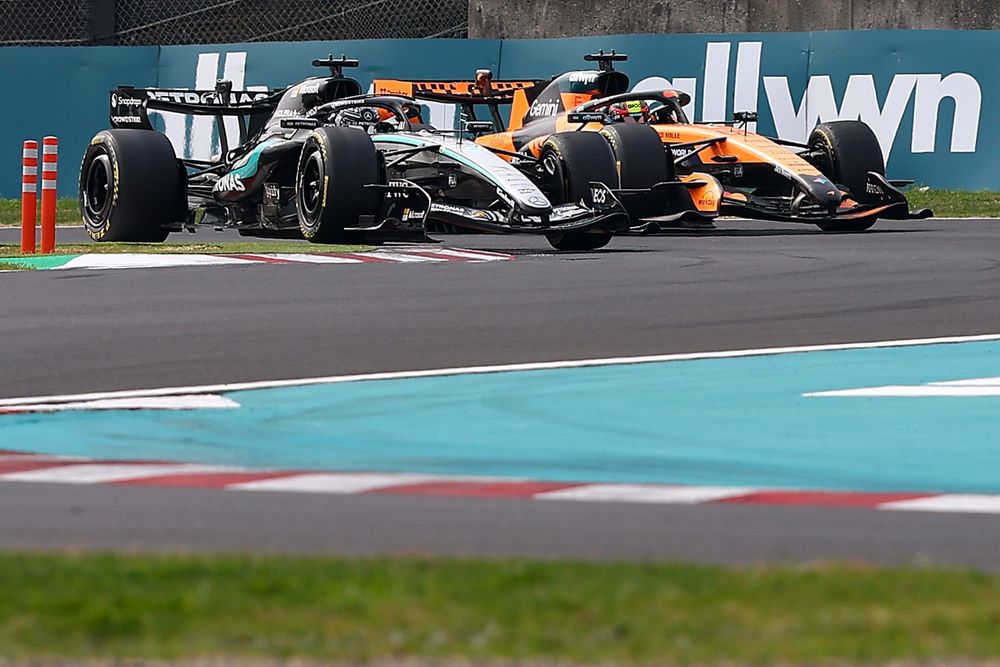
McLaren is confident it has found power unit usage and deployment parity with the factory Mercedes squad
Photo by: Simon Galloway / LAT Images via Getty Images
“While at the start of the season a deficit might have existed for the natural consequence of being a customer team when the programming was so pushed, also from a power unit point of view. That was okay and that was something that we were ready to accept and we processed very constructively together with HPP. But now later in the season, I think we have filled this gap and we should have all the tools that are required to extract the most out of the power unit,” Stella said.
Is Mercedes’ advantage bigger than it seems?
Russell knows that as a consequence, it will ultimately come down to the development rate over the course of the year. That said, he does not think that Mercedes’ advantage will just disappear, meaning Toto Wolff’s team can still be considered the clear favourite for Miami.
“Naturally, those major differences we saw in Melbourne, I think have already closed up, and everyone’s going to continue to get a greater understanding race by race,” Russell said.
“In 2022 after three races I think Leclerc had a 30-plus point lead and Verstappen was saying the championship is over. Ferrari were the quickest and then at the end they were not” George Russell
“I think the field will slowly bunch up but I don’t think you’re going to suddenly see any drastic changes [in Miami]. But I don’t expect our major pace advantage to continue indefinitely. I think the others are going to be hot on our heels.”
It is a realistic assessment. The yo-yo racing during the opening race weekends masked part of it, but once Mercedes managed to break free, the pace advantage still proved significant. In Australia and China, both races followed the same pattern: yo-yo racing after Ferrari’s strong start, but Mercedes was able to capitalise on its pure pace advantage once it had clean air.
After the Japanese Grand Prix, Russell indicated that Oscar Piastri would have been a serious contender without the safety car, and although there is certainly an element of truth in that, Kimi Antonelli subsequently still put 14 seconds between himself and the Australian. It shows that Mercedes’ advantage is significant and at times even larger than it appeared. The latter is confirmed in the data from Paceteq and makes it plausible that this margin will not simply disappear.
Read Also:
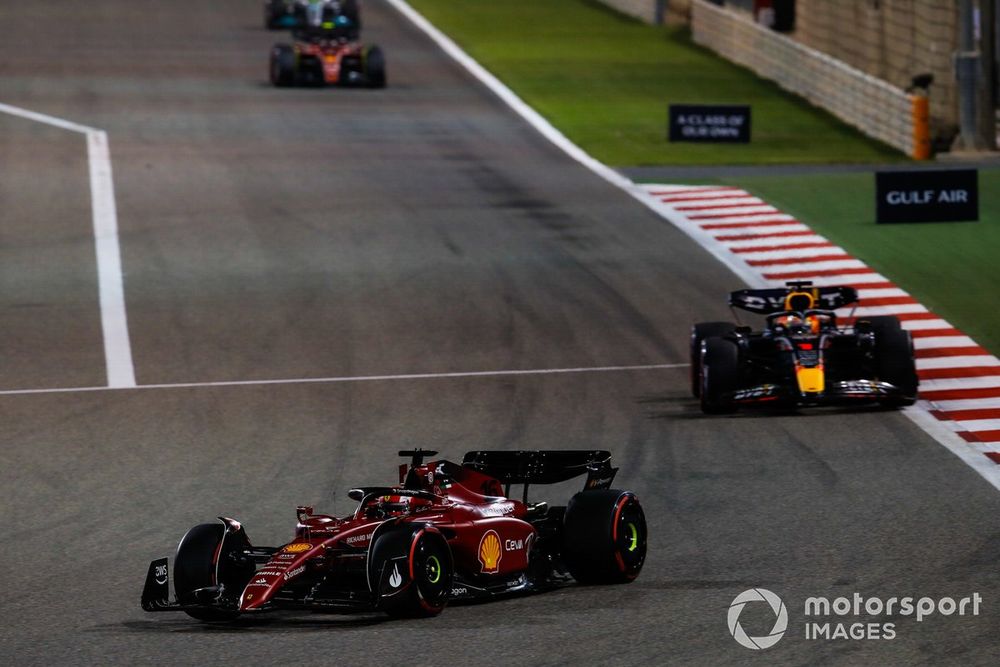
Ferrari enjoyed a performance edge over Red Bull at the start of the previous rules reset, but it didn’t last
Photo by: Zak Mauger / Motorsport Images
Still, Russell remains wary of what he calls the 2022 scenario: the situation in which the team that leads after the opening races under new regulations is overtaken by the competition over the course of the season, which happened to Ferrari in 2022 relative to Red Bull.
“I hope it’s just the two of us going for the championship, but I don’t want to get ahead of ourselves because I’ve said this numerous times: in 2022 after three races I think Leclerc had a 30-plus point lead and Verstappen was saying the championship is over. Ferrari were the quickest and then at the end they were not,” Russell remembered.
Although Russell is right that the first year under a new ruleset is always a massive development battle and that the competitive order can change significantly, there are some key differences compared to Ferrari’s situation in 2022.
First of all, Ferrari and Red Bull were evenly matched from the very first race, which differs significantly from the current picture. Just think back to the entertaining battle between Charles Leclerc and Max Verstappen in Bahrain. Red Bull simply suffered a double DNF in the Middle East, after which another retirement followed for Verstappen in Australia. In terms of points, the picture therefore looked worse for Red Bull than the reality actually was.
Moreover, the Red Bull car (as now) was significantly overweight, meaning a lot of lap time could be gained by reducing weight. The advantage Mercedes has now is larger than Ferrari’s at the start of 2022 and is built on different pillars, meaning the comparison does not fully hold.
Development battle: which platform has the most potential?
That said, there are still two key variables for the remainder of the season: ADUO and the development battle, in which Miami will be the next – and a very interesting – episode.
Stella has indicated that McLaren will travel to the Sunshine State with an almost entirely new package, though he expects all competitors to do the same. McLaren had already targeted Miami for their first major update package, regardless of the calendar changes, and in recent years that has proven to be a successful approach.
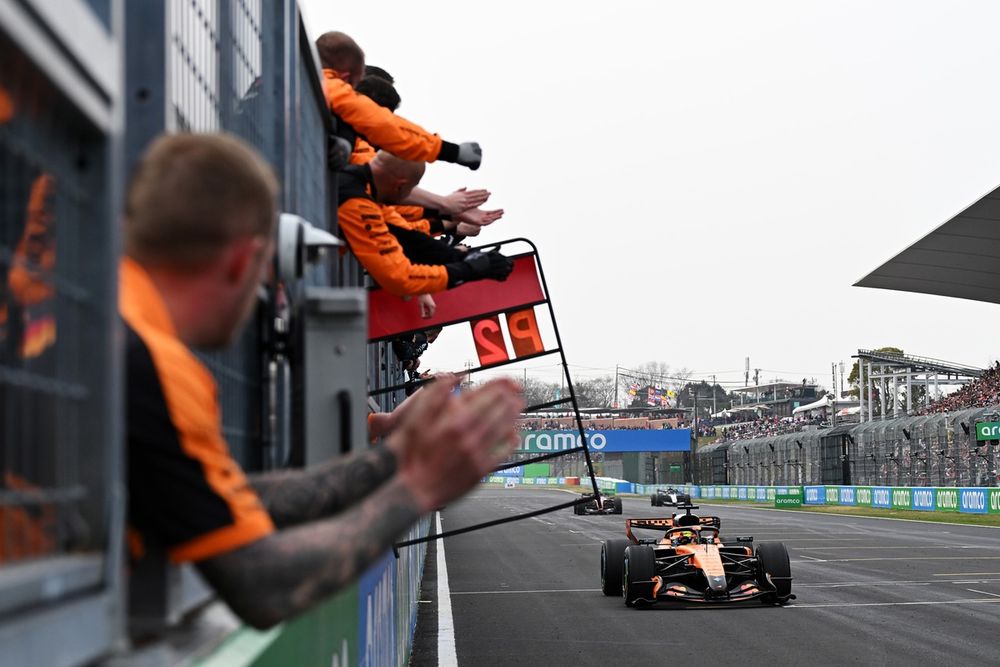
Mercedes had a clear performance edge over its rivals, but how much will that change over the coming rounds?
Photo by: Sam Bagnall / Sutton Images via Getty Images
Ultimately, aside from the power unit, it comes down to which platform still has the most room for development – and that is indeed a parallel with 2022. Back then, it was even more pronounced than now and three very distinct sidepod philosophies could be seen at the start of the new era: downwash (Red Bull), inwash (Ferrari), and zero-pod (Mercedes).
Ferrari acknowledged that the Red Bull concept offered more development potential than its own direction, after which convergence took place. So far, 2026 has mainly revolved around the power unit and energy management, but that does not take away from the fact that development of the chassis and aerodynamic package will become crucial going forward, especially as power unit understanding becomes less of a performance differentiator later on.
As for that development battle, the first signals at Mercedes are positive, Russell explained: “I think we have a very good direction. I think the correlation is very good. We’re ticking all of the boxes that tell us we have a really great foundation with the car, but of course, these things change.”
“I would be very surprised to see, and disappointed, if ADUO decisions would come up with any interferences into the competitive pecking order” Toto Wolff
McLaren had an edge over all other teams in recent years when it comes to development, but that logically offers no guarantee under this new ruleset — making it crucial to see which platform offers the most development opportunities, not only this year but also in the seasons to come.
Why ADUO for competitors is a politically sensitive topic
The final important factor is ADUO, the safety net in the engine regulations. The initial idea was that the pure power of the internal combustion engine would be measured every six races, with manufacturers that are between 2-4% behind receiving one additional upgrade opportunity, and those more than 4% behind receiving two upgrades.
Due to the situation in the Middle East, the FIA must make a decision on the exact timing and, logically, on who qualifies for ADUO. Ferrari team boss Frederic Vasseur has previously indicated that ADUO would offer the Scuderia a good opportunity to make steps on the engine side, but Wolff emphasised that the rule is not intended for that.
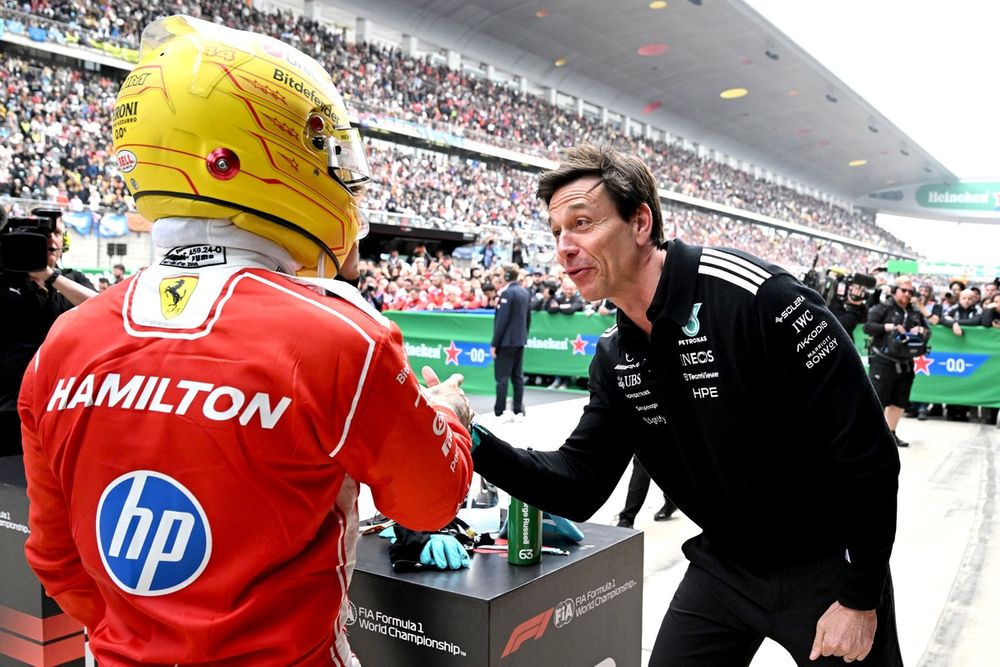
Wolff is wary of the ADUO being used for what it was not intended for
Photo by: Mark Sutton / Formula 1 via Getty Images
“The principle of the ADUO was to allow teams that were on the back foot, in terms of the power unit, to catch up, but not to leapfrog,” the Mercedes team boss said. “Of course, the teams will have their own performance pictures. And as it seems for me, there’s one engine manufacturer that has a problem and we need to help. And then all the others are pretty much in the same ballpark.
“I would be very surprised to see, and disappointed, if ADUO decisions would come up with any interferences into the competitive pecking order as it stands at the moment.”
With that, Wolff indicates that in his view Honda is the only one that truly needs ADUO assistance. Moreover, there are some complicating factors. For instance, Ferrari has made certain strategic choices, including the use of a smaller turbo. While that offers advantages at the start, it could impact the power output – so does that justify ADUO? It underlines that this year’s development battle on the power unit side also has a strong political component.
Taken together, these elements make it logical that Mercedes is not getting ahead of itself just yet and keeps in mind what happened four years ago, although it must be said that the starting position for Wolff’s team is now considerably better than Ferrari’s relative to Red Bull in 2022.
So yes, Russell is right that Mercedes must be wary of shifting competitive order in the first year under new regulations – especially given McLaren’s development record in recent years – but no, the comparison with 2022 does not fully hold for now.
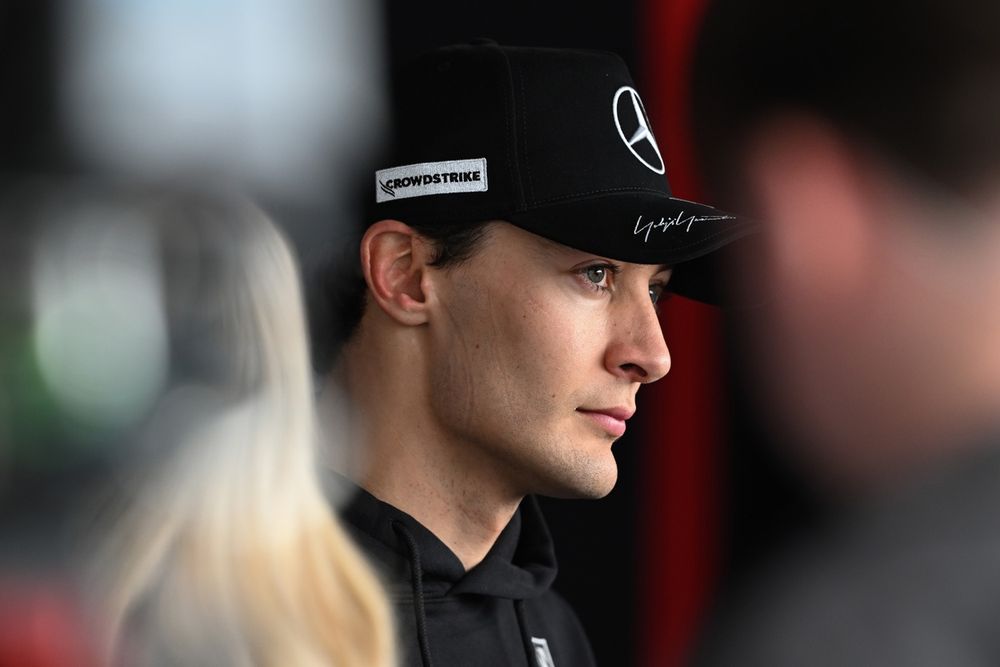
Russell is right for Mercedes to be wary but his 2022 comparisons are not fully accurate
Photo by: Artur Widak / NurPhoto via Getty Images
We want to hear from you!
Let us know what you would like to see from us in the future.
– The Autosport.com Team