
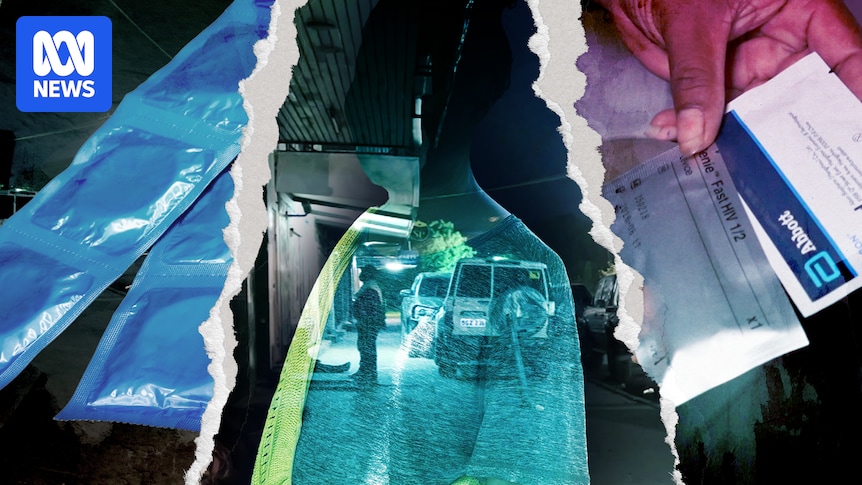
Sex workers and their clients can often be seen in Papua New Guinea’s capital Port Moresby.
Sylvia Pok, not her real name, is a mother who turned to sex work more than 10 years ago to make ends meet after her marriage broke down.
“A lot of the time we are attacked and almost killed by these men,” Ms Pok told the ABC.
She said it was hard and difficult work, but if she made 200-300 Papua New Guinean kina from a client, the equivalent of $60-95, she could pay her rent and feed herself.
“Even some widow mothers are now hanging around here and we look for money to fill our stomach,” she said.
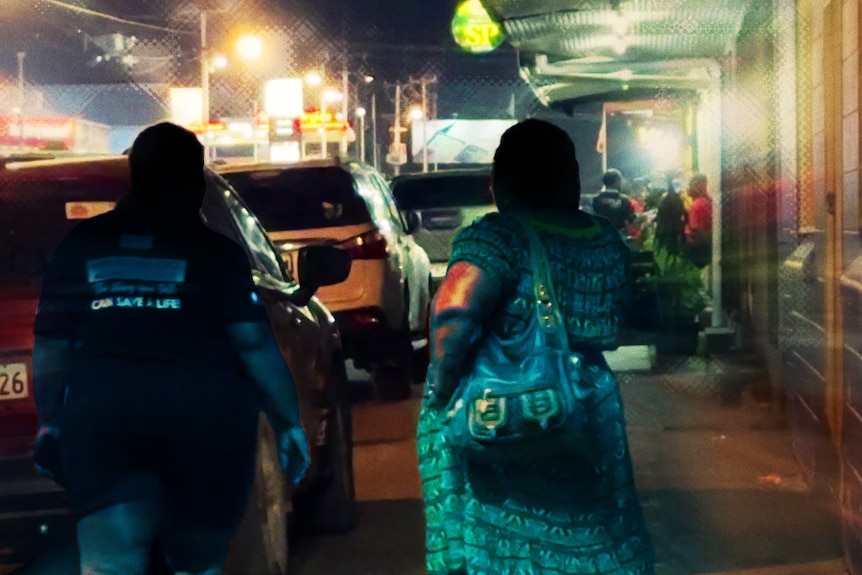
Sylvia, right, on the streets of Papua New Guinea’s capital, Port Moresby. (ABC News: Andrew Kutan, digitally altered)
But physical violence is not the only risk these workers face as PNG battles a surging HIV infection rate.
“There are men who are infected and hanging around these places too, and some come to just harm and kill,” she said.
In June 2025, PNG declared an HIV crisis after 11,000 new infections were detected in 2024.
PNG health authorities estimated there was about 30 new HIV infections every day, including seven babies born with the virus.
Official government figures show that today there’s more than 120,000 people living with HIV in the country, although the real number is thought to be much higher due to gaps in testing.
UNAIDS says sex workers, men who have sex with men and transgender people are among the groups most vulnerable to HIV.
Torn between money and the virus
The latest data from PNG’s health department shows there’s at least 195,000 female sex workers and 358,000 male clients in the country.
Male sex workers, transgender sex workers and female clients are not separately counted.
Sylvia said clients often offered large sums of money for unprotected sex.
“If he refuses to be safe by using a condom then I will not have sex with him because my life is also important, and I am doing this to live,” she said.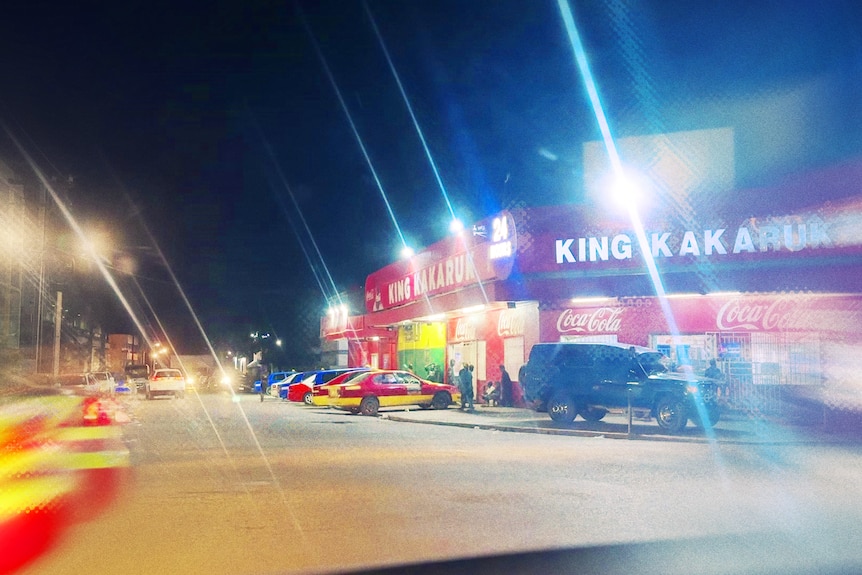
Boroko Shopping Centre is an area frequented by sex workers and their clients. (ABC News: Belinda Kora, digitally altered)
Treena, not her real name, is a transgender woman who is a sex worker.
She’s been in and out of sex work for over 20 years.
“When my mother died in 2002 I just left school and started going into sex work just to survive,” Treena said.
She admits to having unprotected sex with men.
“If they give me a big amount of money, or buy me things, I just go for it, take the risk,” she said.
PNG’s health ministry said that there was roughly 5,100 trans women across the country in 2025.
However, trans women have largely not spoken out about the challenge of combating HIV.
“This is not a good time that we’re going through,” Treena said.
Sylvia and Treena both said advocacy groups and healthcare providers visited sex workers on the street to test them for HIV.
But the challenge facing authorities has been decades in the making.
Stigma and discrimination rife
During the 1990s, HIV cases rose steeply in PNG.
By the early 2000s HIV became the leading cause of death at Port Moresby General Hospital.
Increased testing and availability of medicine in the 2010s saw HIV cases steady, but years of neglect and underfunding has led to one of the region’s worst health crises.
Sex workers, advocates and health workers all agree that the toughest challenge for people living with HIV is still stigma and discrimination.
For the transgender community, visiting clinics can be daunting.
“Sometimes they’re not really friendly, but those that are sensitised they treat us well,” Treena said.
“Others who are not just ignore us, walk and look at you and giggle.”
PNG’s Minister of Health Elias Kapavore disagreed that stigma was an issue.
“People now can walk freely into an HIV clinic and get their blood tested. I don’t see stigma as an issue anymore in our country,” Mr Kapavore said.
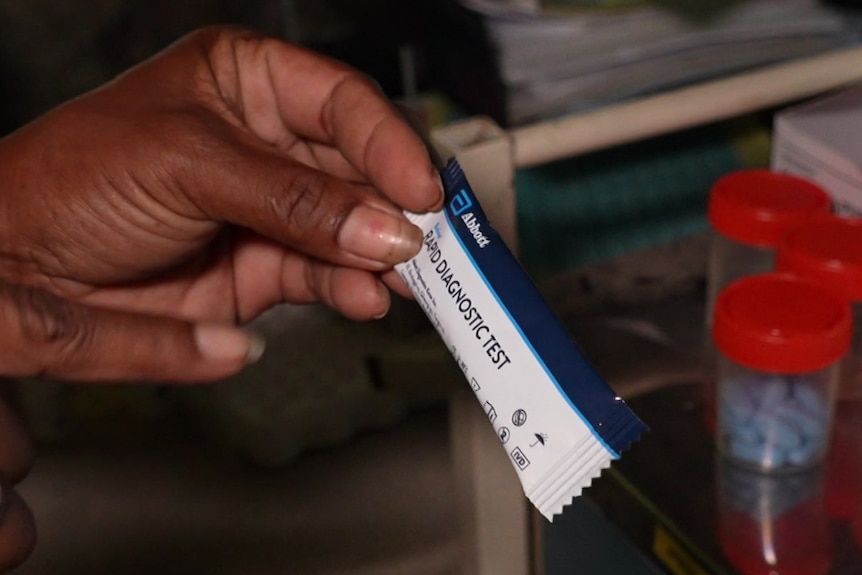
Testing is key to stopping the spread of HIV. (ABC News: Johnson Raela)
PNG’s HIV response program is also dealing with the fallout of global funding cuts.
It lost most of its USAID funding under the Trump administration in 2025.
In response, Australia increased its annual HIV development funding to PNG to almost $10 million.
Last week, the US signed an memorandum of understanding with PNG that would see Washington provide $US15 million ($21 million) between now and 2030.
Speaking before the MOU was signed, Mr Kapavore said that the PNG government had been increasing funding for HIV programs since 2023.
“This year the government allocated 26 million kina ($8.2 million) to address HIV-AIDS. I think the government is doing our part,” the health minister said.
He instead blamed the rising infection rates on the public.
“The increasing number of HIV in the country is due to the fact that people are not [participating in] enough public health awareness [programs].
“And people not knowing their status, there’s a lot of unprotected sex going around in the country.”
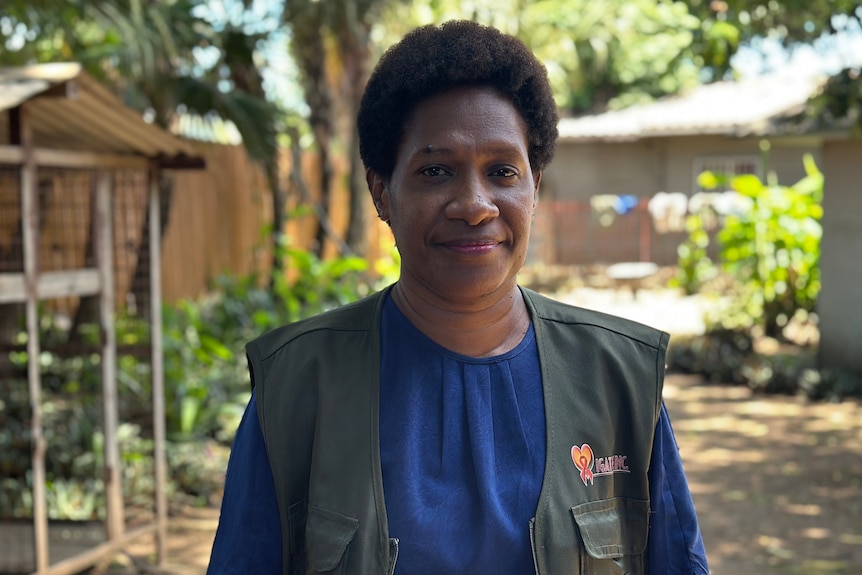
Melanie Palili said more funding was needed to address HIV in PNG. (ABC News: Johnson Raela)
Igat Hope is an organisation that works people living with HIV and AIDS in PNG.
Executive director Melanie Palili said more funding was needed to get support into affected communities.
“We’ve been sending proposals, requests out to possible funding partners. We haven’t received responses,” Ms Palili said.
“We have a lot of members who would love to go out and do the awareness activities, but we need money to support logistics, to get banners printed, transport and everything.”
She said when they have enough money to undertake community outreach they see a huge demand, especially for condoms.
“We went close to 200,000 condoms that were distributed,” she said.
“Surprisingly, most of those that came to get the condoms were pregnant women or mothers or females.
“Most of the women were spouses of men that were working remotely, or they know their spouse is having extramarital affairs.
“Out of fear of them contracting HIV they wanted to ensure they had condoms on hand, just to protect themselves.”
The Anglican Health Centre in Waigani has responded to the spread of HIV and AIDS for more than two decades.
The Anglican church used to fund the centre, but the centre is now under severe financial pressure and relies mostly on government funding and grants from global funders.
Mary Kenwai, the sister in charge of the centre, said it helps more than 1,000 people a month and cares for up to 30 people who contract the virus.
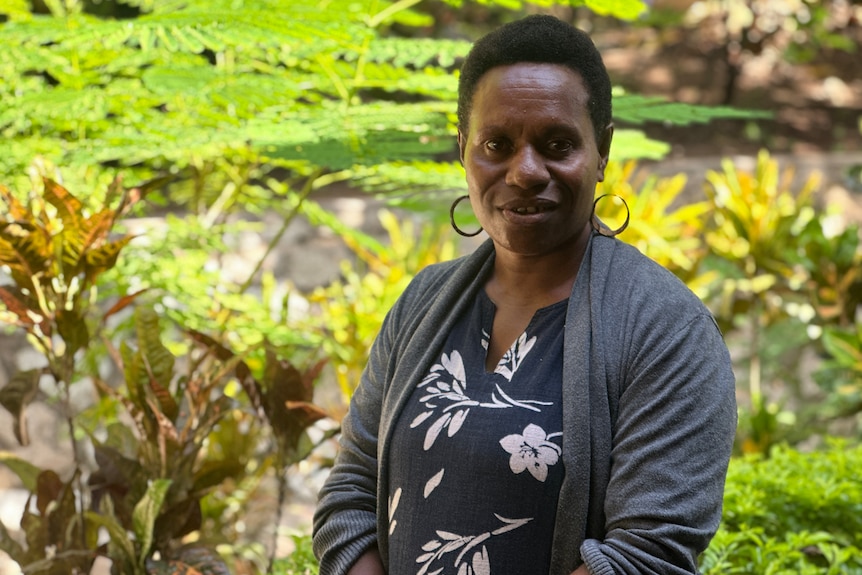
Mary Kenwai remains concerned about the state of her health care facility and its impact on patient outcomes. (ABC News: Johnson Raela)
“I can literally say that we are operating with bore water in this health facility,” Ms Kenwai said.
“Bore water is not safe for health workers as well as the patient. Some will go and fetch the bore water and drink [it]. It’s a health hazard.”
She said the clinic needed major renovations, with the lack of funding impacting patients and staff who were severely underpaid.
Ms Kenwai said they often volunteered their time in hazardous conditions.
“I just want … to wake people up and talk about these issues because we are silently dying,” she said.More news and current affairs from ABC PacificExplore our comprehensive radio, digital, and video coverage of the Pacific all in one place.