
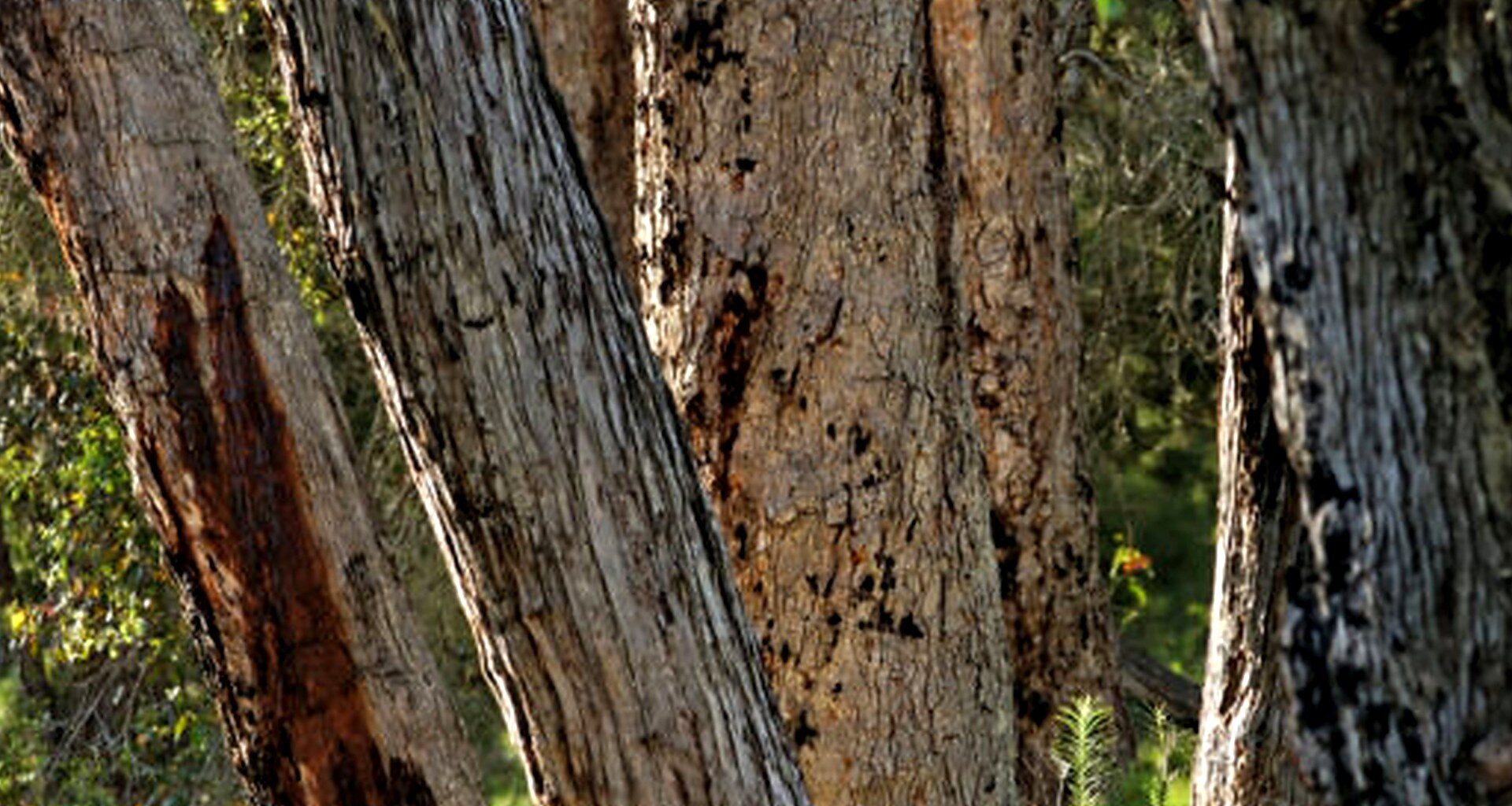
Scientists at the University of Western Australia have warned that the Northern Jarrah Forest cannot be restored to its pre-mining condition once Alcoa’s bauxite operations have stripped the substrate beneath it, with one of the planet’s most concentrated biodiversity hotspots now hanging in the balance of a Federal lease decision.
That is according to UWA botanist Professor Kingsley Dixon, speaking to Particle, the science platform run by Scitech Western Australia, who said the multi-layered bauxite deposit itself structured the ground and aided the water retention that the jarrah ecosystem had evolved to exploit.
“It’s a geological relationship between the forest and the bauxite,” Dixon said, with the loss of that geological scaffolding the central reason rehabilitated pits had failed to reproduce the original forest above them.
Wood Central understands that Alcoa has cleared an estimated 28,000 hectares from the 1.8-million-hectare jarrah bioregion since 1963, with a November 2024 paper in Restoration Ecology — co-authored by Dixon — finding that 35 years of rehabilitated mine sites had failed to recover to pre-mining condition, despite the company’s contractual obligation to restore any land it disturbs.
It comes as Federal Environment Minister Murray Watt weighs a proposal to extend Alcoa’s mining operations to 2045, a decision the Guardian Australia has reported is shaped by the critical minerals partnership Canberra and Washington signed last year, locking in WA’s bauxite layer as part of an aluminium supply chain that CRU International, cited by the World Economic Forum, forecasts will grow 40 per cent by 2030.
In February, Alcoa was hit with a $55 million penalty for illegally clearing about 2,000 hectares of the Northern Jarrah Forest, with $40 million earmarked for permanent ecological offsets, and Watt granted the company an 18-month exemption to keep mining while the fine was imposed.
Professor Stephen Hopper, a botanist and conservation biologist at UWA, told Particle that the shrub layer beneath the jarrah canopy was where the diversity sat, and that returning that understorey was where rehabilitation had repeatedly fallen short.
“There are complications with trying to get stuff like that back into the landscape,” Hopper said, pointing to the two-thirds of the bioregion’s threatened plants and animals that lived in the uplands where the bauxite ore body was thickest.
The South West global biodiversity hotspot, of which the Northern Jarrah Forest is part, hosts more than 8,000 species, with around 80 per cent found nowhere else on Earth, including the critically endangered Baudin’s cockatoo, the western quoll, and several rare orchid species.
The forest was ostensibly protected when the Cook Labor Government banned commercial native forest logging across WA on 1 January 2024, ending more than a century of jarrah, karri, and wandoo harvesting in State forests, but the Alcoa bauxite lease falls outside the scope of that ban.
In November 2023, the Leeuwin Group, comprising more than 150 senior scientists, called on the WA and Federal Governments to halt all mining operations in the Northern Jarrah Forest, warning of a potential extinction catastrophe — a position that has since hardened into the central scientific argument against extending Alcoa’s lease past 2045.

Wood Central is Australia’s first and only dedicated platform covering wood-based media across all digital platforms. Our vision is to develop an integrated platform for media, events, education, and products that connect, inform, and inspire the people and organisations who work in and promote forestry, timber, and fibre.