
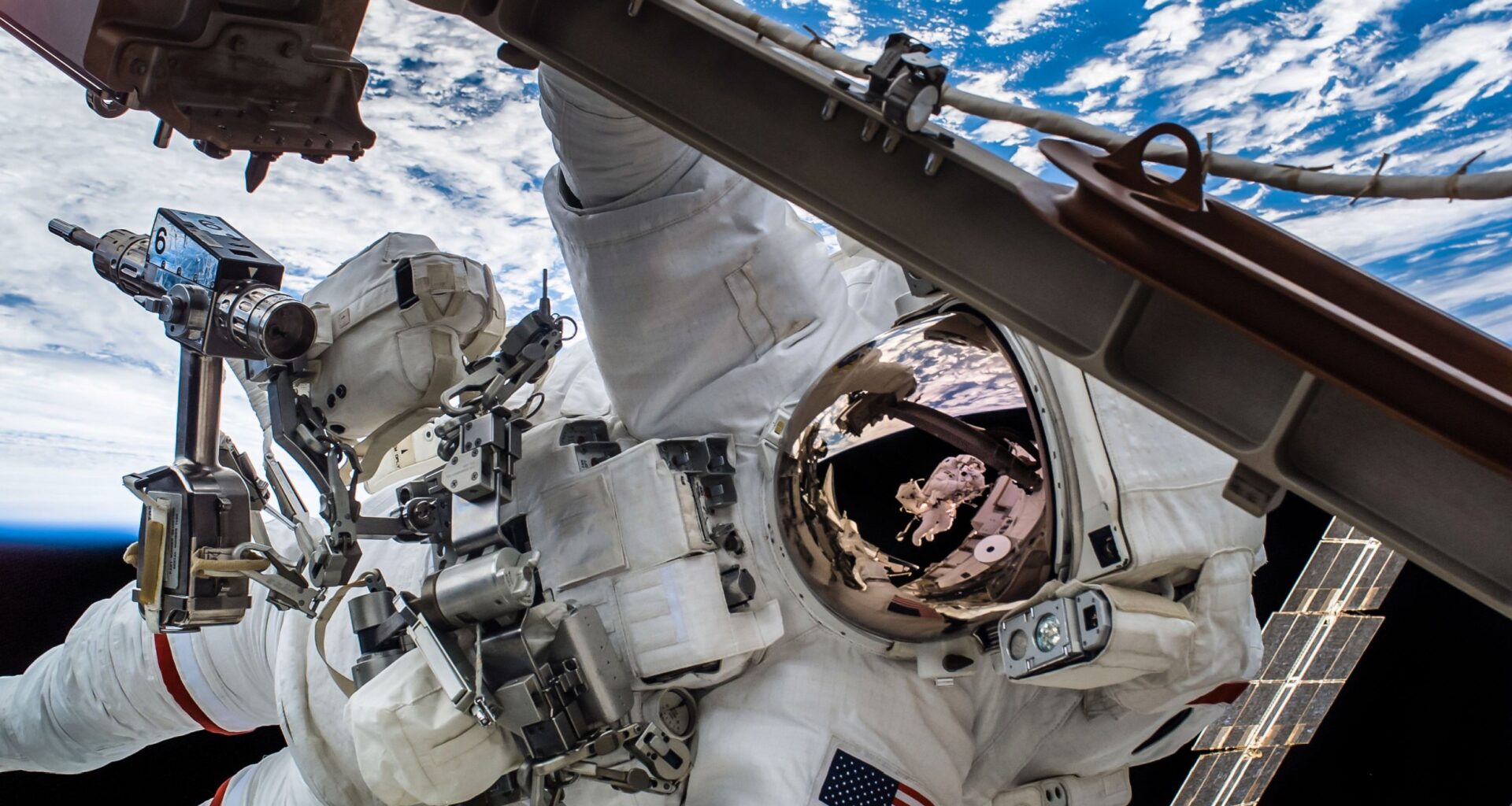
Living in space changes the body fast – but the brain takes its time catching up. Researchers have found that astronauts still hold onto objects as if gravity could pull them away, even after long stays in orbit.
That lingering habit offers a rare glimpse into how the brain predicts movement – and what happens when those predictions are suddenly wrong.
Astronaut grip reveals hidden gravity

Inside a space station experiment, the mismatch appeared as astronauts handled a sensor-packed object with more force than weightlessness required.
Tracking those forces, Philippe Lefèvre of the Catholic University of Louvain (UCLouvain) showed that gravity kept shaping their hands long after launch.
Even after months in orbit, that extra grip remained strongest when astronauts moved objects, rather than when they simply held them still.
The persistence of that response raises a deeper question: how grip normally works and why the brain misjudges it.
The brain predicts every grip
Each lift on Earth teaches the fingers to tighten before an object slips, lands, or pulls away during ordinary movement.
That timing reflects sensorimotor coordination – how the brain links senses and motion – rather than simple hand strength during planned action.
When the arm moves, inertia – an object’s tendency to keep moving – pushes the held item against the fingers through every swing.
A loose grip lets the object drift, while an overly tight one wastes effort and reduces control over time. This balance is not learned overnight.
Long experience on Earth leaves the brain with gravitational priors – built-in expectations about how gravity acts during every reach.
Those expectations allow the hands to prepare for weight before confirmation arrives through touch and muscle feedback. This helps explain why the findings surprised researchers. As Lefèvre later explained, years of exposure to gravity continue to shape behavior even in orbit.
“The fact that we were exposed to gravity from early childhood for years and decades, we cannot forget it, even after five to six months,” he said.
Handling objects gets harder
In microgravity – where objects feel nearly weightless – letting go of a tool does not send it falling. But movement still matters. Even a small shove can send loose equipment drifting across a crowded cabin during routine tasks.
Without steady fingers, a harmless release can quickly become a hazard near screens, switches, or another crew member. Handling objects in space requires a different balance between safety, speed, and the effort spent holding on.
Risk plays a key role in that balance. When a moving object carries more kinetic energy – the energy it has in motion – the cost of a slip increases.
Astronauts respond by gripping more tightly during faster movements, adding force beyond what is needed to prevent slipping. This pattern suggests the brain is not just preventing errors, but also weighing their potential consequences.
Stronger grips can protect equipment, but too much force may reduce precision during delicate work in cramped conditions.
Astronauts reveal the pattern
Across the project, 11 , two women and nine men, performed the task before, during, and after flight using the same object.
Sessions compared normal Earth gravity with weightlessness after crews had already lived aloft for months inside the station.
Years earlier, a spaceflight project shaped that setup around a handheld instrument that measured force and motion in several directions.
Such rare data make the findings powerful, but they also keep the sample small by necessity compared with ground studies.
Grip resets back on Earth
Back on Earth, astronauts did not immediately return to their old grip patterns. Their hands initially misjudged load force – the push or pull that must be resisted during movement – as gravity returned.
With repeated attempts, grip strength and timing gradually adjusted to match Earth’s demands again.
This relatively fast recovery may help crews readapt, but early errors could still matter during landings or time-sensitive tasks.
Looking ahead, these findings carry broader implications. Future missions will not involve simple transitions between Earth and weightlessness.
Astronauts traveling to the Moon or Mars will experience partial gravity, where familiar habits may not fully apply.
Training may need to focus on these awkward transitions, when the brain’s predictions lag behind changing environments.
Tool design could also help by accommodating stronger grips and reducing damage when objects drift unexpectedly near people.
Why grip matters in space
Behind those hand movements sat nearly 20 years of planning, failed hardware, rebuilding, launches, and analysis across agencies.
One early flight model was lost when a supply rocket exploded seconds after launch in 2014, carrying the first instrument.
Teams rebuilt the system and then waited for astronauts to complete careful sessions both in orbit and after landing, working within tight, scheduled windows.
That long period of patience ultimately gave the study its strength, since ordinary laboratories cannot mimic weightlessness for months at a time on Earth.
Looking ahead, hand grip may seem like a small detail, but the findings connect it to navigation, tool use, safety, and recovery after returning to Earth under physical stress.
Better training and smarter handle designs could reduce early errors, while future data may reveal which adjustments last the longest.
The study is published in the Journal of Neuroscience.
—–
Like what you read? Subscribe to our newsletter for engaging articles, exclusive content, and the latest updates.
Check us out on EarthSnap, a free app brought to you by Eric Ralls and Earth.com.
—–