
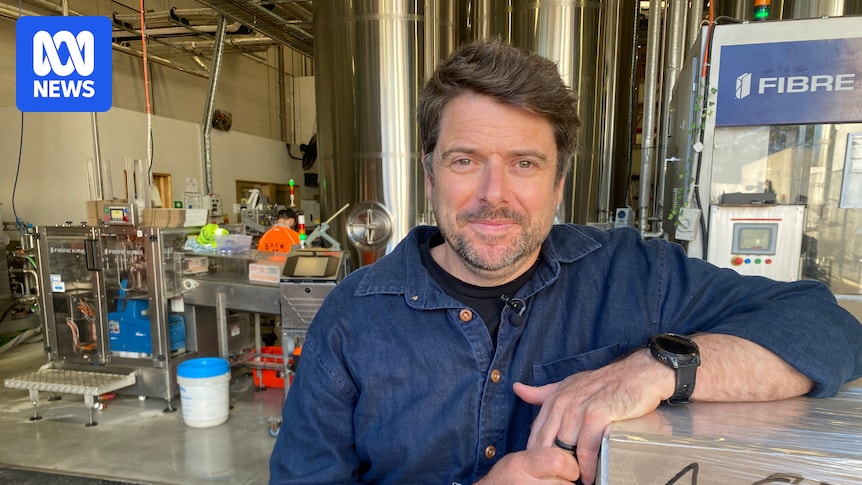
Capital Brewing co-founder Laurence Kain admits manufacturing and production lines aren’t the first things that come to people’s minds when they think of Canberra.
“Brewing isn’t an industry that existed in Canberra on any scale even 10 years ago,” Mr Kain said.
“Now it employs over 200 people locally.”
When Mr Kain first started experimenting with beer, his recipes would be brewed at friends’ factories in Sydney.
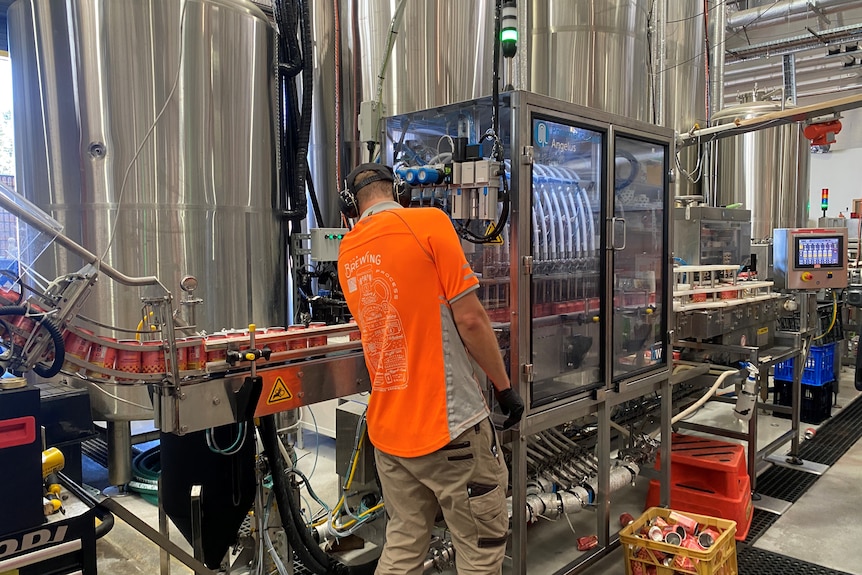
Capital Brewing now makes about 2 million litres of beer and other beverages each year at its Dairy Road facility, sold at retailers in the ACT, New South Wales, Victoria and Queensland.
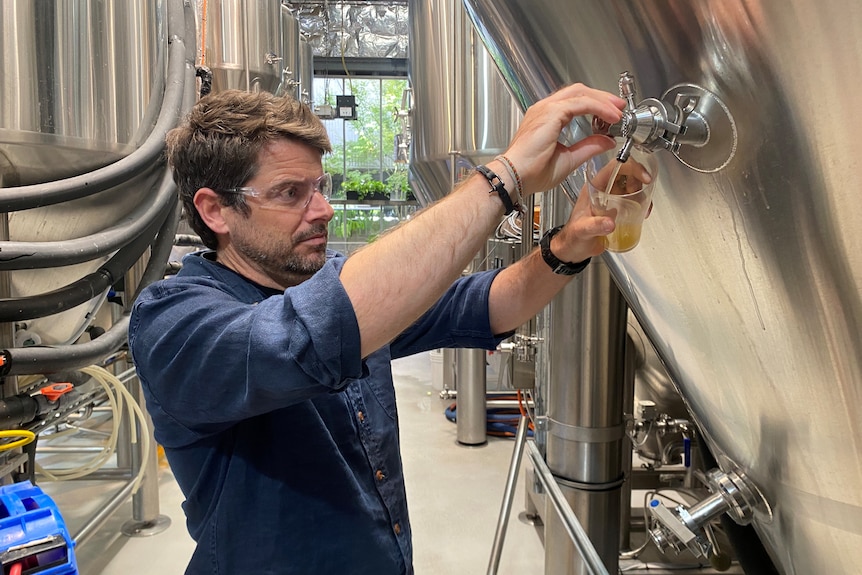
Capital Brewing’s beer is exported to interstate retailers. (ABC News: Harry Frost)
The brewery and cannery — along with the business’s two hospitality venues, marketing, finance and HR teams — are all based in the capital.
And when it comes to competing against multinational breweries, Mr Kain says being Canberra-based gives them an advantage.
“The best thing about operating in Canberra is local people get behind the local brand and that’s what they’ve really done with us,” he said.
“The other really great thing about being in Canberra is the water.
“We’ve got some of the best water in the country for brewing beer and that’s helped us win a long list of medals.”‘Well-positioned’ for AI boom
Scott Carr also sees being Canberra-based as an advantage for his company.
He started Datapod two decades ago when the business consisted of just himself and a Toyota Corolla.
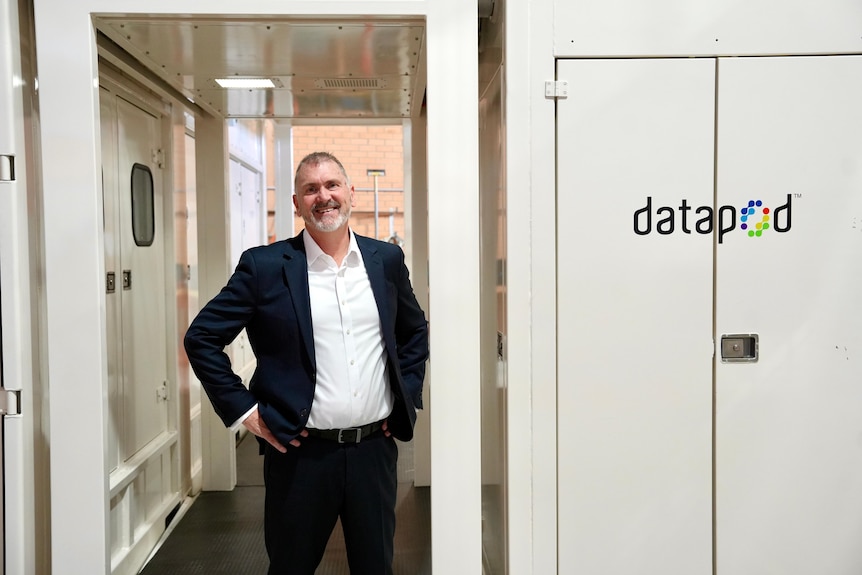
Scott Carr says Datapod is creating solutions in the artificial intelligence boom. (ABC News: Joel Wilson)
Now, in a discreet office and workshop complex in the city’s industrial backblocks, a team of engineers is building solutions to the growing computing demands of the artificial intelligence revolution for mining companies.
“We were going to sites with no water, strict ecological issues where we were having to deal with high risk, big stakes and emission-critical environments,” Mr Carr recalled.
“We were relying on our engineering capability to take on these really difficult problems.”
Datapod’s solution was to design self-contained, transportable AI data centres that didn’t require the huge quantities of water other data centres needed in order to prevent servers from overheating.
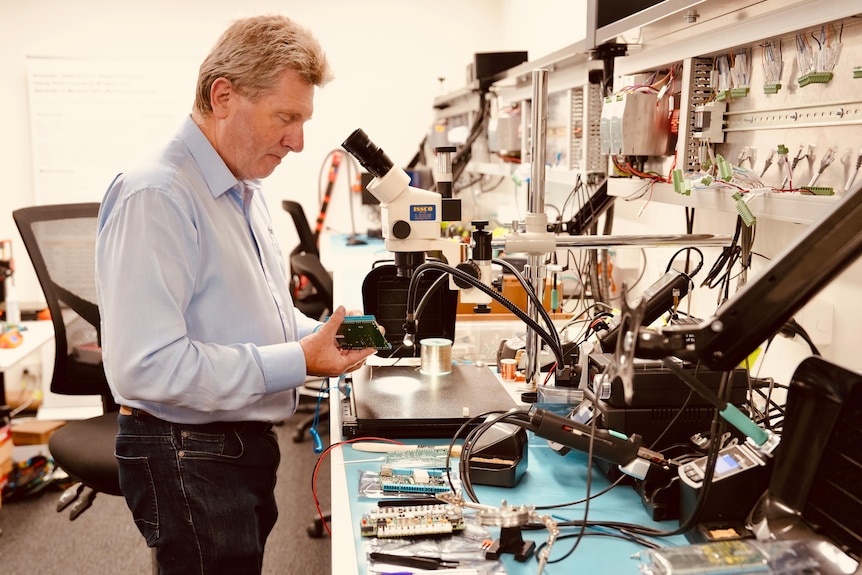
Datapod relies on Canberra’s highly educated and skilled workforce. (ABC News: Harry Frost)
While the larger components for the finished product are made outside of the city, it’s Canberra’s universities — and the pool of talented engineers it provides — which Mr Carr sees as the secret to the business’s success and expansion.
“We’re very well-positioned to be a major beneficiary of the AI revolution,” he said.
“We’re a knowledge economy with some of the best universities in the country, and that’s a good foundation for us to be able to tackle really difficult problems.
“We’ve got that deep engineering capability that means that we can continue to improve and make our product more competitive and make it more suitable for achieving those economies of scale from mass production around the world.”
Barriers to business success
According to the Canberra Business Chamber, the diversification of economy and industry is key to the city’s financial security.
While international education is the ACT’s largest source of export income, the Australian Public Service (APS) remains the city’s largest employer — and one the territory government can’t charge payroll tax.
Without other royalty sources to draw from such as mining, the incentive to grow other industries is strong.
“We don’t have a lot of large businesses necessarily headquartered here or operating here, and given our proximity to the federal government there’s an obvious opportunity to encourage businesses to come here and set up,” Canberra Business Chamber CEO Greg Harford said.
“But we do need to see an environment where those businesses can grow — and one of the issues we’ve got is tax.”

Canberra Business Chamber CEO Greg Harford says ACT businesses face tax burdens if they want to grow. (ABC News: Adam Kennedy)
Two in three jobs in Canberra are now in the private sector, and the population is expected to reach nearly 700,000 by 2050.
But as of mid-2024, only about 3 per cent of ACT businesses employed more than 20 people — and more than half had no employees at all.
Mr Harford said the ACT’s payroll tax thresholds often discouraged small businesses from expanding.
“We certainly have the highest number of start-ups in the country here in the ACT, and that’s a really good thing, but we also have the highest number of business failures,” Mr Harford said.
“It’s certainly true that our payroll tax threshold is one of the highest in the country.
“You don’t need to pay payroll tax if your wage bill is less than $1.75 million a year from 1 July … but if you do tip over into paying payroll tax, we are paying some of the highest rates in the country.”
ACT businesses with wages of between $1.75 million and $20 million will face a payroll tax rate of 6.75 per cent in the next financial year, compared to 5.45 per cent in NSW.
Capital Brewing’s Laurence Kain says the ACT government’s expanded portable long service leave scheme is not applicable to most in hospitality.
Similarly, Mr Kain said the ACT government’s move to add a portable long service leave scheme for hospitality workers was another barrier to expansion.
The government argues expanding the existing portable long service leave scheme to cover the services industry is a progressive approach to protecting workers’ rights.
But Mr Kain thinks few in the industry will benefit.
“I myself have worked in hospitality since I was 16 years old — unfortunately, that’s going on about 30 years,” Mr Kain said.
“In that time, I haven’t seen many, if any, hospitality people stay in the industry long enough to get their long service leave — particularly the casual staff.
“That’s putting us at a significant disadvantage.
“If the government feels that young hospitality staff should get paid more, we’d be happy to pay them more now, but we just feel that they’re never going to see that 1 per cent of the payroll that we’re having to put into a government fund.”
‘Morass of regulation’
Larger businesses in the ACT — typically ones that employ more than 200 people — are also facing an ACT payroll tax rate hike.
From the start of the next financial year, large businesses with Australia-wide wages of more than $150 million will face a payroll tax rate of 8.75 per cent.
“That is a disincentive ultimately to grow if you’re a large business,” Mr Harford said.
“We should be supporting those large businesses to come here, set up here, and grow here, not encouraging them to put their employees somewhere else.”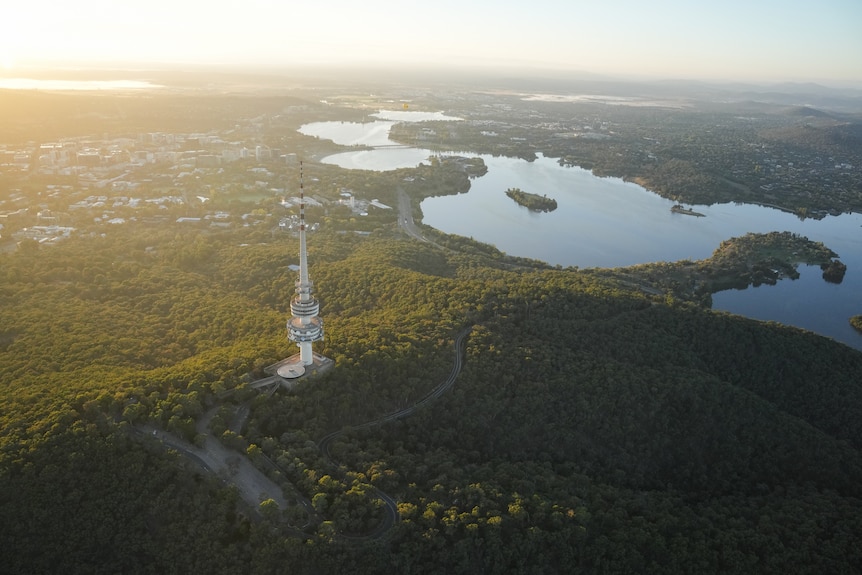
Large Canberra businesses — typically ones that employ more than 200 people — are facing an ACT payroll tax rate hike. (ABC News: Matt Roberts)
Mr Harford acknowledges the ACT government has limited revenue streams to pay for infrastructure and services, compared to states like Western Australia which can charge mining royalties.
Nevertheless, he argues lowering taxes would help to “grow the pie”.
“If you can increase the number of businesses operating here, if you can increase the number of people employed here in the ACT, if you can increase the number of people living here in the ACT, and they’re all paying perhaps a slightly lower rate of tax, overall your revenue should be up,” Mr Harford said.
“There’s a morass of regulation that businesses have to face if they’re setting up here.
“Some of that’s from the Commonwealth, some of that’s from the territory, but we really need to cut through that, make it easier, simpler and cheaper to do business,” he said.
Benefits of being based in Canberra
Chief Minister Andrew Barr argues it’s the benefits businesses get from being based in Canberra — and not the tax rates — that will be the deciding factor in how the private sector grows.
“We’ve seen very strong growth in small business in the territory and that’s a really important part of our economy and provides a lot of local services and increasingly is exporting,” Mr Barr said.
“The national and multinational companies that would headquarter here would do so because of the skills of our workforce and our proximity to the biggest procurer of goods and services in the southern hemisphere, and that’s the Australian government.”

ACT Chief Minister Andrew Barr says businesses can benefit from being based in Canberra. (ABC News: Adam Kennedy)
He also agrees the ACT is well-positioned to take advantage of the rapid development of AI, like Mr Carr has done with Datapod — and the ACT being 100 per cent supplied by renewable electricity has been “a really important feature of our success so far”.
“There certainly is a very strong appetite amongst governments and companies that use those data centres to have sound environmental credentials — and this has been an important point of difference for us,” he said.
“Into the future, it’s clear that the large energy demands that bigger and more data centres will require will need to be sourced from renewable sources and fortunately, again, our industry sector is an international leader in that regard.
“[We] are already engaging with the energy networks and with renewable energy generators to power future data centres in the ACT.”
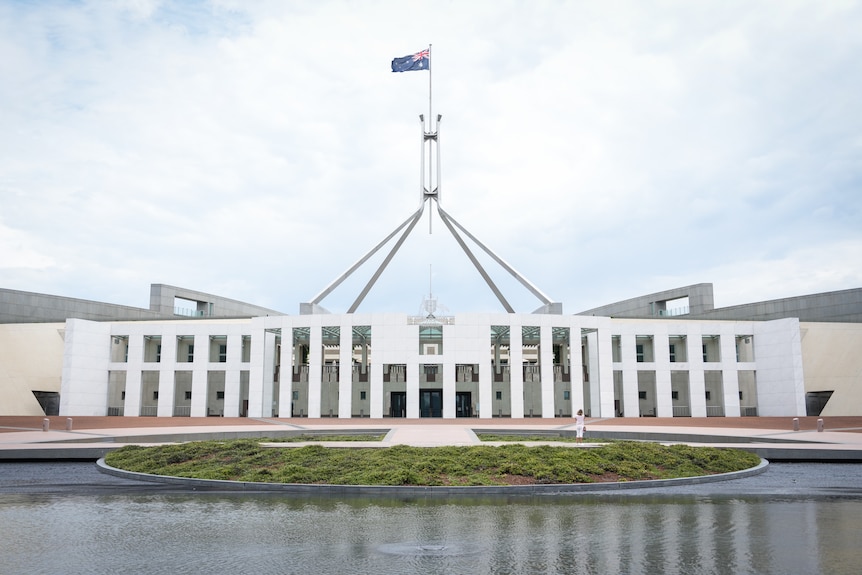
Andrew Barr says, at its core, Canberra will always be a public service city. (ABC News: Matt Roberts)
When it comes to manufacturing more generally, Mr Barr thinks it will be an important part of Canberra’s economic future — but for the most part, it won’t be in the form of large factories based in the capital.
“We’re not going to be producing millions of $5 trinkets but we do produce hundreds of multi-million dollar items and exports,” Mr Barr said.
“I think the reality of Canberra is that the city exists to be the centre of public administration in Australia so that will always be at the core of why this city exists.
“But off that base you can build a more diverse private sector economy that is focused on exporting to the rest of the nation and the rest of the world.”