
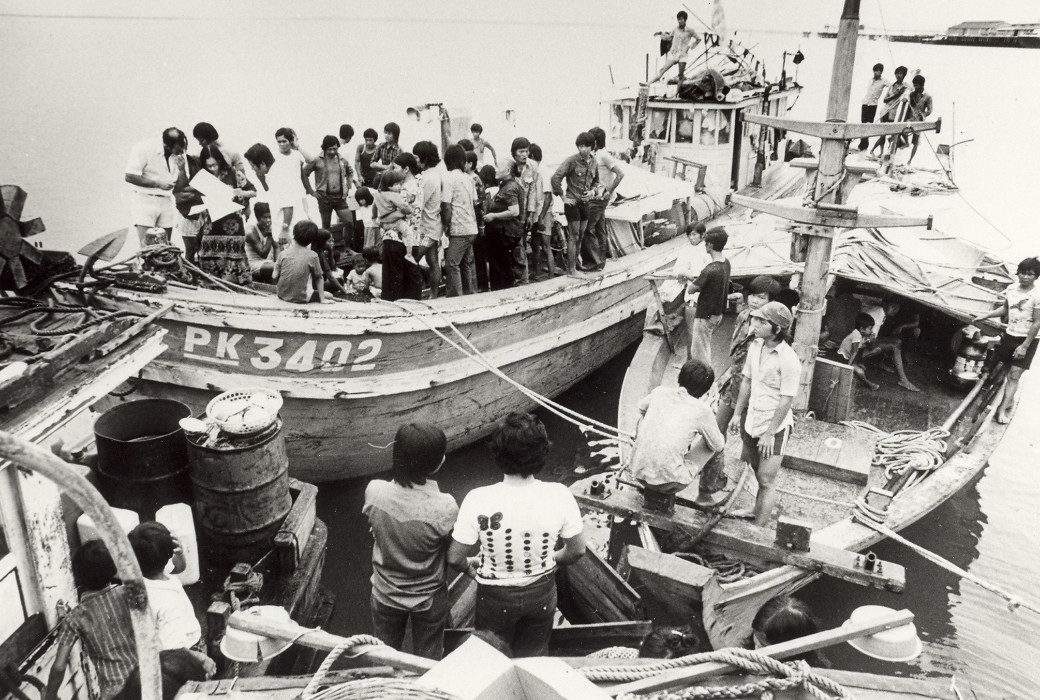
When asylum seekers’ futures are argued before the High Court, questions of borders, power and national identity are laid bare.
This week on Judgment: Cases that Changed Australia is “We Will Decide,” on Australia’s strict immigration laws.
When the fates of those who dare to come to Australia in breach of strict immigration laws land in the High Court, the country’s history and humanity are laid bare.
Australians have long wrestled with the challenges of controlling who enters the borders of a country built on immigration.
Kim Lim’s family came to Australia from Cambodia on a leaky boat in the 1980s, fleeing Pol Pot’s murderous terror. Aged 10, she and her family are swept up in Australia’s first regime of Mandatory Detention. They challenge their detention in the High Court – and lose.
In 2000, Ahmed Al Ketab, a young Palestinian man, finds himself locked up in the same system. Australia rejects his application for refugee status, but no other country will take him. Australia simply keeps him locked up. This is not just mandatory detention, but indefinite detention.
In the High Court fundamental questions are tested – can the Australian government lock up people who have not committed a crime indefinitely? Or are such harsh sentences solely the prerogative of our courts? How far does the power to control our borders extend?
The High Court delivers one of the most bitterly divisive judgments in its history, endorsing indefinite immigration detention – a power exercised by no other Liberal Democracy in the world at that time.
8:30pm Tuesday on ABC.