
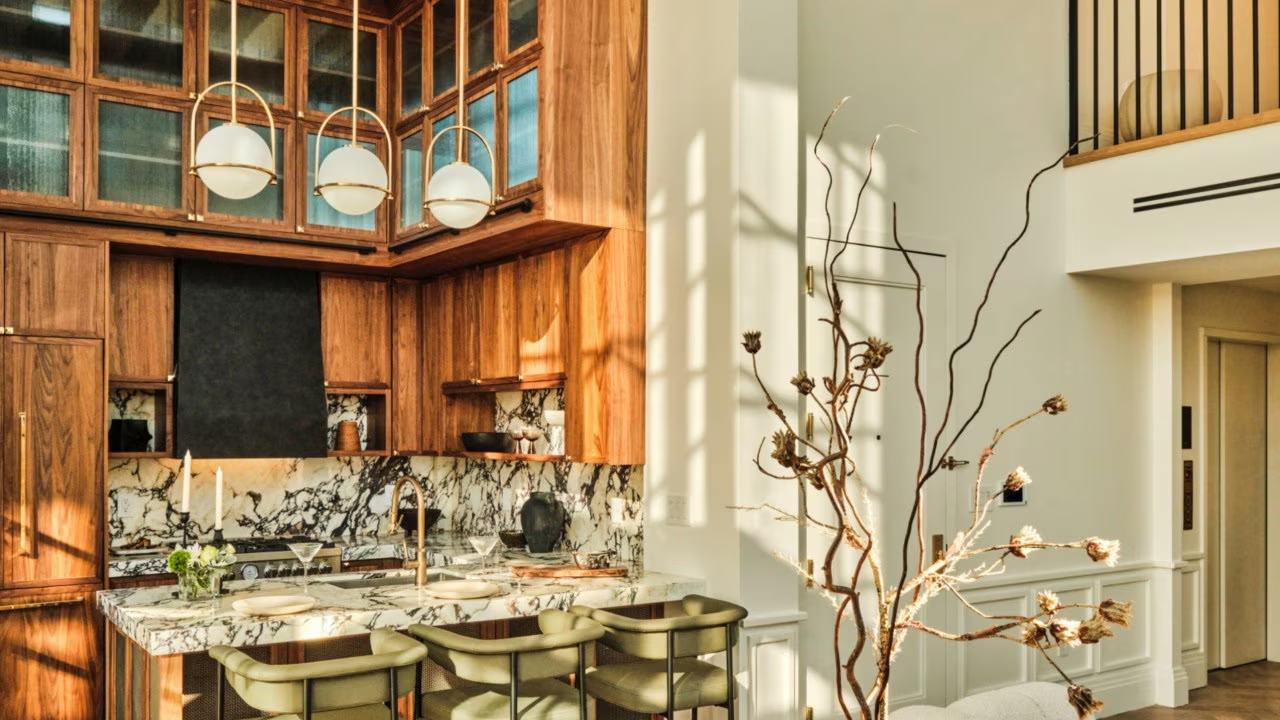
On the corner of Union Avenue in Williamsburg, Brooklyn, a new residential space has taken form. Designed by Sara Ianniciello, founder and creative director of Makers Collective Design, the penthouse offers a study between old and new, merging openness and intimacy, and refinement and warmth.
The homeowners, who have chosen to remain anonymous, were attracted to Williamsburg not for its notoriety, but for its enduring character. As Ianniciello explains, “They were drawn to Williamsburg for its strong sense of neighbourhood, creative energy, and connection to Brooklyn’s broader cultural landscape.” It’s a sentiment that feels increasingly rare in a neighbourhood often defined by its rapid transformation. Here, however, the intention was different from the outset. “From the beginning, the building was designed to support a calm, grounded, and enduring way of living rather than a highly public lifestyle.”
That ethos is immediately legible in both the architecture and interiors. Williamsburg itself provides a rich and dimensional backdrop—one that informed every design decision. “Williamsburg is one of Brooklyn’s most layered and creative neighbourhoods, shaped by a mix of historic residential streets, former industrial buildings, and a strong maker culture that continues to define its identity,” Ianniciello notes. Yet what distinguishes this particular location is its subtle duality. “It carries Brooklyn’s global creative energy, yet the immediate context feels quieter, more residential, and rooted in daily neighbourhood life.” This tension between vibrancy and serenity became a guiding principle, allowing the home to remain connected to the city but also retreat from it.
From the street, the building distinguishes itself through materiality rather than scale. Where neighbouring structures lean toward cooler grey palettes, this facade adopts a warmer, more tactile approach. A rich beige brick with subtle variation creates depth and softness, while true divided-light windows lend a sense of authenticity that nods to historic precedents. Though the previous structure no longer stood, its influence remains embedded in the building’s proportions and relationship to the street.