
By Reese Mautone
Date posted: 1 May 2026
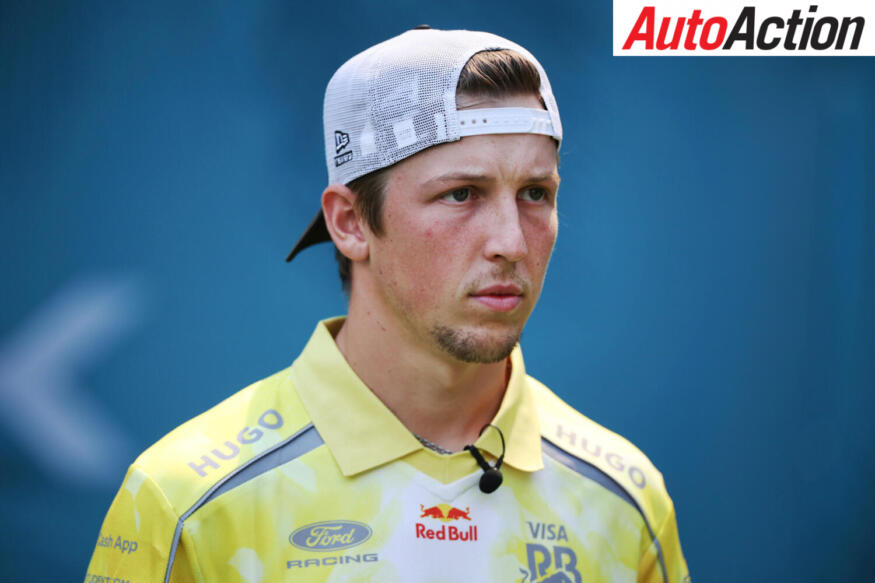
The midfield upgrade battle intensifies as Formula 1 returns in Miami, with Racing Bulls focused on making gains through development as Liam Lawson says the team’s aim is simple: “we’re trying to bring better stuff than everybody else” as the latest upgrades hit the grid.
Almost five weeks have passed since Lawson last competed on the world stage in Suzuka, but the Kiwi says the extended break has been a valuable reset, describing the time away from the track as “useful” for Racing Bulls as it continues its push up the midfield order.
“[The break] was good, honestly,” Lawson said.
“It was probably quite useful for a lot of the teams; for us to look over the first few races, prepare for, obviously, the second part — or still the first part — of the season, but now the sort of second part of the start.
“I mean, it’s been a tricky start to the year with these cars, so yeah.”
The Faenza-based outfit has been transparent regarding its 2026 upgrades schedule, with Racing Bulls Team Principal Alan Permane admitting that aside from new components originally planned for Bahrain, the break in races hasn’t impacted any major roll-outs.
Allowing the team to build additional units, Permane says that after the extended break, RB now has more room for error in Miami — banking “three or four sets” versus two — before the team effectively replaces the undisclosed new parts in Montreal.
“We had a pretty decent upgrade planned for Bahrain, which of course we will see in Miami,” Permane explained to selected media during the break.
“We had another upgrade planned for Montreal, so we will have a sort of quick double hit there.
“There’s no way to bring them both.
“The Montreal one, we can’t bring earlier, so it’s a slightly strange situation where we’ll bring a new, quite decent upgrade and new component, and then almost replace it straight away – that’s just the way the calendar’s fallen.
“We are going to take the opportunity to do some unplanned work on the chassis, so there’s some bits and bobs to do, there’s some upgrades there that weren’t actually planned in until the end of this flyaway sequence, so that’s helped us there.”
The team’s most notable change as Formula 1 returns to the track is a one-off livery for the Miami Grand Prix.
Inspired by the Red Bull Summer Edition Sudachi Lime, the eye-catching livery showcases a bold yellow ‘citrus’ design that also features on RB’s team kit this weekend.
Staying true to Miami style, the VCARB 03 even made a statement arrival via yacht, docking at a popular waterfront venue along the Miami River to promote the energy drink company.
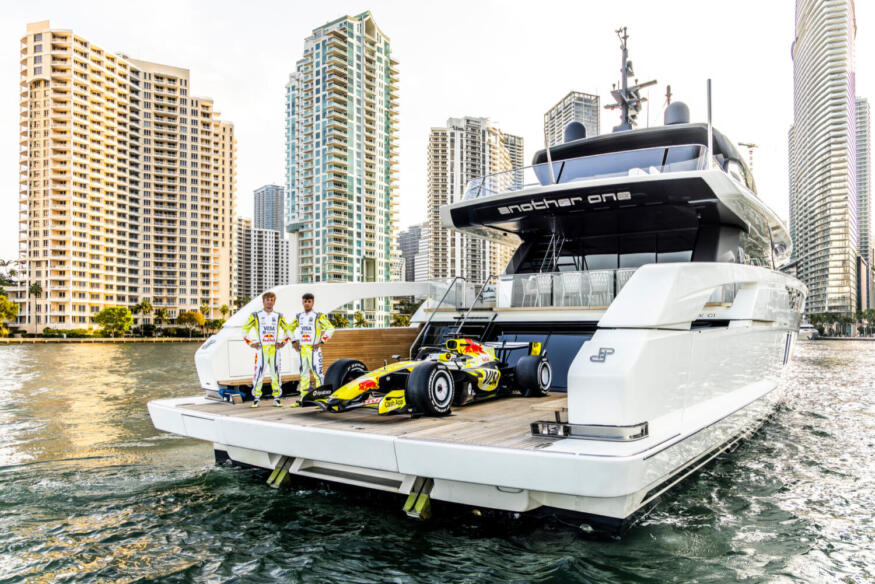
Liam Lawson and Arvid Lindblad pose with the VCARB 03 during the Miami Special livery reveal for 2026. Image: Chris Tedesco / Red Bull Content Pool.
Sharing his brief thoughts on Racing Bulls’ Miami upgrades, Lawson says his measure of success is relative to what their midfield competitors arm themselves with this weekend.
“It’s really hard to know at this point,” the #30 said.
“[The upgrades are] definitely positive, but I think a lot of teams are going to be bringing stuff here, so to know exactly how it’s going to be is very, very tough.
“But I’m excited, obviously.
“This part of the year is really about development, so everything we’re bringing is… we’re trying to bring better stuff than everybody else, and we’ll see how we go.”
Despite not having the strongest car underneath him, the Kiwi has gone from strength to strength in 2026, a complete 180 from the start of his 2025 season at Red Bull.
Collecting a total of 10 points, Lawson had finished within the Top 10 on three separate occasions, including a double-points scoring weekend across the Chinese Grand Prix Sprint weekend.
He aims to continue his rewarding form during the next month of racing in North America, sitting just two points behind Max Verstappen, the highest-placed Red Bull driver in P9 of the drivers’ championship.
“Every time I get in the car, I try and do the best job I can, so Formula 1 is very much a sport of variables,” Lawson said.
“There’s a lot that has to happen to have a successful weekend and a successful year, and I think this year, it’s been working quite well for us.
“So, it’s been a good start, a lot of opportunity with these new cars, trying to be on top of it, so we’ll try and keep that momentum going.”
Racing Bulls is positioned at the back of the tight midfield between Haas, Alpine, and, surprisingly, Red Bull, with the four teams occupying P4-P7, only separated by four points.
Wet weather could throw a spanner in Racing Bulls’ on-target plans for this weekend, with the FIA holding discussions on the possibility of starting the race earlier to avoid heavy thunderstorms scheduled for Sunday’s main event, however, the Miami Grand Prix is a Sprint weekend, providing two opportunities for Lawson and his rookie teammate to lift the team up the order.
As a result of the majority of the grid implementing significant new upgrades and the FIA making countless changes to the technical regulations, the sole hour of practice has been extended by half an hour, meaning Free Practice will now start at 02:00 AEST on Saturday morning, and run for 90 minutes.
That crucial session will be followed by Sprint Qualifying at 06:30 AEST, with the grid hungry for its first taste of competition in almost five weeks.
Image: Chris Graythen/Getty Images // Getty Images / Red Bull Content Pool.
2026 Miami Grand Prix Schedule (AEST):
Saturday, May 2:
Free Practice: 02:00 – 03:30
Sprint Qualifying: 06:30 – 07:14
Sunday, May 3:
Sprint: 02:00 – 03:00
Qualifying: 06:00 – 07:00
Monday, May 4:
Race: 06:00
Read more in new Auto Action Digital HERE
Buy in the new issue of Auto Action Premium HERE
Don’t forget the print edition of Auto Action available via subscription here, or you can purchase a copy of the latest issue from one of our outlets here.
Recent Storiesarray (
0 =>
WP_Term::__set_state(array(
‘term_id’ => 37,
‘name’ => ‘F1’,
‘slug’ => ‘f1’,
‘term_group’ => 0,
‘term_taxonomy_id’ => 37,
‘taxonomy’ => ‘category’,
‘description’ => ‘An Introduction to Formula One (F1)
Formula One, or F1, is the highest class of single-seater auto racing, governed by the Fédération Internationale de l\’Automobile (FIA) and is owned by Liberty Media. The name “Formula One” refers to the set of rules or formula that all cars and drivers must comply with.
The F1 season consists of a series of races, known as Grands Prix, held on purpose-built circuits or public roads around the world. The results of each race are combined to determine two annual championships: one for drivers and one for constructors (teams).
The history of Formula One can be traced back to the pre-war Grand Prix racing, which featured open-wheel cars with supercharged engines. The first World Championship of Drivers was organised by the FIA in 1950, following the end of World War II. The first race was held at Silverstone, England, and was won by Giuseppe Farina, driving an Alfa Romeo. The first constructors\’ championship was introduced in 1958 and was won by Vanwall.
Formula One has seen many changes and innovations over the years, both in terms of technology and regulations. Some of the most notable developments include the introduction of rear-engined cars in the late 1950s, the use of aerodynamic wings in the late 1960s, the adoption of turbocharged engines in the late 1970s, the emergence of electronic driver aids in the late 1980s, the switch to V10 and then V8 engines in the 1990s and 2000s, and the introduction of hybrid power units in 2014.
Formula One has also produced some of the greatest drivers and rivalries in the history of motorsport. Some of the most famous names include Juan Manuel Fangio, Jim Clark, Jackie Stewart, Niki Lauda, Ayrton Senna, Alain Prost, Michael Schumacher, Lewis Hamilton, and Sebastian Vettel. Some of the most intense battles for the championship have been between Fangio and Stirling Moss in the 1950s, Lauda and James Hunt in the 1970s, Senna and Prost in the late 1980s, Schumacher and Mika Hakkinen in the late 1990s, and Hamilton and Vettel in the 2010s.
Formula One is widely regarded as the pinnacle of motorsport, attracting millions of fans and viewers worldwide. The sport is also a huge business, involving billions of dollars in revenue and expenditure. The teams compete for prize money, sponsorship deals, and media rights, while the drivers earn millions of dollars in salaries and endorsements. The sport is also influenced by politics, regulations, and controversies, such as doping scandals, espionage cases, safety issues, and environmental concerns.
The following is a list of all F1 World Drivers Champions by year, from 1950 to 2020:
1950-1959
1950: Giuseppe Farina (Italy) – Alfa Romeo 158, Alfa Romeo
1951: Juan Manuel Fangio (Argentina) – Alfa Romeo 159, Alfa Romeo
1952: Alberto Ascari (Italy) – Ferrari 500, Ferrari
1953: Alberto Ascari (Italy) – Ferrari 500, Ferrari
1954: Juan Manuel Fangio (Argentina) – Maserati 250F, Maserati / Mercedes-Benz W196, Mercedes-Benz
1955: Juan Manuel Fangio (Argentina) – Mercedes-Benz W196, Mercedes-Benz
1956: Juan Manuel Fangio (Argentina) – Ferrari D50, Ferrari
1957: Juan Manuel Fangio (Argentina) – Maserati 250F, Maserati
1958: Mike Hawthorn (United Kingdom) – Ferrari 246, Ferrari
1959: Jack Brabham (Australia) – Cooper T51, Cooper-Climax
1960-1969
1960: Jack Brabham (Australia) – Cooper T53, Cooper-Climax
1961: Phil Hill (United States) – Ferrari 156, Ferrari
1962: Graham Hill (United Kingdom) – BRM P57, BRM
1963: Jim Clark (United Kingdom) – Lotus 25, Lotus-Climax
1964: John Surtees (United Kingdom) – Ferrari 158, Ferrari
1965: Jim Clark (United Kingdom) – Lotus 33, Lotus-Climax
1966: Jack Brabham (Australia) – Brabham BT19, Brabham-Repco
1967: Denny Hulme (New Zealand) – Brabham BT20, Brabham-Repco
1968: Graham Hill (United Kingdom) – Lotus 49, Lotus-Ford
1969: Jackie Stewart (United Kingdom) – Matra MS80, Matra-Ford
1970-1979
1970: Jochen Rindt (Austria) – Lotus 72, Lotus-Ford
1971: Jackie Stewart (United Kingdom) – Tyrrell 003, Tyrrell-Ford
1972: Emerson Fittipaldi (Brazil) – Lotus 72D, Lotus-Ford
1973: Jackie Stewart (United Kingdom) – Tyrrell 006, Tyrrell-Ford
1974: Emerson Fittipaldi (Brazil) – McLaren M23, McLaren-Ford
1975: Niki Lauda (Austria) – Ferrari 312T, Ferrari
1976: James Hunt (United Kingdom) – McLaren M23, McLaren-Ford
1977: Niki Lauda (Austria) – Ferrari 312T2, Ferrari
1978: Mario Andretti (United States) – Lotus 79, Lotus-Ford
1979: Jody Scheckter (South Africa) – Ferrari 312T4, Ferrari
1980-1989
1980: Alan Jones (Australia) – Williams FW07B, Williams-Ford
1981: Nelson Piquet (Brazil) – Brabham BT49C, Brabham-Ford
1982: Keke Rosberg (Finland) – Williams FW08, Williams-Ford
1983: Nelson Piquet (Brazil) – Brabham BT52, Brabham-BMW
1984: Niki Lauda (Austria) – McLaren MP4/2, McLaren-TAG
1985: Alain Prost (France) – McLaren MP4/2B, McLaren-TAG
1986: Alain Prost (France) – McLaren MP4/2C, McLaren-TAG
1987: Nelson Piquet (Brazil) – Williams FW11B, Williams-Honda
1988: Ayrton Senna (Brazil) – McLaren MP4/4, McLaren-Honda
1989: Alain Prost (France) – McLaren MP4/5, McLaren-Honda
1990-1999
1990: Ayrton Senna (Brazil) – McLaren MP4/5B, McLaren-Honda
1991: Ayrton Senna (Brazil) – McLaren MP4/6, McLaren-Honda
1992: Nigel Mansell (United Kingdom) – Williams FW14B, Williams-Renault
1993: Alain Prost (France) – Williams FW15C, Williams-Renault
1994: Michael Schumacher (Germany) – Benetton B194, Benetton-Ford
1995: Michael Schumacher (Germany) – Benetton B195, Benetton-Renault
1996: Damon Hill (United Kingdom) – Williams FW18, Williams-Renault
1997: Jacques Villeneuve (Canada) – Williams FW19, Williams-Renault
1998: Mika Häkkinen (Finland) – McLaren MP4/13, McLaren-Mercedes
1999: Mika Häkkinen (Finland) – McLaren MP4/14, McLaren-Mercedes
2000-2009
2000: Michael Schumacher (Germany) – Ferrari F1-2000, Ferrari
2001: Michael Schumacher (Germany) – Ferrari F2001, Ferrari
2002: Michael Schumacher (Germany) – Ferrari F2002, Ferrari
2003: Michael Schumacher (Germany) – Ferrari F2003-GA, Ferrari
2004: Michael Schumacher (Germany) – Ferrari F2004, Ferrari
2005: Fernando Alonso (Spain) – Renault R25, Renault
2006: Fernando Alonso (Spain) – Renault R26, Renault
2007: Kimi Räikkönen (Finland) – Ferrari F2007, Ferrari
2008: Lewis Hamilton (United Kingdom) – McLaren MP4-23, McLaren-Mercedes
2009: Jenson Button (United Kingdom) – Brawn BGP 001, Brawn-Mercedes
2010-2020
2010: Sebastian Vettel (Germany) – Red Bull RB6, Red Bull-Renault
2011: Sebastian Vettel (Germany) – Red Bull RB7, Red Bull-Renault
2012: Sebastian Vettel (Germany) – Red Bull RB8, Red Bull-Renault
2013: Sebastian Vettel (Germany) – Red Bull RB9, Red Bull-Renault
2014: Lewis Hamilton (United Kingdom) – Mercedes F1 W05 Hybrid, Mercedes
2015: Lewis Hamilton (United Kingdom) – Mercedes F1 W06 Hybrid, Mercedes
2016: Nico Rosberg (Germany) – Mercedes F1 W07 Hybrid, Mercedes
2017: Lewis Hamilton (United Kingdom) – Mercedes F1 W08 EQ Power+, Mercedes
2018: Lewis Hamilton (United Kingdom) – Mercedes F1 W09 EQ Power+, Mercedes
2019: Lewis Hamilton (United Kingdom) – Mercedes F1 W10 EQ Power+, Mercedes
2020: Lewis Hamilton (United Kingdom) – Mercedes F1 W11 EQ Power+, Mercedes
2021-
2021: Max Verstappen (Netherlands) – Red Bull RB16B, Honda
2022: Max Verstappen (Netherlands) – Red Bull RB18, Red Bull Power Trains Honda
2023: Max Verstappen (Netherlands) – Red Bull RB19, Red Bull Power Trains Honda
2024: Max Verstappen (Netherlands) – Red Bull RB20, Red Bull Power Trains Honda’,
‘parent’ => 660,
‘count’ => 3188,
‘filter’ => ‘raw’,
‘cat_ID’ => 37,
‘category_count’ => 3188,
‘category_description’ => ‘An Introduction to Formula One (F1)
Formula One, or F1, is the highest class of single-seater auto racing, governed by the Fédération Internationale de l\’Automobile (FIA) and is owned by Liberty Media. The name “Formula One” refers to the set of rules or formula that all cars and drivers must comply with.
The F1 season consists of a series of races, known as Grands Prix, held on purpose-built circuits or public roads around the world. The results of each race are combined to determine two annual championships: one for drivers and one for constructors (teams).
The history of Formula One can be traced back to the pre-war Grand Prix racing, which featured open-wheel cars with supercharged engines. The first World Championship of Drivers was organised by the FIA in 1950, following the end of World War II. The first race was held at Silverstone, England, and was won by Giuseppe Farina, driving an Alfa Romeo. The first constructors\’ championship was introduced in 1958 and was won by Vanwall.
Formula One has seen many changes and innovations over the years, both in terms of technology and regulations. Some of the most notable developments include the introduction of rear-engined cars in the late 1950s, the use of aerodynamic wings in the late 1960s, the adoption of turbocharged engines in the late 1970s, the emergence of electronic driver aids in the late 1980s, the switch to V10 and then V8 engines in the 1990s and 2000s, and the introduction of hybrid power units in 2014.
Formula One has also produced some of the greatest drivers and rivalries in the history of motorsport. Some of the most famous names include Juan Manuel Fangio, Jim Clark, Jackie Stewart, Niki Lauda, Ayrton Senna, Alain Prost, Michael Schumacher, Lewis Hamilton, and Sebastian Vettel. Some of the most intense battles for the championship have been between Fangio and Stirling Moss in the 1950s, Lauda and James Hunt in the 1970s, Senna and Prost in the late 1980s, Schumacher and Mika Hakkinen in the late 1990s, and Hamilton and Vettel in the 2010s.
Formula One is widely regarded as the pinnacle of motorsport, attracting millions of fans and viewers worldwide. The sport is also a huge business, involving billions of dollars in revenue and expenditure. The teams compete for prize money, sponsorship deals, and media rights, while the drivers earn millions of dollars in salaries and endorsements. The sport is also influenced by politics, regulations, and controversies, such as doping scandals, espionage cases, safety issues, and environmental concerns.
The following is a list of all F1 World Drivers Champions by year, from 1950 to 2020:
1950-1959
1950: Giuseppe Farina (Italy) – Alfa Romeo 158, Alfa Romeo
1951: Juan Manuel Fangio (Argentina) – Alfa Romeo 159, Alfa Romeo
1952: Alberto Ascari (Italy) – Ferrari 500, Ferrari
1953: Alberto Ascari (Italy) – Ferrari 500, Ferrari
1954: Juan Manuel Fangio (Argentina) – Maserati 250F, Maserati / Mercedes-Benz W196, Mercedes-Benz
1955: Juan Manuel Fangio (Argentina) – Mercedes-Benz W196, Mercedes-Benz
1956: Juan Manuel Fangio (Argentina) – Ferrari D50, Ferrari
1957: Juan Manuel Fangio (Argentina) – Maserati 250F, Maserati
1958: Mike Hawthorn (United Kingdom) – Ferrari 246, Ferrari
1959: Jack Brabham (Australia) – Cooper T51, Cooper-Climax
1960-1969
1960: Jack Brabham (Australia) – Cooper T53, Cooper-Climax
1961: Phil Hill (United States) – Ferrari 156, Ferrari
1962: Graham Hill (United Kingdom) – BRM P57, BRM
1963: Jim Clark (United Kingdom) – Lotus 25, Lotus-Climax
1964: John Surtees (United Kingdom) – Ferrari 158, Ferrari
1965: Jim Clark (United Kingdom) – Lotus 33, Lotus-Climax
1966: Jack Brabham (Australia) – Brabham BT19, Brabham-Repco
1967: Denny Hulme (New Zealand) – Brabham BT20, Brabham-Repco
1968: Graham Hill (United Kingdom) – Lotus 49, Lotus-Ford
1969: Jackie Stewart (United Kingdom) – Matra MS80, Matra-Ford
1970-1979
1970: Jochen Rindt (Austria) – Lotus 72, Lotus-Ford
1971: Jackie Stewart (United Kingdom) – Tyrrell 003, Tyrrell-Ford
1972: Emerson Fittipaldi (Brazil) – Lotus 72D, Lotus-Ford
1973: Jackie Stewart (United Kingdom) – Tyrrell 006, Tyrrell-Ford
1974: Emerson Fittipaldi (Brazil) – McLaren M23, McLaren-Ford
1975: Niki Lauda (Austria) – Ferrari 312T, Ferrari
1976: James Hunt (United Kingdom) – McLaren M23, McLaren-Ford
1977: Niki Lauda (Austria) – Ferrari 312T2, Ferrari
1978: Mario Andretti (United States) – Lotus 79, Lotus-Ford
1979: Jody Scheckter (South Africa) – Ferrari 312T4, Ferrari
1980-1989
1980: Alan Jones (Australia) – Williams FW07B, Williams-Ford
1981: Nelson Piquet (Brazil) – Brabham BT49C, Brabham-Ford
1982: Keke Rosberg (Finland) – Williams FW08, Williams-Ford
1983: Nelson Piquet (Brazil) – Brabham BT52, Brabham-BMW
1984: Niki Lauda (Austria) – McLaren MP4/2, McLaren-TAG
1985: Alain Prost (France) – McLaren MP4/2B, McLaren-TAG
1986: Alain Prost (France) – McLaren MP4/2C, McLaren-TAG
1987: Nelson Piquet (Brazil) – Williams FW11B, Williams-Honda
1988: Ayrton Senna (Brazil) – McLaren MP4/4, McLaren-Honda
1989: Alain Prost (France) – McLaren MP4/5, McLaren-Honda
1990-1999
1990: Ayrton Senna (Brazil) – McLaren MP4/5B, McLaren-Honda
1991: Ayrton Senna (Brazil) – McLaren MP4/6, McLaren-Honda
1992: Nigel Mansell (United Kingdom) – Williams FW14B, Williams-Renault
1993: Alain Prost (France) – Williams FW15C, Williams-Renault
1994: Michael Schumacher (Germany) – Benetton B194, Benetton-Ford
1995: Michael Schumacher (Germany) – Benetton B195, Benetton-Renault
1996: Damon Hill (United Kingdom) – Williams FW18, Williams-Renault
1997: Jacques Villeneuve (Canada) – Williams FW19, Williams-Renault
1998: Mika Häkkinen (Finland) – McLaren MP4/13, McLaren-Mercedes
1999: Mika Häkkinen (Finland) – McLaren MP4/14, McLaren-Mercedes
2000-2009
2000: Michael Schumacher (Germany) – Ferrari F1-2000, Ferrari
2001: Michael Schumacher (Germany) – Ferrari F2001, Ferrari
2002: Michael Schumacher (Germany) – Ferrari F2002, Ferrari
2003: Michael Schumacher (Germany) – Ferrari F2003-GA, Ferrari
2004: Michael Schumacher (Germany) – Ferrari F2004, Ferrari
2005: Fernando Alonso (Spain) – Renault R25, Renault
2006: Fernando Alonso (Spain) – Renault R26, Renault
2007: Kimi Räikkönen (Finland) – Ferrari F2007, Ferrari
2008: Lewis Hamilton (United Kingdom) – McLaren MP4-23, McLaren-Mercedes
2009: Jenson Button (United Kingdom) – Brawn BGP 001, Brawn-Mercedes
2010-2020
2010: Sebastian Vettel (Germany) – Red Bull RB6, Red Bull-Renault
2011: Sebastian Vettel (Germany) – Red Bull RB7, Red Bull-Renault
2012: Sebastian Vettel (Germany) – Red Bull RB8, Red Bull-Renault
2013: Sebastian Vettel (Germany) – Red Bull RB9, Red Bull-Renault
2014: Lewis Hamilton (United Kingdom) – Mercedes F1 W05 Hybrid, Mercedes
2015: Lewis Hamilton (United Kingdom) – Mercedes F1 W06 Hybrid, Mercedes
2016: Nico Rosberg (Germany) – Mercedes F1 W07 Hybrid, Mercedes
2017: Lewis Hamilton (United Kingdom) – Mercedes F1 W08 EQ Power+, Mercedes
2018: Lewis Hamilton (United Kingdom) – Mercedes F1 W09 EQ Power+, Mercedes
2019: Lewis Hamilton (United Kingdom) – Mercedes F1 W10 EQ Power+, Mercedes
2020: Lewis Hamilton (United Kingdom) – Mercedes F1 W11 EQ Power+, Mercedes
2021-
2021: Max Verstappen (Netherlands) – Red Bull RB16B, Honda
2022: Max Verstappen (Netherlands) – Red Bull RB18, Red Bull Power Trains Honda
2023: Max Verstappen (Netherlands) – Red Bull RB19, Red Bull Power Trains Honda
2024: Max Verstappen (Netherlands) – Red Bull RB20, Red Bull Power Trains Honda’,
‘cat_name’ => ‘F1’,
‘category_nicename’ => ‘f1’,
‘category_parent’ => 660,
)),
1 =>
WP_Term::__set_state(array(
‘term_id’ => 11,
‘name’ => ‘Latest News’,
‘slug’ => ‘latest-news’,
‘term_group’ => 0,
‘term_taxonomy_id’ => 11,
‘taxonomy’ => ‘category’,
‘description’ => ”,
‘parent’ => 0,
‘count’ => 18029,
‘filter’ => ‘raw’,
‘cat_ID’ => 11,
‘category_count’ => 18029,
‘category_description’ => ”,
‘cat_name’ => ‘Latest News’,
‘category_nicename’ => ‘latest-news’,
‘category_parent’ => 0,
)),
2 =>
WP_Term::__set_state(array(
‘term_id’ => 2029,
‘name’ => ‘ZZZ-Email’,
‘slug’ => ’email’,
‘term_group’ => 0,
‘term_taxonomy_id’ => 2029,
‘taxonomy’ => ‘category’,
‘description’ => ”,
‘parent’ => 2031,
‘count’ => 8591,
‘filter’ => ‘raw’,
‘cat_ID’ => 2029,
‘category_count’ => 8591,
‘category_description’ => ”,
‘cat_name’ => ‘ZZZ-Email’,
‘category_nicename’ => ’email’,
‘category_parent’ => 2031,
)),
3 =>
WP_Term::__set_state(array(
‘term_id’ => 2031,
‘name’ => ‘ZZZ-RSSFeeds’,
‘slug’ => ‘zzz-rssfeeds’,
‘term_group’ => 0,
‘term_taxonomy_id’ => 2031,
‘taxonomy’ => ‘category’,
‘description’ => ”,
‘parent’ => 0,
‘count’ => 7949,
‘filter’ => ‘raw’,
‘cat_ID’ => 2031,
‘category_count’ => 7949,
‘category_description’ => ”,
‘cat_name’ => ‘ZZZ-RSSFeeds’,
‘category_nicename’ => ‘zzz-rssfeeds’,
‘category_parent’ => 0,
)),
)