
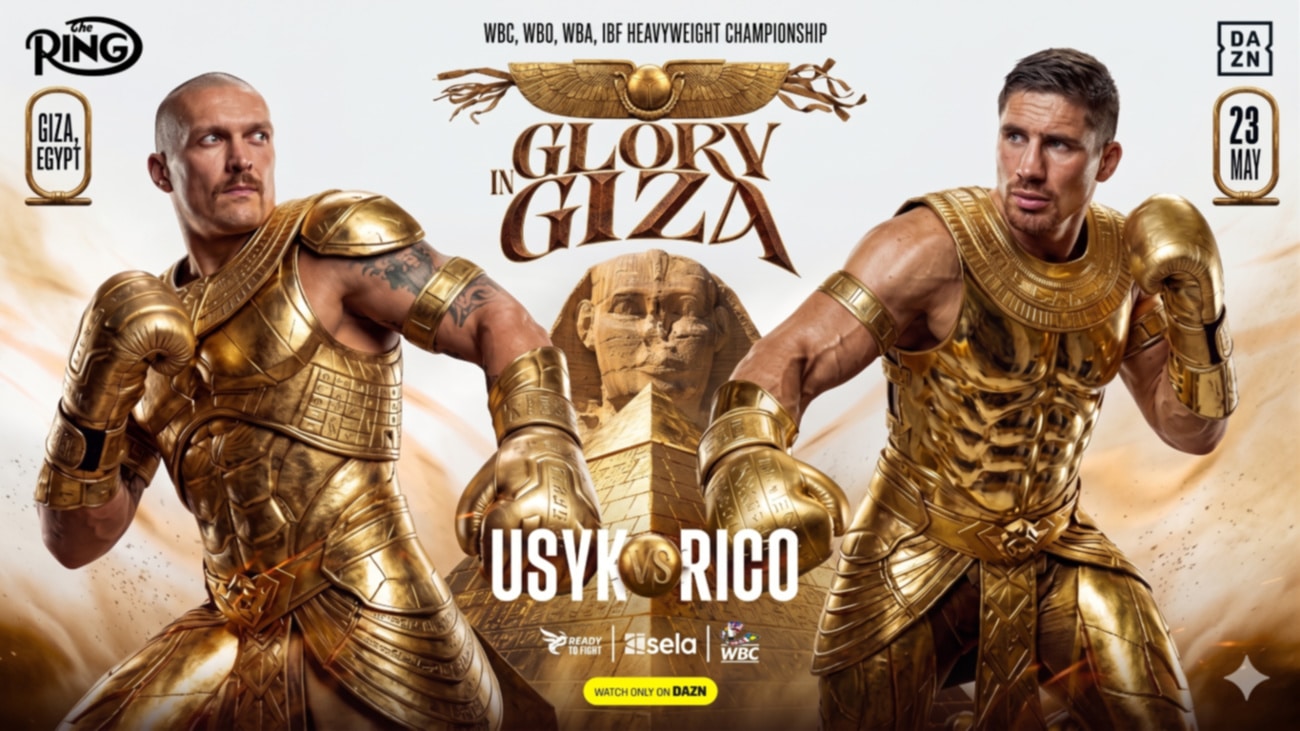


The undercard includes Hamzah Sheeraz against Alem Begic for the vacant WBO super middleweight title. Sheeraz returns following his stoppage win over Edgar Berlanga in his last outing.
Elsewhere, Jack Catterall faces Shakhram Giyasov for the WBA regular title. Frank Sanchez meets Richard Torrez Jr. in a heavyweight bout involving regional belts.
In the women’s division, Mizuki Hiruta defends her Ring and WBO titles against Mai Soliman. Hiruta enters the fight on a six-fight title defense run.
Additional bouts include Daniel Lapin defending intercontinental light heavyweight belts against Benjamin Mendes Tani, and Basem Mamdouh taking on Jamar Talley.
The card also features appearances from Saudi prospect Sultan Almohammed and local Egyptian fighters, with additional matchups expected to be confirmed.
From a traditional U.S. promotional standpoint, Usyk-Rico is a bit of a head-scratcher. Rico Verhoeven is a certified legend in Europe, specifically in the Netherlands, and the kickboxing world, but you’re right that he has zero name recognition with the casual American boxing fan.
Even with Usyk being the unified king, he’s always been more of a “connoisseur’s favorite” than a massive pay-per-view (PPV) engine in the States.
DAZN is reportedly pricing this at $59.99 in the U.S. Asking fans to pay that for a crossover fight where the opponent has one pro boxing match (from 2014) is a big ask. Many are already calling it “high-budget sparring.”
While Verhoeven has reigned over GLORY Kickboxing for over a decade, that doesn’t translate to PPV buys in a different sport. Without a “villain” or a massive American star, the casual audience usually tunes out.
Although the Sheeraz vs. Begic and Sanchez vs. Torrez Jr. are great fights for people like us who live and breathe the sport, they aren’t A-side names that convince a casual fan to drop sixty bucks.
With Turki Alalshikh and the Saudi General Entertainment Authority behind this, the traditional “break-even” math for a boxing card goes out the window.