
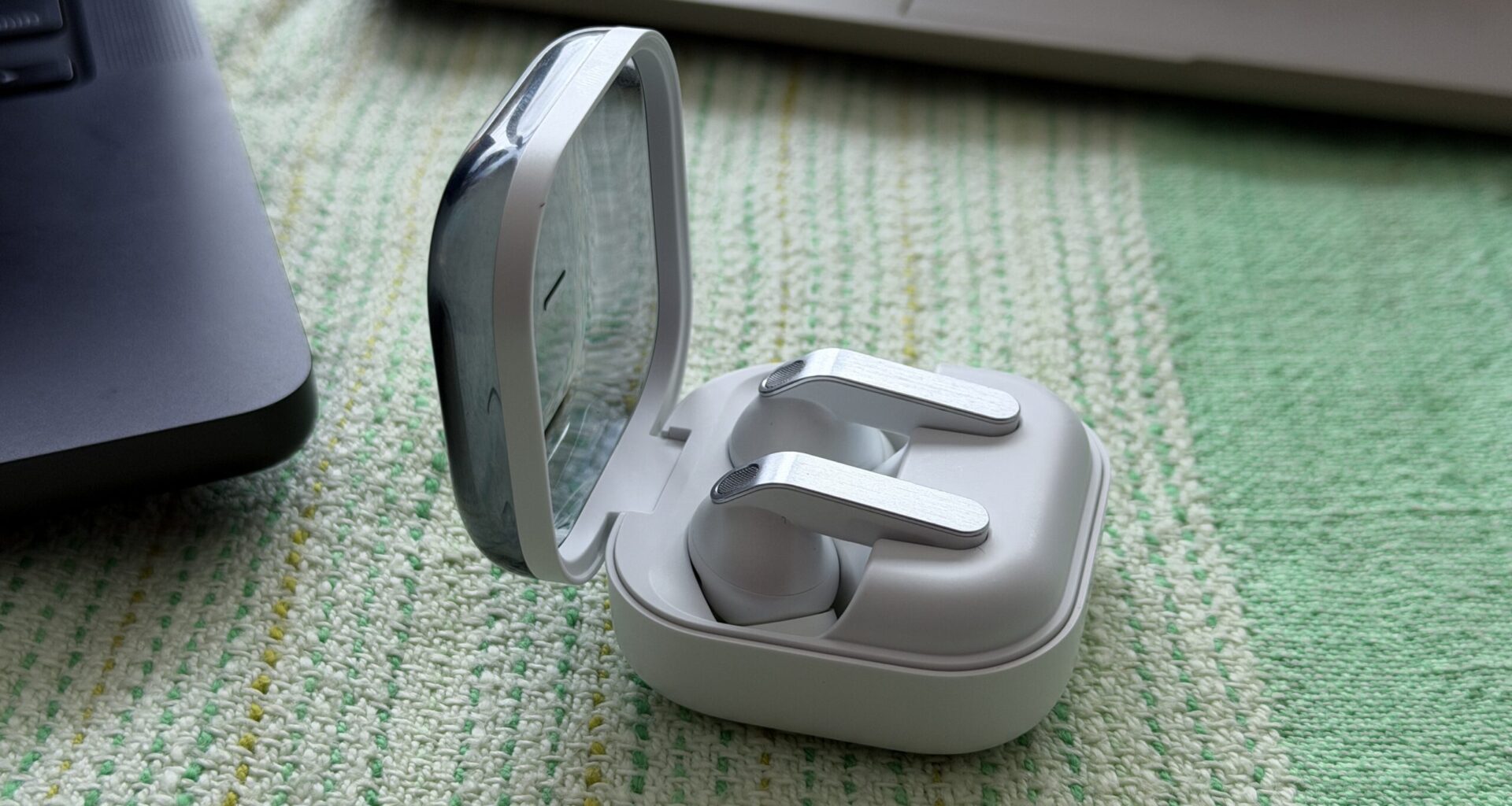
With the launch of the Samsung Galaxy Buds 4 Pro alongside the Galaxy S26 series, it’s clear what Samsung is trying to achieve: they want to stop being the “best alternative” and start being the definitive choice for anyone with a Galaxy device in their life. By pricing these at $399 AUD in Australia, they’ve positioned them directly against the AirPods Pro 3 and the Sony WF-1000XM6.
Samsung is betting big on a “better together” strategy, leaning into One UI 8.5 integration to make the case that if you own a Galaxy S26 Ultra, Galaxy Tab or Galaxy Book laptop, you shouldn’t even be looking at other brands. After just seven days of use, I’m finding that while the ecosystem promises are enticing, the technical execution still has some catching up to do.
Design / Build
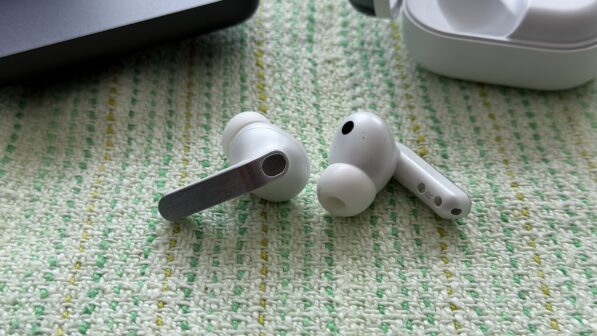
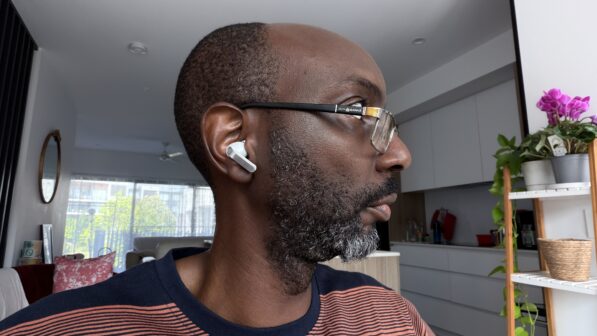
It’s impossible to ignore the elephant in the room: Samsung has clearly looked at the Apple AirPods Pro for inspiration. From the stem-heavy silhouette to the sleek white finish, the DNA is undeniably Apple. However, the silver “blade” accents on the stems give them a futuristic, industrial edge that makes them stand out. Despite the premium look, the buds are remarkably light at just 5.1 grams each. That lightness, combined with the new canal-fit design, makes for a “forget you’re wearing them” experience that I actually prefer over the more pressurized fit of previous generations.
I’ve put the fit to the test during my morning walks, and they’ve stayed surprisingly secure without the need for the bulky wingtips Samsung used to rely on. They’ve also finally bumped the durability up to an IP57 rating, which means they can technically survive a full dunk in fresh water. While I’m not planning on taking them for a swim, having that extra peace of mind during a sweaty workout or a sudden Sydney downpour is a massive value-add for a $400 product.
The move to physical on-stem pinch controls is the most significant upgrade for me. I’ve never been a fan of the finicky touch-tap controls on previous Galaxy Buds, which always registered accidental pauses. These new stems provide a satisfying tactile click that makes the interface feel deliberate. The charging case is equally slick; it’s compact, supports wireless charging, and features a new transparent clamshell lid that lets you see if the buds are docked properly without opening it.
Ecosystem, AI, and Gestures
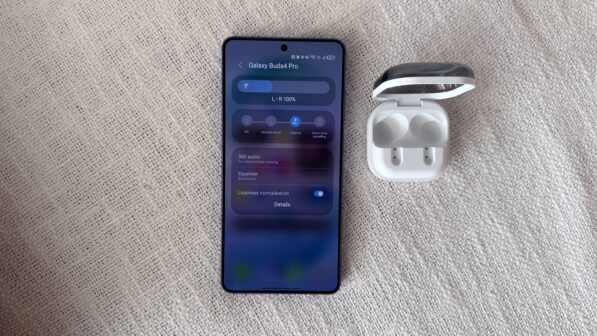
The promises of the “Galaxy Ecosystem” are grand, and when paired with the S26 Ultra, the experience is undeniably smooth. The “Quick Connect” pop-up appeared the second I flipped the lid, and having the noise-canceling toggles baked into the phone’s quick panel is a genuine quality-of-life win.
Where Samsung is trying to out-Apple Apple is in the realm of AI-driven interaction. The new Head Gesture controls are a prime example: you can nod to answer a call or shake your head to dismiss it. While AirPods Pro 3 have similar Siri Interactions, Samsung’s version feels slightly more responsive on the S26 Ultra hardware, though I still find myself looking like a crazy person in public when I’m nodding at thin air. Then there’s the Interpreter Mode integration; seeing live translations piped directly into my ears while the S26 Ultra displays the text for the other person is genuinely impressive tech, even if the translation speed still has that slight, awkward AI lag.
On the Mac, this “magic” understandably fades. You lose the granular app control and the fancy AI gestures, though they held a surprisingly stable connection as standard Bluetooth buds. It’s a reminder that while Samsung is building a walled garden to rival Apple’s, those of us who mix and match our hardware will always feel the friction of those walls.
Audio / ANC Performance
My first week of listening has been a bit of a mixed bag. Out of the box, the audio leans heavily into a boomy, almost muddy bass response that tends to swallow up the finer details. It lacks the surgical clarity I was hoping for in a “Pro” model. That said, Samsung’s 9-band EQ in the app is a lifesaver; after some tinkering, I was able to pull back the low-end and brighten the mids to a point where they sound great.
Compared to Apple’s “Personalized Spatial Audio,” Samsung’s 360 Audio with head tracking is highly competent, but it feels more like a filter applied over the sound rather than a fundamental shift in the soundstage. I also find the fixed head tracking modes on headphones to be super distracting and unrealistic which is no different on the Buds 4 Pro.
The Active Noise Canceling (ANC) is effective enough for a home office, but it isn’t nearly as “dead silent” as the AirPods Pro 3. There is also a very faint, noticeable hiss when no media is playing—a low-level floor noise that is disappointing for 2026. Transparency mode is also just “okay.” While it does the job, it lacks the uncanny natural clarity of the competition, especially if you have your media volume turned up even slightly.
Battery Life / Charging
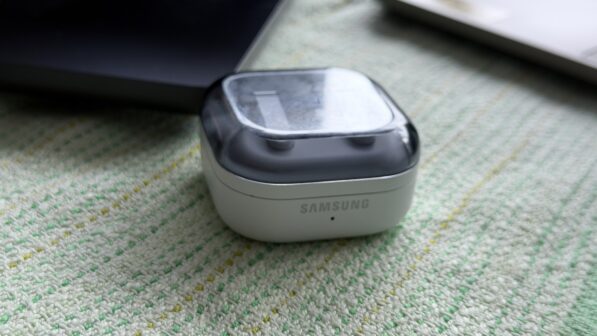
One area where I’ve been genuinely impressed during this first week is the endurance. Samsung promises about 6 hours of playback with ANC on and up to 30 hours total with the case, and so far, those numbers feel conservative. I’ve been using these buds daily for a week—taking calls, listening to podcasts, and using them for work sessions—and I still haven’t had to plug the case into a wall. It’s been a reliable “set and forget” experience. When I eventually do need a top-up, the case supports wireless charging, allowing me to just toss it on my Qi pad or the back of the S26 Ultra if I’m in a pinch.
Verdict
After one week of testing, the Galaxy Buds 4 Pro stand out as Samsung’s best attempt yet at a true AirPods competitor. For a Galaxy user, the seamless integration and physical stem controls make these a joy to use on a functional level. While I wasn’t immediately blown away by the default sound profile, the ability to fine-tune the audio with a proper EQ makes them a capable daily driver. They might not be the undisputed kings of ANC, but as a companion to your Samsung devices, they are a solid, cohesive piece of the puzzle.
Samsung Australia kindly loaned the Galaxy Buds 4 Pro to PowerUp for the purpose of this article.