
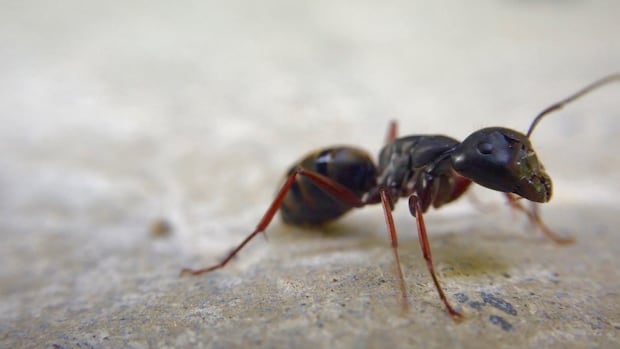
Surgeries have been temporarily suspended in Carman while health-care officials deal with an “ant problem” in the southern Manitoba town’s hospital.
Southern Health, the provincial authority responsible for the delivery of services at Carman Memorial Hospital, said in a statement it’s not known how long the medical procedures will need to be on hold.
Ants have been spotted crawling in the hallways and under doorways throughout the hospital in the town of roughly 3,000, about 75 kilometres southwest of Winnipeg.
Southern Health declined an interview, but said in its statement there’s no risk to safety of staff and patients, or risk of damage the building.
However, the hospital needed to take “precautions to remedy the situation in an effort to avoid any further surgical cancellations and any chance that the ant problem may get worse,” a spokesperson said in a statement.
Surgeries that require a sterile environment have been deferred as a precaution, the health authority said. Any factor that could affect the safety of the operating room, like an ant, would require a suspension.
Scope procedures have not been affected, and work is underway to restore surgical services as soon as possible, Southern Health said.
The health authority didn’t answer CBC’s questions about how many surgeries have or will be affected.
When contacted by CBC, Carman Mayor Brent Owen said he couldn’t comment on the hospital’s situation because he was not aware of it.
A spokesperson for Manitoba Health Minister Uzoma Asagwara told CBC in a statement the issue is “being addressed immediately,” but is causing delays in minor elective procedures. Patients affected are being contacted directly, the statement said.
Emergency care continues as usual, and any patient who requires urgent surgical treatment will be taken to the nearest hospital, the spokesperson’s statement said.
1st detected in 2024
The insects are believed to be pavement ants. The health authority said it is still trying to determine where they are coming from, but they appear to be getting into the operating room under its door.
Ants were first detected in the hospital in August 2024, Southern Health said, but died off within a couple of weeks. They reappeared last summer, and despite control measures, they showed up again this spring, according to the health authority.
Southern Health believes a colony has made a home close to the hospital and the ants are “simply seeking food sources inside buildings as ants are known to do,” the statement said.
However, the problem so far does not amount to an infestation, the health authority said.
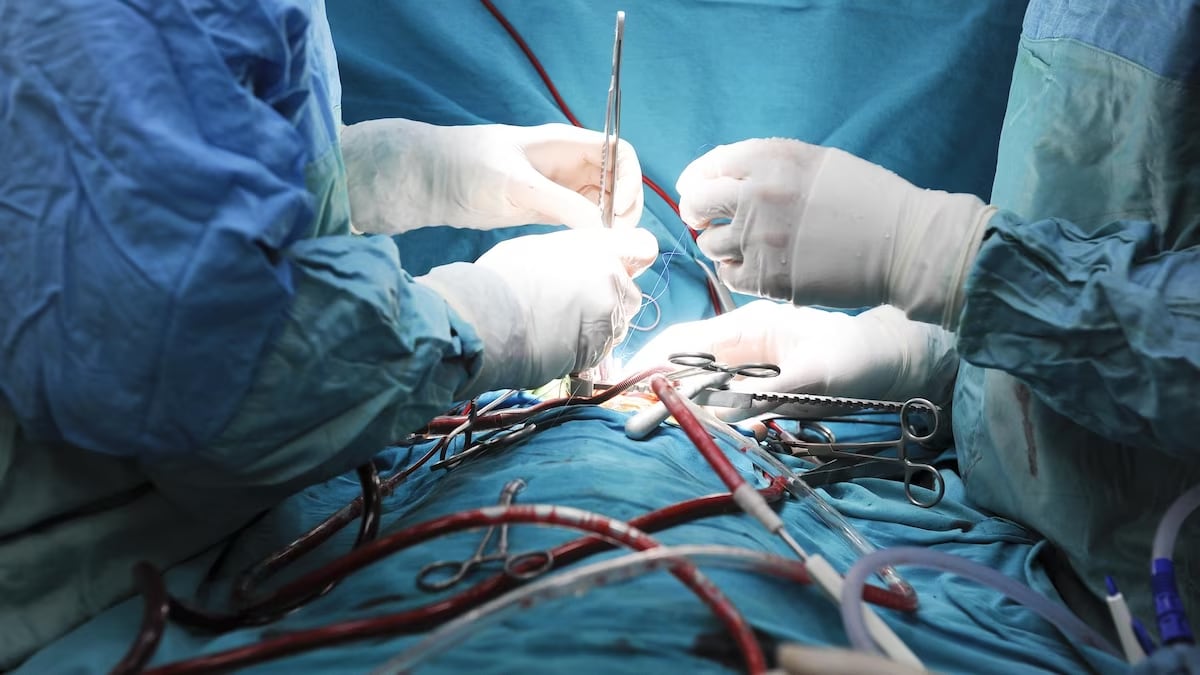 A file photo of a surgery. Southern Health says surgeries, which required a sterile environment, have been suspended at Carman Memorial Hospital as a precaution. (Baranozdemir/Getty Images)
The health authority said more extensive measures are needed to find a long-term solution for the ant problem.
But Rob Higgins, a retired professor of entomology who specializes in ants, said it’s challenging to get rid of the pavement ants.
“For an animal so tiny, they are highly organized and can be quite obvious when they decide that they’re moving in somewhere,” he said.
That species can get underneath a building’s foundation or into its crawl spaces before moving into utility lines indoors in search of food.
That might lead to “hospital staff areas … where people have lunch,” said Higgins.
“You even have a surgical area — the sugar in some intravenous solutions is probably of interest to them.”
‘This is a tough one’
While pavement ants can generally be brought under control for a couple of months at a time, it’s likely the insects will likely show up again, said Higgins.
“I’m really not aware of many places that have successfully permanently dealt with pavement ants,” he said.
That’s in part because ants can’t be controlled in landscaped areas, where they originally spread. During the winter, pavement ants ball up in the soil. As soon as conditions improve, they start looking for new habitats, Higgins said.
If a colony is removed, scout ants from a neighbouring group may find the same space and populate it again.
Southern Health said it has so far cleaned up drains, opened up walls and placed sticky tape around the hospital to find out where the ants are coming from and discourage them from coming into the building.
The health authority didn’t say what long-term measures will be taken.
Higgins said a slow-acting bait that ants can take back to their nest is the general recommendation for dealing with them. But given that colonies will likely reappear, surveillance and treatment are usually needed, he said.
“Certain species of ants are tough, and this is a tough one. You don’t typically have huge numbers of them, but they’re persistent.”