
By Luis Vasconcelos
Date posted: 8 May 2026
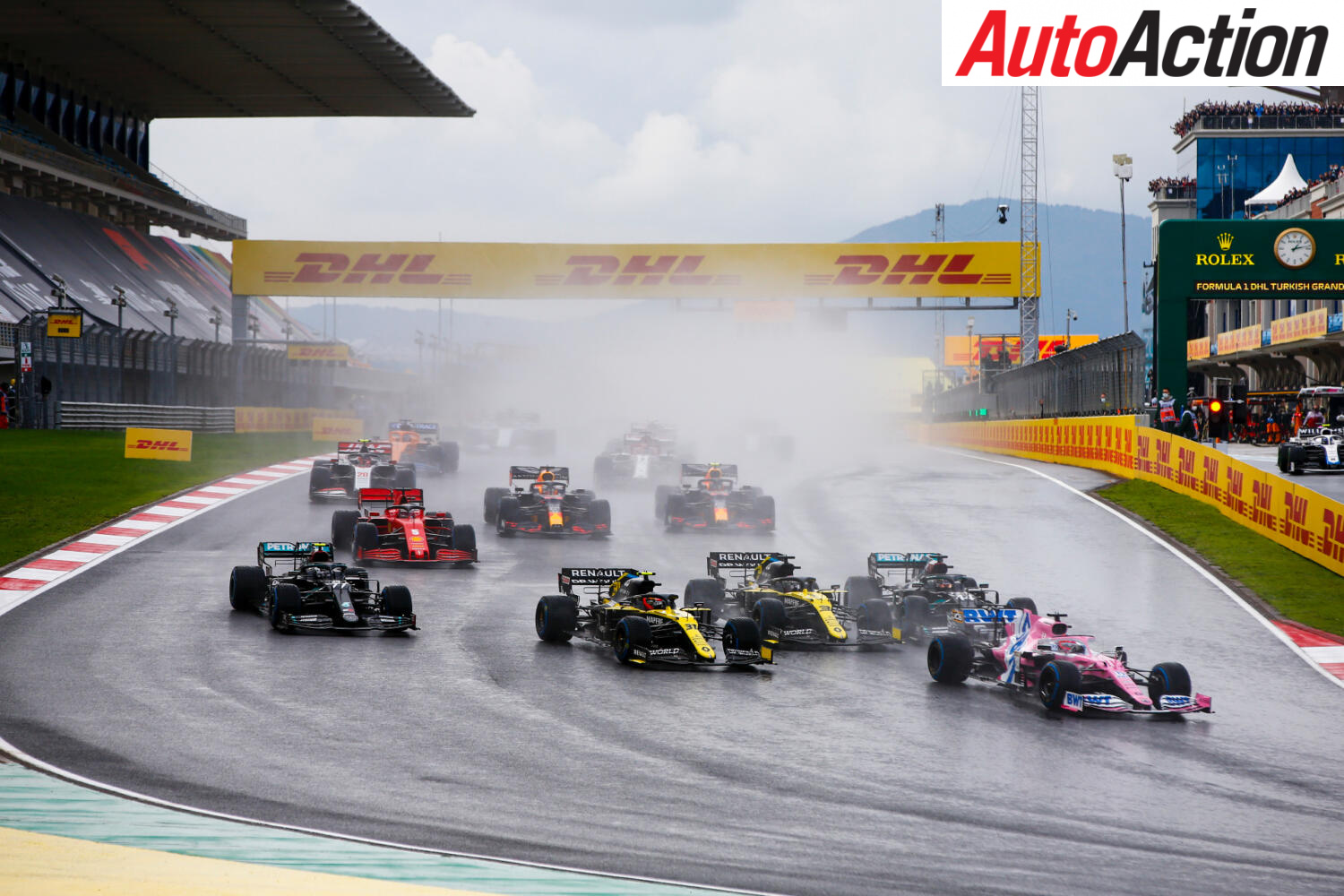
With the announcement the Turkish Grand Prix will be back on the calendar next year, Formula 1 has completed the work necessary to put together the 2027 schedule.
With the Dutch Grand Prix contract not extended after this year’s event and Barcelona entering a rotation system with Spa Francorchamps, the Catalans sitting it out in 2027, the two available slots will be filled by Portimão, on a two-year contract, and Istanbul, with a five-year deal in place.
While there is an impressive number of long-term deals between Formula 1 and grand prix promoters, some of them lasting another 15 years, Stefano Domenicali will be a busy man in the next couple of years as he balances extending existing contracts with securing new venues for the sport.
READ MORE F1 NEWS IN NEW AUTO ACTION PREMIUM HERE
Recently, the Italian explained why it is crucial for Formula 1 to keep a calendar capped at 24 races, saying that “it is relevant that it is not a peak of one year, it’s about how we can have the assurance that when we go to a new place, there is a vision for multiple years to be there and there has to be a relevant market,” adding that “there has to be a long-term business plan for it.”
As previously reported, the current situation sees the Netherlands dropping out of the calendar at the end of this year, with Barcelona joining Spa Francorchamps on a rotation system that will keep both on the calendar until 2032, while Las Vegas’ contract expires at the end of this year. Then, 2028 marks the final year of Portugal, Singapore and Mexico’s contracts, with the Japanese Grand Prix secured until the end of 2029.
Other agreements extend further, with China, Azerbaijan and Brazil locked in until 2030, Italy, Qatar and Abu Dhabi until 2031, Hungary for one year beyond that, while Silverstone and Austin are contracted through to the end of 2034.
Five grands prix have long-term deals running until the end of 2035, Saudi Arabia, Australia, Monaco, Canada and Spain, with Madrid entering the schedule. Bahrain is secured until the end of 2036, while both Miami and Austria have deals in place until the end of 2041.
Those contracts provide Formula 1 and the teams with financial stability, but there is no shortage of countries looking to join the calendar. At the top of the list is Argentina, which has openly pushed to bring its grand prix back from 2028, when upgrades to the Oscar y Juan Galvez circuit are expected to be completed. The Indian government has also stated it is in advanced negotiations to return to the Buddh International Circuit, something Formula 1 has quickly denied.
At every grand prix weekend, delegations from countries without races are present in the paddock, holding meetings with Domenicali and other representatives of the commercial rights holder. However, some bids are clearly more advanced than others. South Africa, for example, has long pushed for a return but has yet to present a sustainable business plan that would convince Formula 1, leaving it a distant possibility.
The same is increasingly true of plans for South Korea to host a race on the streets of Incheon, near the capital and adjacent to the international airport, despite local political backing.
As for the proposed Thailand Grand Prix, ongoing political instability has placed the plan on the backburner, with no guarantee of the long-term certainty required to secure a deal. Neighbouring Malaysia would only consider a return at a significantly reduced hosting fee, making a comeback to Sepang unlikely in the near term.
Other proposals presented to Domenicali, including projects in Egypt, Morocco, Rwanda, Germany and France, have not progressed beyond initial discussions, leaving them as distant prospects rather than immediate additions to the Formula 1 calendar.
The latest edition of Auto Action Premium is out now in a newsagency near you.
On sale at over 2,300 outlets throughout Australia. Find your nearest outlet here
Subscribe to Auto Action Premium magazine here and get your magazine delivered straight to your door!
Read new Auto Action Digital HERE

Recent Storiesarray (
0 =>
WP_Term::__set_state(array(
‘term_id’ => 37,
‘name’ => ‘F1’,
‘slug’ => ‘f1’,
‘term_group’ => 0,
‘term_taxonomy_id’ => 37,
‘taxonomy’ => ‘category’,
‘description’ => ‘An Introduction to Formula One (F1)
Formula One, or F1, is the highest class of single-seater auto racing, governed by the Fédération Internationale de l\’Automobile (FIA) and is owned by Liberty Media. The name “Formula One” refers to the set of rules or formula that all cars and drivers must comply with.
The F1 season consists of a series of races, known as Grands Prix, held on purpose-built circuits or public roads around the world. The results of each race are combined to determine two annual championships: one for drivers and one for constructors (teams).
The history of Formula One can be traced back to the pre-war Grand Prix racing, which featured open-wheel cars with supercharged engines. The first World Championship of Drivers was organised by the FIA in 1950, following the end of World War II. The first race was held at Silverstone, England, and was won by Giuseppe Farina, driving an Alfa Romeo. The first constructors\’ championship was introduced in 1958 and was won by Vanwall.
Formula One has seen many changes and innovations over the years, both in terms of technology and regulations. Some of the most notable developments include the introduction of rear-engined cars in the late 1950s, the use of aerodynamic wings in the late 1960s, the adoption of turbocharged engines in the late 1970s, the emergence of electronic driver aids in the late 1980s, the switch to V10 and then V8 engines in the 1990s and 2000s, and the introduction of hybrid power units in 2014.
Formula One has also produced some of the greatest drivers and rivalries in the history of motorsport. Some of the most famous names include Juan Manuel Fangio, Jim Clark, Jackie Stewart, Niki Lauda, Ayrton Senna, Alain Prost, Michael Schumacher, Lewis Hamilton, and Sebastian Vettel. Some of the most intense battles for the championship have been between Fangio and Stirling Moss in the 1950s, Lauda and James Hunt in the 1970s, Senna and Prost in the late 1980s, Schumacher and Mika Hakkinen in the late 1990s, and Hamilton and Vettel in the 2010s.
Formula One is widely regarded as the pinnacle of motorsport, attracting millions of fans and viewers worldwide. The sport is also a huge business, involving billions of dollars in revenue and expenditure. The teams compete for prize money, sponsorship deals, and media rights, while the drivers earn millions of dollars in salaries and endorsements. The sport is also influenced by politics, regulations, and controversies, such as doping scandals, espionage cases, safety issues, and environmental concerns.
The following is a list of all F1 World Drivers Champions by year, from 1950 to 2020:
1950-1959
1950: Giuseppe Farina (Italy) – Alfa Romeo 158, Alfa Romeo
1951: Juan Manuel Fangio (Argentina) – Alfa Romeo 159, Alfa Romeo
1952: Alberto Ascari (Italy) – Ferrari 500, Ferrari
1953: Alberto Ascari (Italy) – Ferrari 500, Ferrari
1954: Juan Manuel Fangio (Argentina) – Maserati 250F, Maserati / Mercedes-Benz W196, Mercedes-Benz
1955: Juan Manuel Fangio (Argentina) – Mercedes-Benz W196, Mercedes-Benz
1956: Juan Manuel Fangio (Argentina) – Ferrari D50, Ferrari
1957: Juan Manuel Fangio (Argentina) – Maserati 250F, Maserati
1958: Mike Hawthorn (United Kingdom) – Ferrari 246, Ferrari
1959: Jack Brabham (Australia) – Cooper T51, Cooper-Climax
1960-1969
1960: Jack Brabham (Australia) – Cooper T53, Cooper-Climax
1961: Phil Hill (United States) – Ferrari 156, Ferrari
1962: Graham Hill (United Kingdom) – BRM P57, BRM
1963: Jim Clark (United Kingdom) – Lotus 25, Lotus-Climax
1964: John Surtees (United Kingdom) – Ferrari 158, Ferrari
1965: Jim Clark (United Kingdom) – Lotus 33, Lotus-Climax
1966: Jack Brabham (Australia) – Brabham BT19, Brabham-Repco
1967: Denny Hulme (New Zealand) – Brabham BT20, Brabham-Repco
1968: Graham Hill (United Kingdom) – Lotus 49, Lotus-Ford
1969: Jackie Stewart (United Kingdom) – Matra MS80, Matra-Ford
1970-1979
1970: Jochen Rindt (Austria) – Lotus 72, Lotus-Ford
1971: Jackie Stewart (United Kingdom) – Tyrrell 003, Tyrrell-Ford
1972: Emerson Fittipaldi (Brazil) – Lotus 72D, Lotus-Ford
1973: Jackie Stewart (United Kingdom) – Tyrrell 006, Tyrrell-Ford
1974: Emerson Fittipaldi (Brazil) – McLaren M23, McLaren-Ford
1975: Niki Lauda (Austria) – Ferrari 312T, Ferrari
1976: James Hunt (United Kingdom) – McLaren M23, McLaren-Ford
1977: Niki Lauda (Austria) – Ferrari 312T2, Ferrari
1978: Mario Andretti (United States) – Lotus 79, Lotus-Ford
1979: Jody Scheckter (South Africa) – Ferrari 312T4, Ferrari
1980-1989
1980: Alan Jones (Australia) – Williams FW07B, Williams-Ford
1981: Nelson Piquet (Brazil) – Brabham BT49C, Brabham-Ford
1982: Keke Rosberg (Finland) – Williams FW08, Williams-Ford
1983: Nelson Piquet (Brazil) – Brabham BT52, Brabham-BMW
1984: Niki Lauda (Austria) – McLaren MP4/2, McLaren-TAG
1985: Alain Prost (France) – McLaren MP4/2B, McLaren-TAG
1986: Alain Prost (France) – McLaren MP4/2C, McLaren-TAG
1987: Nelson Piquet (Brazil) – Williams FW11B, Williams-Honda
1988: Ayrton Senna (Brazil) – McLaren MP4/4, McLaren-Honda
1989: Alain Prost (France) – McLaren MP4/5, McLaren-Honda
1990-1999
1990: Ayrton Senna (Brazil) – McLaren MP4/5B, McLaren-Honda
1991: Ayrton Senna (Brazil) – McLaren MP4/6, McLaren-Honda
1992: Nigel Mansell (United Kingdom) – Williams FW14B, Williams-Renault
1993: Alain Prost (France) – Williams FW15C, Williams-Renault
1994: Michael Schumacher (Germany) – Benetton B194, Benetton-Ford
1995: Michael Schumacher (Germany) – Benetton B195, Benetton-Renault
1996: Damon Hill (United Kingdom) – Williams FW18, Williams-Renault
1997: Jacques Villeneuve (Canada) – Williams FW19, Williams-Renault
1998: Mika Häkkinen (Finland) – McLaren MP4/13, McLaren-Mercedes
1999: Mika Häkkinen (Finland) – McLaren MP4/14, McLaren-Mercedes
2000-2009
2000: Michael Schumacher (Germany) – Ferrari F1-2000, Ferrari
2001: Michael Schumacher (Germany) – Ferrari F2001, Ferrari
2002: Michael Schumacher (Germany) – Ferrari F2002, Ferrari
2003: Michael Schumacher (Germany) – Ferrari F2003-GA, Ferrari
2004: Michael Schumacher (Germany) – Ferrari F2004, Ferrari
2005: Fernando Alonso (Spain) – Renault R25, Renault
2006: Fernando Alonso (Spain) – Renault R26, Renault
2007: Kimi Räikkönen (Finland) – Ferrari F2007, Ferrari
2008: Lewis Hamilton (United Kingdom) – McLaren MP4-23, McLaren-Mercedes
2009: Jenson Button (United Kingdom) – Brawn BGP 001, Brawn-Mercedes
2010-2020
2010: Sebastian Vettel (Germany) – Red Bull RB6, Red Bull-Renault
2011: Sebastian Vettel (Germany) – Red Bull RB7, Red Bull-Renault
2012: Sebastian Vettel (Germany) – Red Bull RB8, Red Bull-Renault
2013: Sebastian Vettel (Germany) – Red Bull RB9, Red Bull-Renault
2014: Lewis Hamilton (United Kingdom) – Mercedes F1 W05 Hybrid, Mercedes
2015: Lewis Hamilton (United Kingdom) – Mercedes F1 W06 Hybrid, Mercedes
2016: Nico Rosberg (Germany) – Mercedes F1 W07 Hybrid, Mercedes
2017: Lewis Hamilton (United Kingdom) – Mercedes F1 W08 EQ Power+, Mercedes
2018: Lewis Hamilton (United Kingdom) – Mercedes F1 W09 EQ Power+, Mercedes
2019: Lewis Hamilton (United Kingdom) – Mercedes F1 W10 EQ Power+, Mercedes
2020: Lewis Hamilton (United Kingdom) – Mercedes F1 W11 EQ Power+, Mercedes
2021-
2021: Max Verstappen (Netherlands) – Red Bull RB16B, Honda
2022: Max Verstappen (Netherlands) – Red Bull RB18, Red Bull Power Trains Honda
2023: Max Verstappen (Netherlands) – Red Bull RB19, Red Bull Power Trains Honda
2024: Max Verstappen (Netherlands) – Red Bull RB20, Red Bull Power Trains Honda’,
‘parent’ => 660,
‘count’ => 3204,
‘filter’ => ‘raw’,
‘cat_ID’ => 37,
‘category_count’ => 3204,
‘category_description’ => ‘An Introduction to Formula One (F1)
Formula One, or F1, is the highest class of single-seater auto racing, governed by the Fédération Internationale de l\’Automobile (FIA) and is owned by Liberty Media. The name “Formula One” refers to the set of rules or formula that all cars and drivers must comply with.
The F1 season consists of a series of races, known as Grands Prix, held on purpose-built circuits or public roads around the world. The results of each race are combined to determine two annual championships: one for drivers and one for constructors (teams).
The history of Formula One can be traced back to the pre-war Grand Prix racing, which featured open-wheel cars with supercharged engines. The first World Championship of Drivers was organised by the FIA in 1950, following the end of World War II. The first race was held at Silverstone, England, and was won by Giuseppe Farina, driving an Alfa Romeo. The first constructors\’ championship was introduced in 1958 and was won by Vanwall.
Formula One has seen many changes and innovations over the years, both in terms of technology and regulations. Some of the most notable developments include the introduction of rear-engined cars in the late 1950s, the use of aerodynamic wings in the late 1960s, the adoption of turbocharged engines in the late 1970s, the emergence of electronic driver aids in the late 1980s, the switch to V10 and then V8 engines in the 1990s and 2000s, and the introduction of hybrid power units in 2014.
Formula One has also produced some of the greatest drivers and rivalries in the history of motorsport. Some of the most famous names include Juan Manuel Fangio, Jim Clark, Jackie Stewart, Niki Lauda, Ayrton Senna, Alain Prost, Michael Schumacher, Lewis Hamilton, and Sebastian Vettel. Some of the most intense battles for the championship have been between Fangio and Stirling Moss in the 1950s, Lauda and James Hunt in the 1970s, Senna and Prost in the late 1980s, Schumacher and Mika Hakkinen in the late 1990s, and Hamilton and Vettel in the 2010s.
Formula One is widely regarded as the pinnacle of motorsport, attracting millions of fans and viewers worldwide. The sport is also a huge business, involving billions of dollars in revenue and expenditure. The teams compete for prize money, sponsorship deals, and media rights, while the drivers earn millions of dollars in salaries and endorsements. The sport is also influenced by politics, regulations, and controversies, such as doping scandals, espionage cases, safety issues, and environmental concerns.
The following is a list of all F1 World Drivers Champions by year, from 1950 to 2020:
1950-1959
1950: Giuseppe Farina (Italy) – Alfa Romeo 158, Alfa Romeo
1951: Juan Manuel Fangio (Argentina) – Alfa Romeo 159, Alfa Romeo
1952: Alberto Ascari (Italy) – Ferrari 500, Ferrari
1953: Alberto Ascari (Italy) – Ferrari 500, Ferrari
1954: Juan Manuel Fangio (Argentina) – Maserati 250F, Maserati / Mercedes-Benz W196, Mercedes-Benz
1955: Juan Manuel Fangio (Argentina) – Mercedes-Benz W196, Mercedes-Benz
1956: Juan Manuel Fangio (Argentina) – Ferrari D50, Ferrari
1957: Juan Manuel Fangio (Argentina) – Maserati 250F, Maserati
1958: Mike Hawthorn (United Kingdom) – Ferrari 246, Ferrari
1959: Jack Brabham (Australia) – Cooper T51, Cooper-Climax
1960-1969
1960: Jack Brabham (Australia) – Cooper T53, Cooper-Climax
1961: Phil Hill (United States) – Ferrari 156, Ferrari
1962: Graham Hill (United Kingdom) – BRM P57, BRM
1963: Jim Clark (United Kingdom) – Lotus 25, Lotus-Climax
1964: John Surtees (United Kingdom) – Ferrari 158, Ferrari
1965: Jim Clark (United Kingdom) – Lotus 33, Lotus-Climax
1966: Jack Brabham (Australia) – Brabham BT19, Brabham-Repco
1967: Denny Hulme (New Zealand) – Brabham BT20, Brabham-Repco
1968: Graham Hill (United Kingdom) – Lotus 49, Lotus-Ford
1969: Jackie Stewart (United Kingdom) – Matra MS80, Matra-Ford
1970-1979
1970: Jochen Rindt (Austria) – Lotus 72, Lotus-Ford
1971: Jackie Stewart (United Kingdom) – Tyrrell 003, Tyrrell-Ford
1972: Emerson Fittipaldi (Brazil) – Lotus 72D, Lotus-Ford
1973: Jackie Stewart (United Kingdom) – Tyrrell 006, Tyrrell-Ford
1974: Emerson Fittipaldi (Brazil) – McLaren M23, McLaren-Ford
1975: Niki Lauda (Austria) – Ferrari 312T, Ferrari
1976: James Hunt (United Kingdom) – McLaren M23, McLaren-Ford
1977: Niki Lauda (Austria) – Ferrari 312T2, Ferrari
1978: Mario Andretti (United States) – Lotus 79, Lotus-Ford
1979: Jody Scheckter (South Africa) – Ferrari 312T4, Ferrari
1980-1989
1980: Alan Jones (Australia) – Williams FW07B, Williams-Ford
1981: Nelson Piquet (Brazil) – Brabham BT49C, Brabham-Ford
1982: Keke Rosberg (Finland) – Williams FW08, Williams-Ford
1983: Nelson Piquet (Brazil) – Brabham BT52, Brabham-BMW
1984: Niki Lauda (Austria) – McLaren MP4/2, McLaren-TAG
1985: Alain Prost (France) – McLaren MP4/2B, McLaren-TAG
1986: Alain Prost (France) – McLaren MP4/2C, McLaren-TAG
1987: Nelson Piquet (Brazil) – Williams FW11B, Williams-Honda
1988: Ayrton Senna (Brazil) – McLaren MP4/4, McLaren-Honda
1989: Alain Prost (France) – McLaren MP4/5, McLaren-Honda
1990-1999
1990: Ayrton Senna (Brazil) – McLaren MP4/5B, McLaren-Honda
1991: Ayrton Senna (Brazil) – McLaren MP4/6, McLaren-Honda
1992: Nigel Mansell (United Kingdom) – Williams FW14B, Williams-Renault
1993: Alain Prost (France) – Williams FW15C, Williams-Renault
1994: Michael Schumacher (Germany) – Benetton B194, Benetton-Ford
1995: Michael Schumacher (Germany) – Benetton B195, Benetton-Renault
1996: Damon Hill (United Kingdom) – Williams FW18, Williams-Renault
1997: Jacques Villeneuve (Canada) – Williams FW19, Williams-Renault
1998: Mika Häkkinen (Finland) – McLaren MP4/13, McLaren-Mercedes
1999: Mika Häkkinen (Finland) – McLaren MP4/14, McLaren-Mercedes
2000-2009
2000: Michael Schumacher (Germany) – Ferrari F1-2000, Ferrari
2001: Michael Schumacher (Germany) – Ferrari F2001, Ferrari
2002: Michael Schumacher (Germany) – Ferrari F2002, Ferrari
2003: Michael Schumacher (Germany) – Ferrari F2003-GA, Ferrari
2004: Michael Schumacher (Germany) – Ferrari F2004, Ferrari
2005: Fernando Alonso (Spain) – Renault R25, Renault
2006: Fernando Alonso (Spain) – Renault R26, Renault
2007: Kimi Räikkönen (Finland) – Ferrari F2007, Ferrari
2008: Lewis Hamilton (United Kingdom) – McLaren MP4-23, McLaren-Mercedes
2009: Jenson Button (United Kingdom) – Brawn BGP 001, Brawn-Mercedes
2010-2020
2010: Sebastian Vettel (Germany) – Red Bull RB6, Red Bull-Renault
2011: Sebastian Vettel (Germany) – Red Bull RB7, Red Bull-Renault
2012: Sebastian Vettel (Germany) – Red Bull RB8, Red Bull-Renault
2013: Sebastian Vettel (Germany) – Red Bull RB9, Red Bull-Renault
2014: Lewis Hamilton (United Kingdom) – Mercedes F1 W05 Hybrid, Mercedes
2015: Lewis Hamilton (United Kingdom) – Mercedes F1 W06 Hybrid, Mercedes
2016: Nico Rosberg (Germany) – Mercedes F1 W07 Hybrid, Mercedes
2017: Lewis Hamilton (United Kingdom) – Mercedes F1 W08 EQ Power+, Mercedes
2018: Lewis Hamilton (United Kingdom) – Mercedes F1 W09 EQ Power+, Mercedes
2019: Lewis Hamilton (United Kingdom) – Mercedes F1 W10 EQ Power+, Mercedes
2020: Lewis Hamilton (United Kingdom) – Mercedes F1 W11 EQ Power+, Mercedes
2021-
2021: Max Verstappen (Netherlands) – Red Bull RB16B, Honda
2022: Max Verstappen (Netherlands) – Red Bull RB18, Red Bull Power Trains Honda
2023: Max Verstappen (Netherlands) – Red Bull RB19, Red Bull Power Trains Honda
2024: Max Verstappen (Netherlands) – Red Bull RB20, Red Bull Power Trains Honda’,
‘cat_name’ => ‘F1’,
‘category_nicename’ => ‘f1’,
‘category_parent’ => 660,
)),
1 =>
WP_Term::__set_state(array(
‘term_id’ => 11,
‘name’ => ‘Latest News’,
‘slug’ => ‘latest-news’,
‘term_group’ => 0,
‘term_taxonomy_id’ => 11,
‘taxonomy’ => ‘category’,
‘description’ => ”,
‘parent’ => 0,
‘count’ => 18067,
‘filter’ => ‘raw’,
‘cat_ID’ => 11,
‘category_count’ => 18067,
‘category_description’ => ”,
‘cat_name’ => ‘Latest News’,
‘category_nicename’ => ‘latest-news’,
‘category_parent’ => 0,
)),
2 =>
WP_Term::__set_state(array(
‘term_id’ => 2029,
‘name’ => ‘ZZZ-Email’,
‘slug’ => ’email’,
‘term_group’ => 0,
‘term_taxonomy_id’ => 2029,
‘taxonomy’ => ‘category’,
‘description’ => ”,
‘parent’ => 2031,
‘count’ => 8629,
‘filter’ => ‘raw’,
‘cat_ID’ => 2029,
‘category_count’ => 8629,
‘category_description’ => ”,
‘cat_name’ => ‘ZZZ-Email’,
‘category_nicename’ => ’email’,
‘category_parent’ => 2031,
)),
3 =>
WP_Term::__set_state(array(
‘term_id’ => 2031,
‘name’ => ‘ZZZ-RSSFeeds’,
‘slug’ => ‘zzz-rssfeeds’,
‘term_group’ => 0,
‘term_taxonomy_id’ => 2031,
‘taxonomy’ => ‘category’,
‘description’ => ”,
‘parent’ => 0,
‘count’ => 7987,
‘filter’ => ‘raw’,
‘cat_ID’ => 2031,
‘category_count’ => 7987,
‘category_description’ => ”,
‘cat_name’ => ‘ZZZ-RSSFeeds’,
‘category_nicename’ => ‘zzz-rssfeeds’,
‘category_parent’ => 0,
)),
)