
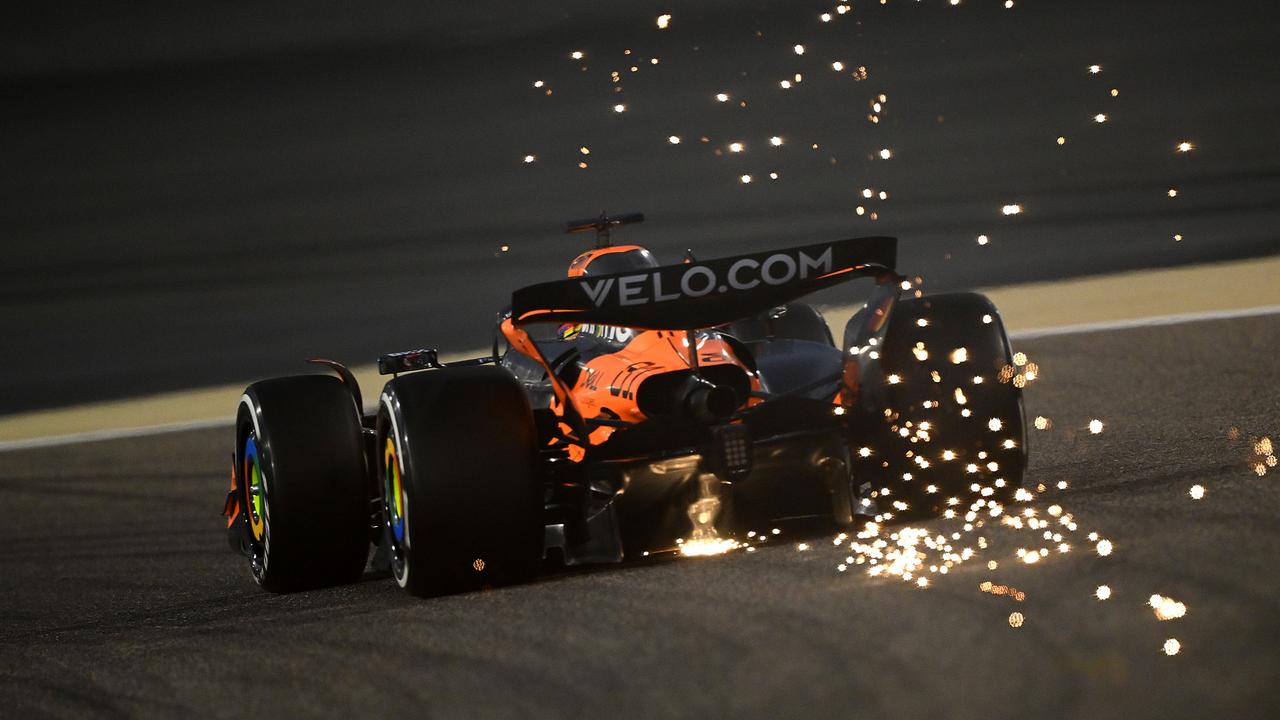
Formula 1 is not ruling out reinstating one of either the Bahrain or Saudi Arabian grands prix later this year despite ongoing tensions in the Middle East.
The Bahrain and Saudi Arabian rounds, originally scheduled in April, were called off in the middle of March due to the war, which began on 28 February with American and Israeli strikes on Iran.
Formula 1 elected not to replace either event, with the cost of a hastily organised grand prix unlikely to be offset by hosting fees, leaving a four-weekend gap in the slimmed-down 22-round schedule.

Fox Sports, available on Kayo Sports, is the only place to watch every practice, qualifying session and race in the 2026 FIA Formula One World Championship™ LIVE in 4K. New to Kayo? Join now and get your first month for just $1.
The sport took an economic hit from the decision, with financial services firm Guggenheim Partners reporting the two races contributed around US$115 million (A$159.4 million) annually to F1 coffers.
But F1’s carefully worded March statement never described either race as cancelled, and Liberty Media CEO Derek Chang says adding one back into the calendar remains a possibility if tensions ease later in the year.
“The wellbeing of everyone in F1 comes first, and we always manage the calendar with that principle in mind,” he said during an investor call to discuss recent financial results.
“While that creates a near-term financial impact, it does not change our confidence in the long-term trajectory of the sport.
“We will be thoughtful in our approach, and we will continuously evaluate the calendar this year.
“It might be possible to reschedule one race toward the end of the season.”
F1 CEO Stefano Domenicali hinted to Bloomberg late last month that the sport “may recover one” race but added that it would be “quite difficult” because the calendar “is already quite full”.
PIT TALK PODCAST: Andrea Kimi Antonelli wins again to extend his championship lead to 20 points on a tough day for teammate George Russell, and FIA president Muhammed Ben Sulayem says Formula 1 will return to V8 engines by 2031 at the latest. Listen to Pit Talk here.
There are only two narrow windows in which arranging a revived Middle Eastern grand prix could be achievable.
The first is on the weekend of 2–4 October between the Azerbaijan and Singapore grands prix. These two races have been held on back-to-back weekends in previous years, with travel between them often involving a stop in the Middle East, adding some logic to the logistics.
Aiding the sport is that this year’s Azerbaijan Grand Prix will also take place on a Saturday owing to a local holiday on the Sunday, easing logistical pressures somewhat.
However, it would mean creating a triple-header of three consecutive races, meaning three triple-headers to end the season — or nine grands prix in 11 weeks — at what is already the most taxing time in the season for both drivers and team staff.
The only other option is to create a run of four consecutive races to end the season either by shifting the Abu Dhabi Grand Prix one week later to create a gap on 4–6 December or by making either Bahrain or Saudi Arabia the season-ending race on 11–13 December.
Formula 1 has never held four grands prix in succession.
Complicating this option is that Abu Dhabi pays to host the final round of the season, but shifting it by a week would affect fans who have already bought tickets as well as the musical acts already booked for the weekend.
Either option would mean the final race of the season takes place on 13 December. With a post-season test also on the schedule, teams would be unlikely to make it back to their European bases with all their equipment accounted for much more than week before Christmas, with the regulations requiring teams to down tools for a mandatory break starting on 24 December.
If space can be made in the calendar and Formula 1 is committed to reviving one of the races, Bahrain is thought more likely to get the nod given its permanent-circuit status and Formula 1’s intimate familiarity with the venue and its logistical demands.
Saudi Arabia’s Jeddah, however, is not subject to the same travel restrictions as Bahrain, and it had been reported that local organisers were more determined to try to hold their April place on the calendar given the city has yet to be drawn into the conflict. Its street circuit is also practically permanent, being cordoned off during the year.
McLaren are back!? 1-2 sprint triumph | 00:46
BUT HOW LIKELY IS IT?
According to The Race, teams were briefed on the sport’s thinking on shuffling the final part of the calendar to accommodate one of the called-off races.
However, no decision has been made given the continuing hostilities in the Middle East, and a decision either way likely does not need to be made before the mid-season break.
With the break slated for August, there would be precious little time to slot a race into early October, which could make a late inclusion more likely.
That said, if the situation in the Middle East remains unchanged, Formula 1 will be forced to contemplate the opposite problem of having to call off the Qatar and Abu Dhabi grands prix as well.
Both countries, as well as Bahrain and parts of Saudi Arabia, are subject to travel advisories by the UK foreign office, which advises against all but essential travel.
Though this is one step down from the more severe ‘advise against all travel’ designation, it appears roughly equivalent to Australia’s ‘do not travel’ label. The Australian government advises not to travel to Qatar, Abu Dhabi and Bahrain and to reconsider travel to Saudi Arabia.
These designations normally affect insurance coverage, which will be fundamental to the decision.
Insurance is also voided in the event of war, which could preclude a race from being held even in Jeddah, where warnings are less severe.
F1 is based in the United Kingdom and will follow UK advice.
Unlike in April, when Formula 1 was happy to slim down the calendar and take the financial hit, the sport would be unwilling to see the schedule reduced to 20 rounds and the season end early.
There could also be perceptions of sporting integrity issues if a potentially close-run championship is decided by the calling-off of races and the subsequent reduction in available points.
“We’re evaluating all the various alternatives and trying to make decision in a timely fashion that will give us as much lead time to the extent we make changes and make adjustments,” Chang said. “[Domenicali] and his team are working overtime trying to keep up.”
Domenicali wouldn’t be drawn on speculation that F1 might end the season with a Las Vegas double-header — the final round before Qatar and Abu Dhabi and a race organised by Formula 1 itself — nor on any other possibility, but the CEO told the investor call that alternatives were being prepared in the event more races had to be called off.
“To be very direct, to avoid any speculation, the only thing I can say is that we have plans, hopefully not to be applied, because we really hope that the situation for the world, not only for the racing, will go back to a normal situation,” he said.
“We have plans of course. The lead time, or the cut off really, is different [for whether] we can eventually recover what has not been run in April versus what could eventually happen or not happen at the end of November and beginning of December [with Qatar and Abu Dhabi].
“We are of course aligning with the teams and with the promoters, because that’s something that has a big chain of reaction.
“In due time we will keep everyone informed, but I hope you understand if we just say something, that will be speculation that we want to avoid, because as I said, the first hope is to make sure that we go back to the place that we should be.”