
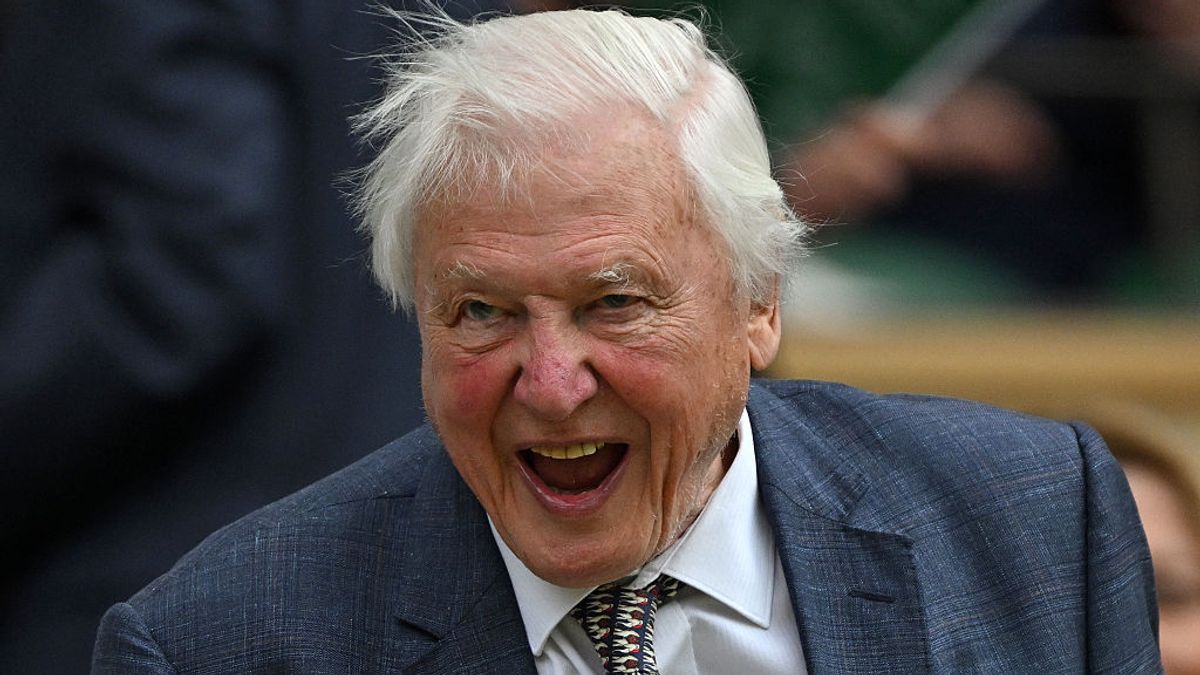
He may be known across the world for his work as a natural historian, conservationist and all round national treasure to the UK, but Sir David Attenborough also left a lasting legacy on rugby league. As the popular British documentarian celebrates his 100th birthday, we look at the impact he made on the sport of rugby league.
Back in 1965 the RFL and the BBC came together and agreed to showcase a midweek rugby league tournament. Getting rugby league on the TV was key for the launch of BBC2 in the north of England, with then controller of BBC2 David Attenborough, the man behind the idea.
Attenborough knew the draw rugby league on television in the north of England would have, and was the driving force in getting the tournament off the ground with the RFL. As director of programming at the BBC and the controller of BBC2, he would also be responsible for commissioning programmes such as Monty Python’s Flying Circus, The Old Grey Whistle Test and for bringing snooker to BBC2 with the advent of colour television.
The BBC2 Floodlit Trophy picked up on an old eight team format, with ITV previously having aired the Independent Television Floodlit Trophy in the 1955-56 season. In the 1965-66 season the BBC version was launched, becoming a staple of the schedule for 15 years.
Played during the early part of the season, each week one match on a Tuesday night would be selected for broadcast, with the second half of the game shown live on BBC2. It was quite common in those days, and indeed through to the late 1980s, for television channels to show the second half of live sporting events rather than take out the full schedule as they do now.
The first-ever eight team tournament featured Castleford, Leeds, Leigh, Oldham, St Helens, Swinton, Warrington and Widnes, with Castleford winning the first of their record four trophies in the competition.
Those teams were all chosen for having floodlights, with the exception of Leeds, who rushed to install them for the following year. At that time many grounds didn’t have floodlights, but the introduction of the competition helped towards changing that. It was not essential to have floodlights however, despite the name of the competition. Non televised matches were played at various times and often on an afternoon, with only the TV game of the week under floodlights on a Tuesday evening.
As well as helping to drive the quality and presence of floodlights, the competition was used to trial new rules with the four tackles and then a scrum or handover rule introduced first in the Floodlit Trophy in October 1966, before becoming fully implemented across the British game two months later. Six years later it would be changed to the six tackle rule we have today.
Due to cutbacks at the BBC, the final competition was held in the 1979-80 season, with Hull FC winning the last-ever trophy by beating great rivals Hull KR the week before Christmas.
For 15 years it was a popular competition that brought rugby league to millions of viewers on the BBC. All thanks to Sir David Attenborough.