
Hey Subscribers,
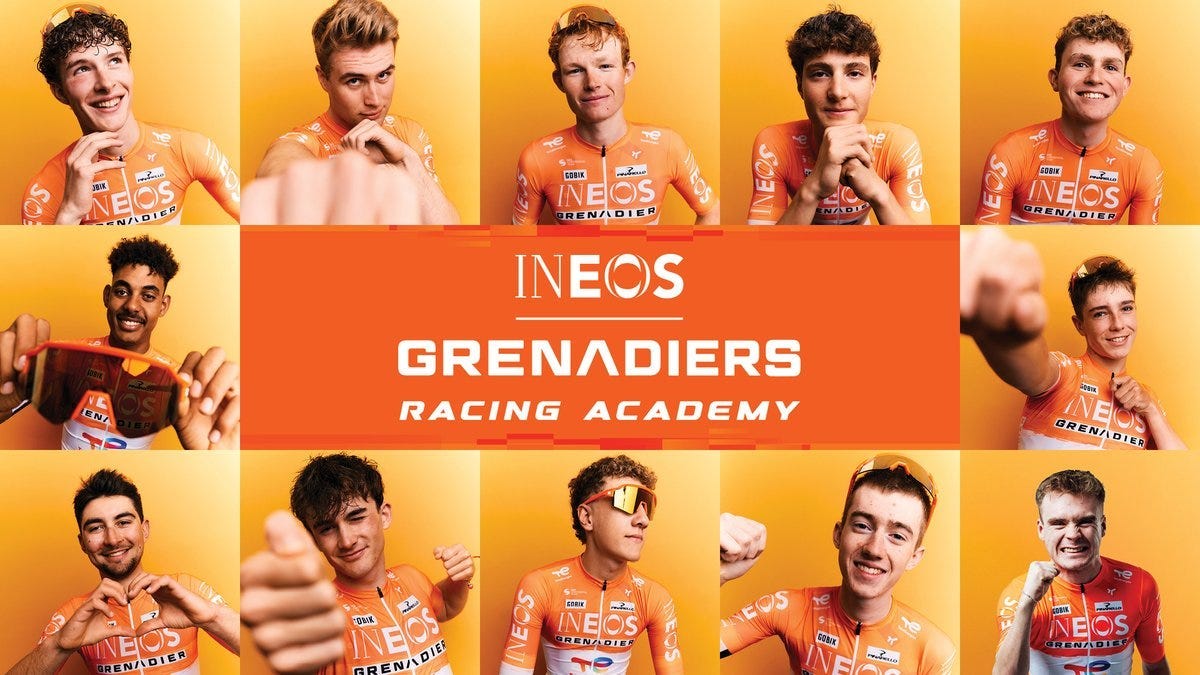
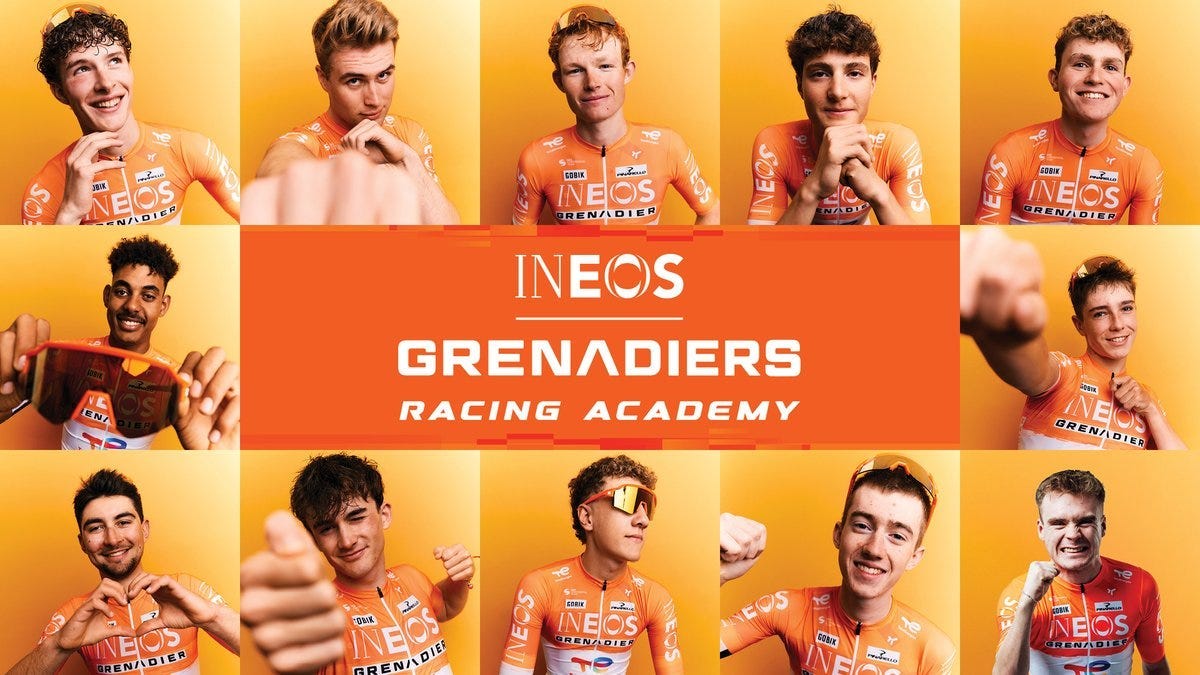
Giro d’Italia coverage will resume later today with a detailed Benson Bulletin from stage 1, and I’ll be on the ground at the race from Monday onwards, but I do have this exclusive interview with Simon Watts from Ineos Grenadiers Racing Academy from the Tour de Bretagne to kick start today’s content.
We talked about the team’s initial setup, how riders are recruited, how the Academy ties into the WorldTour team’s ambitions to win the Tour de France in the future, and how involved the likes of Dave Brailsford and Geraint Thomas are in the development programme.
If you’d like to read more from this series, please check out the following features:
Cycling transfers: Inside EF Education-EasyPost’s transfer strategy 🇺🇸
Cycling transfers: Inside Tudor Pro Cycling’s recruitment strategy🇨🇭
Cycling transfers: Inside Soudal Quick-Step’s recruitment strategy 🇧🇪
Twitter 🟢 — Instagram 🔴 — Bluesky 🔵
Just a reminder, there’s a whopping 25% sale on annual subscriptions right now, so for less than £1 a week you can read all the upcoming Giro content, race analysis and breaking transfer news. Just click on the link below.
Daniel 🫶
Daniel Benson: I have a running series in which I talk to teams about how they recruit, what processes they go through, and obviously, this is a first-year venture, so how did you go about your strategy around recruitment?
Simon Watts: We are in a fairly advantaged position regarding our performance structure. We’ve got a really close-knit team that invests a lot of time in the conversations that we have week to week, and we’ve got a really good meeting structure through each of our performance teams. We also have a brilliant set of staff who are so passionate about sport and need holding back in terms of what they’ve seen, what they’ve heard, and their network of links. As much as we can have a formalised scouting structure, there’s also a need to have the informal stuff, so while you raise a good point about this being new, we had a great base of intellect and experience that was coming into that process.
Also, on the back of my previous role with the team and projects that finished towards the end of 2024, there was really good foresight in terms of this project. So while 2026 is our first year of running the Academy team, it was well over a year in the making to form that plan and the protocols around it.
So this time last year, I had a really good chance to get out and about at races and follow up on those conversations, and bring much of that together. Publicly, it was announced much later, but it was well in the planning.
Daniel Benson: I remember being at the start of the Tour last year and reporting that the team was going ahead. Were you always confident it would be the case? For example, when we first met at the junior edition of E3 last spring, did you know that the team was absolutely nailed on to happen?
Simon Watts: I’ve been in elite sport long enough to know that there’s always going to be that state of flex and understanding. I knew at that point that it was absolutely guaranteed that the team were behind it and really passionate to go down this road. There were already some really good plans and processes in place. There’s always some flexibility, so I didn’t want to produce a team just for the sake of having a team or having a team just because everyone else had one. What we wanted to create was something that was world-leading in its athlete development and support. Although I appreciate that, from the outside, it looks like every other team, in terms of set-up, it’s not just about ticking a box.