
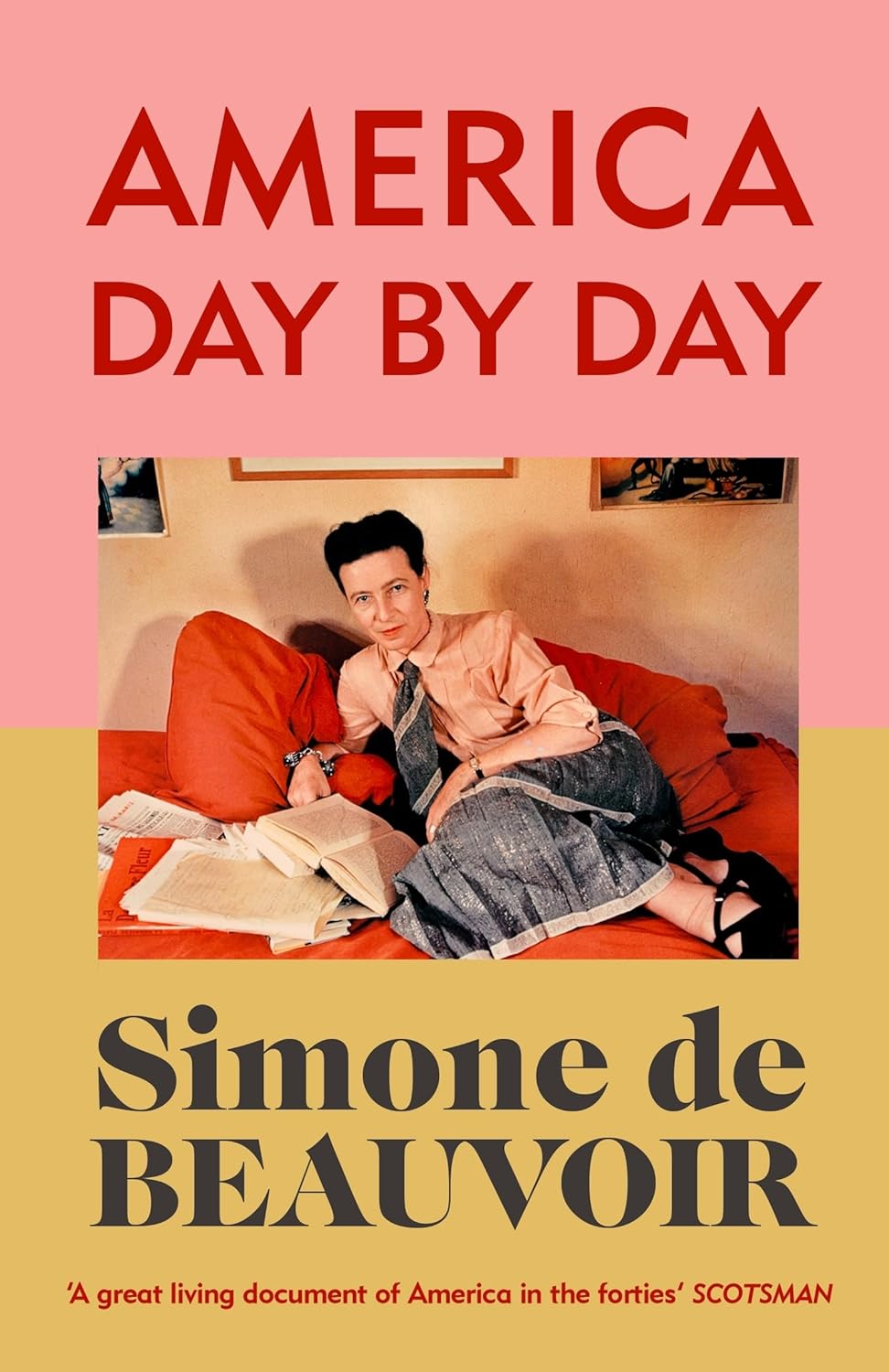
Very occasionally, a reviewer stumbles across a book so quotable that it’s almost impossible to do it justice, a book where every second paragraph contains a sentence (sometimes two or three) that is perfectly constructed and ripe for reproduction. Simone de Beauvoir’s travel diary of her visit to America is precisely that kind of book.
“The splendid flight becomes applied navigation,” she writes of her turbulent descent towards La Guardia airport, for example. “The string of pearls become streets, the crystal balls are streetlamps … a factory smokestack sways in the sky.”
Originally published in 1948, a year before The Second Sex, and this month dusted off and reissued by Vintage Classics, the journal of de Beauvoir’s US jaunt covers just over four months. From January to May 1947, she travelled coast to coast by train, and then back again on a series of Greyhound buses, taking in Chicago, Hollywood, New Mexico, Texas, Nevada and Arizona, among other places, while popping into various universities to give lectures.
But far from pretentious or navel-gazing, de Beauvoir’s reflections are discerning, thought-provoking, and in places even funny, like Bill Bryson if he were a nerdy Frenchwoman with a taste for philosophy. “Tourism has a privileged character in America,” she notes. Unlike in Europe, “it doesn’t cut you off from the country it’s revealing to you; on the contrary, it’s a way of entering it”.
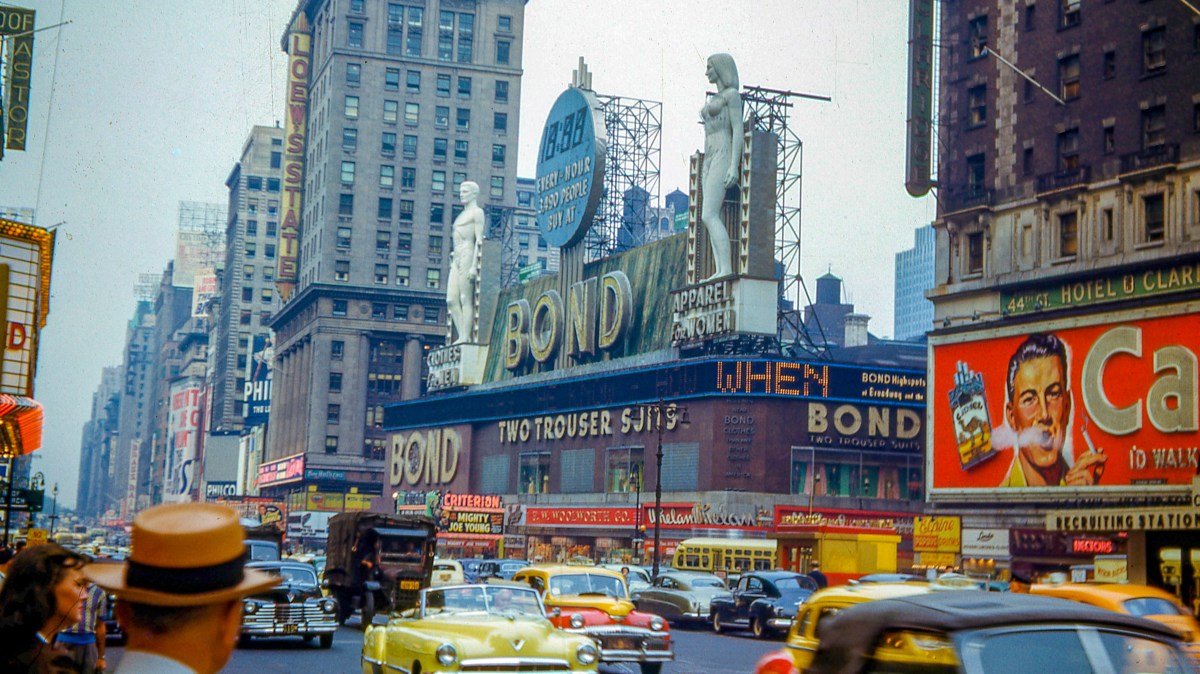
De Beauvoir, then 39 years old and yet to become famous in the English-speaking world, begins her trip in New York, a “city that’s been deserted by men and invaded by the sky”. There, she finds herself perpetually astonished, peering at street sellers’ trinkets, sipping Scotch (“one of the keys to America”) with new friends, and strolling along distinctly un-European roads with unusual stores flanking them, including “a tailor for fat men who exhibits photographs of the obese dressed with his help in jackets and trousers of incredible dimensions”.
One night she attempts to smoke a joint at the Plaza Hotel. “I swallow all the smoke, and no angel bothers to lift me from the earth: I must not be susceptible to marijuana.” Another evening she is wowed by rush hour. “Suddenly, the doors of the buildings release dark waves, a rising tide of humanity submerges the streets, and we’re carried off in a whirl.” Celebrity cameos — including Billie Holiday, Frank Sinatra, Louis Armstrong and the “indefatigable” Charlie Chaplin — abound.
• What we’re reading this week — by the Times books team
After New York her account gets even richer. Some sites she celebrates and some she dismisses, but whatever her opinion she lavishes each place with the same vivid description. Washington DC is a city “where history is petrified into boredom”. In Niagara she observes that “if the lake suddenly froze, it would give a long, tragic moan”. A “monstrous” hotel awaits her in Chicago, “permeated by a stifling heat and the thick scent of dollars”.
Driving through Nevada, she stops at a gas station that is flanked with cages containing “two monkeys, several snakes coiled up, a barn owl, a miserable vulture”. The colours of the desert surrounding the Grand Canyon “seem to have been painted by a megalomaniac Gauguin”. In Virginia, she dismisses Williamsburg as “one of the sorriest shams to which I’ve ever fallen victim”, and of Los Angeles she makes the truly majestic remark that “the Earth revolves in the quiet of the night with this shining wound in its side”.
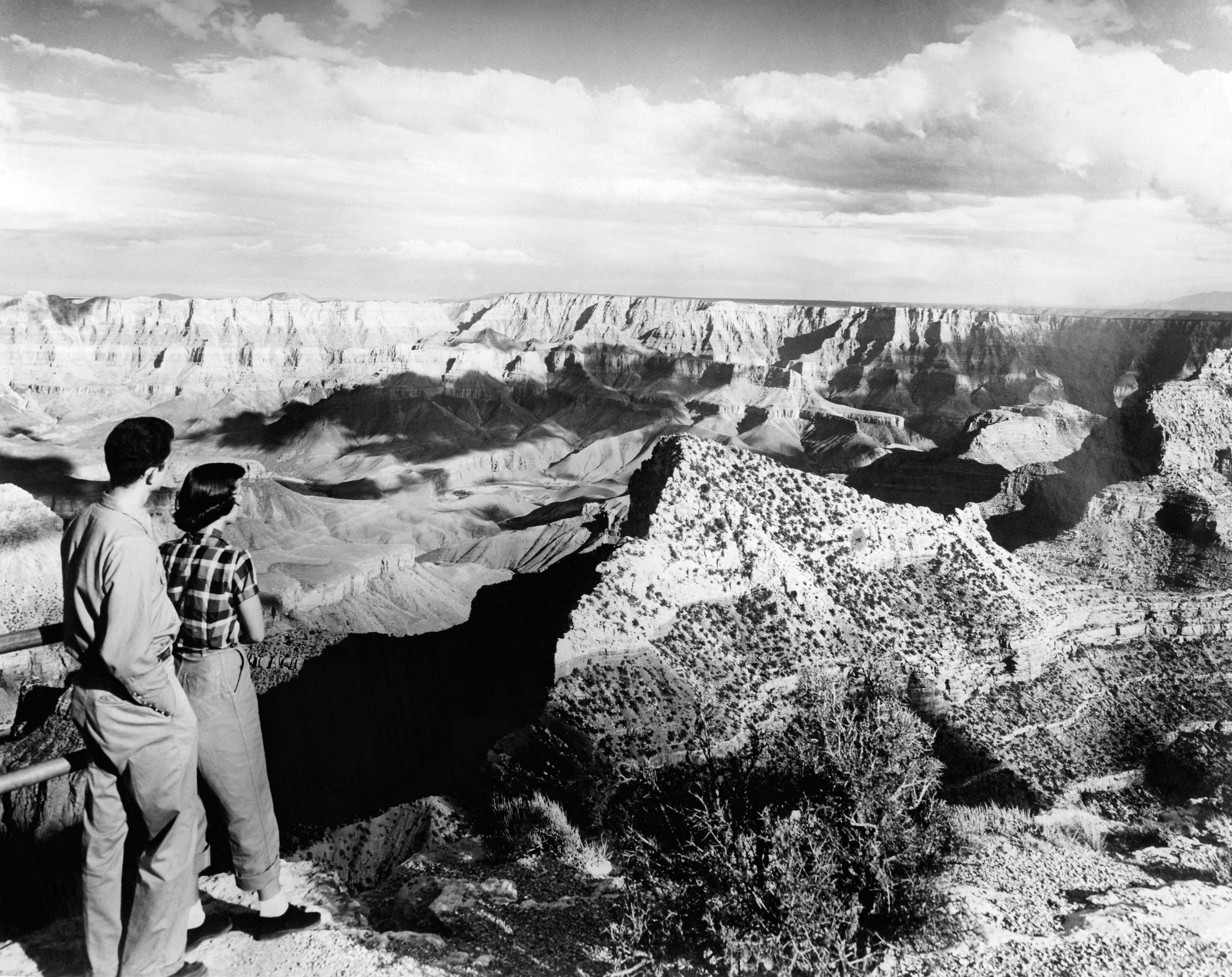
The Grand Canyon in the 1940s
INTERCONTINENTALE/AFP VIA GETTY IMAGES
On top of all these fabulous portraits, de Beauvoir tackles the social issues then occupying the Land of the Free. Racial divisions she describes as “the great American dilemma”; namely how the heralded Declaration of Independence and its inalienable rights are “flagrantly contradicted by the situation of blacks”, especially in the South.
She considers the treatment of the young author Calder Willingham, who was being sued by the New York Society for the Suppression of Vice for his debut novel End as a Man, which “deals openly with homosexuality and vehemently attacks military schools”. Men and women, her favourite topic, also get a classically Beauvoirian analysis. “Only after taking refuge in alcohol will [American] men and women consent to sexual adventures; then, they can bury them in the night of their conscience.”
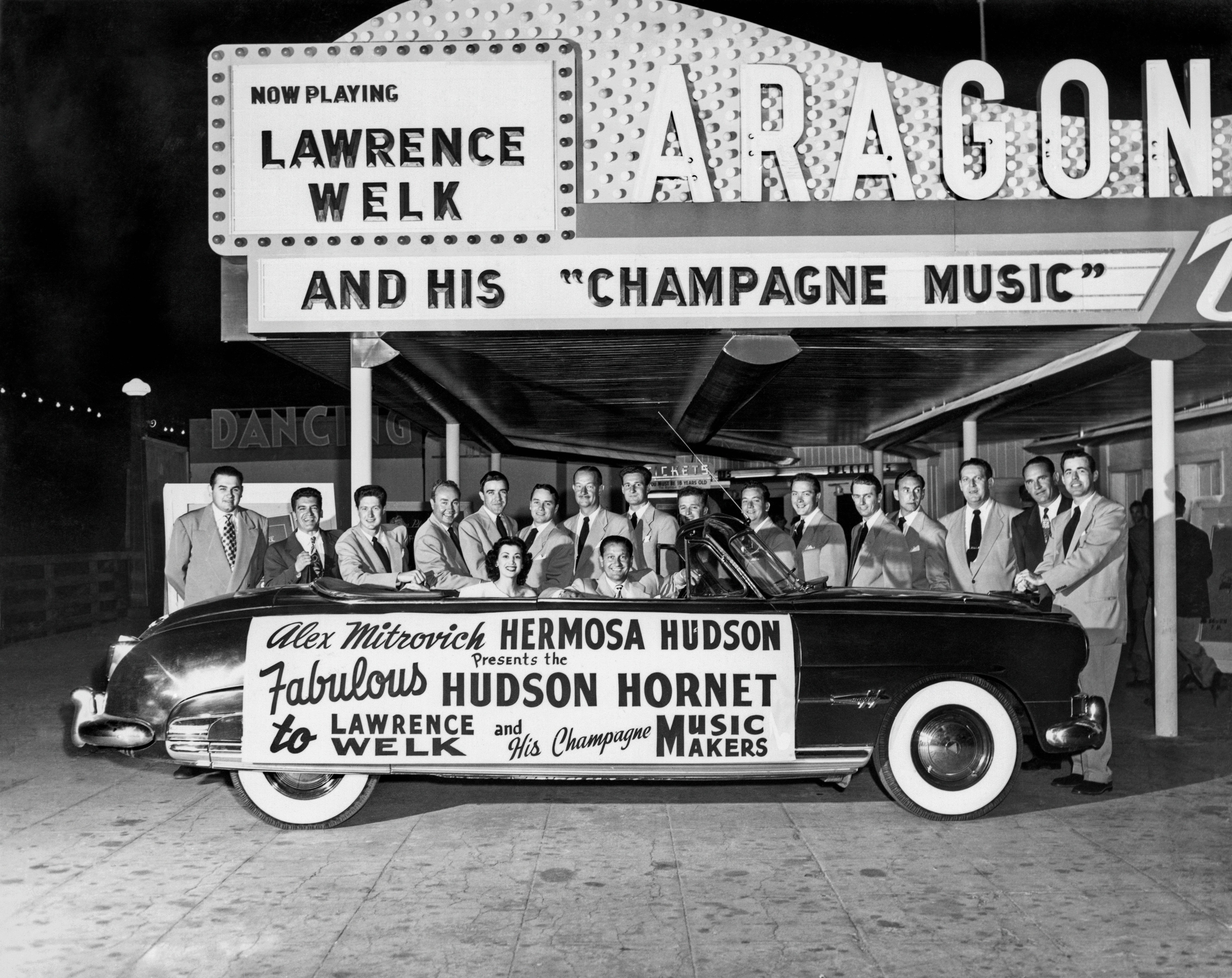
Santa Monica in California in 1951
ALAMY
• Read more book reviews and interviews — and see what’s top of the Sunday Times Bestsellers List
From the nation’s remarkably shallow history (such as that three centuries ago, New York’s central island was called “Manhattanick” by the Native Americans, which “with strange prescience” meant “the island of drunkenness”) to the habits of its people (who with their frozen meat, “conditioned” air and homogenised milk “accept only a nature inspected and corrected by man”), every page offers a deft observation. Her prose is beautiful too; speeding past a forest of sequoia trees, she remarks that the “reddish trunks have the muted beauty of old Persian carpets”.
The only pitfall of this otherwise blazing book is that the smartest line of all she steals from somebody else. A local admits to her: “This country is like an enormous whale. It has a tiny brain — that’s the East — and an endless body.”
America Day by Day by Simone de Beauvoir (Vintage Classics £12.99 pp416). To order a copy go to timesbookshop.co.uk. Free UK standard P&P on orders over £25. Special discount available for Times+ members