
With a quarter of the 2026 season in the books, the Chicago Cubs are on pace to win 100-plus games and drawing comparisons to their last World Series team a decade ago.
Their odds to make the playoffs, entering Tuesday, were 85.9, 94.5 and 98.1 percent, respectively, per FanGraphs, Baseball Reference and Baseball Prospectus. Buoyed by 15 straight wins at home, the atmosphere at Wrigley Field has been electric.
Despite all that momentum, the club is still dealing with one glaring issue — injuries. Part 1 of this week’s mailbag focuses on that problem.
Questions have been edited for length and clarity.
What the hell is going on with the pitching injuries? — JWoody
Sahadev Sharma: The Cubs have to look into this, there’s no doubt about it. Even one injury usually leads to a look back at what may have gone wrong and if anything could have been prevented. This is also just the reality of pitching development in today’s game.
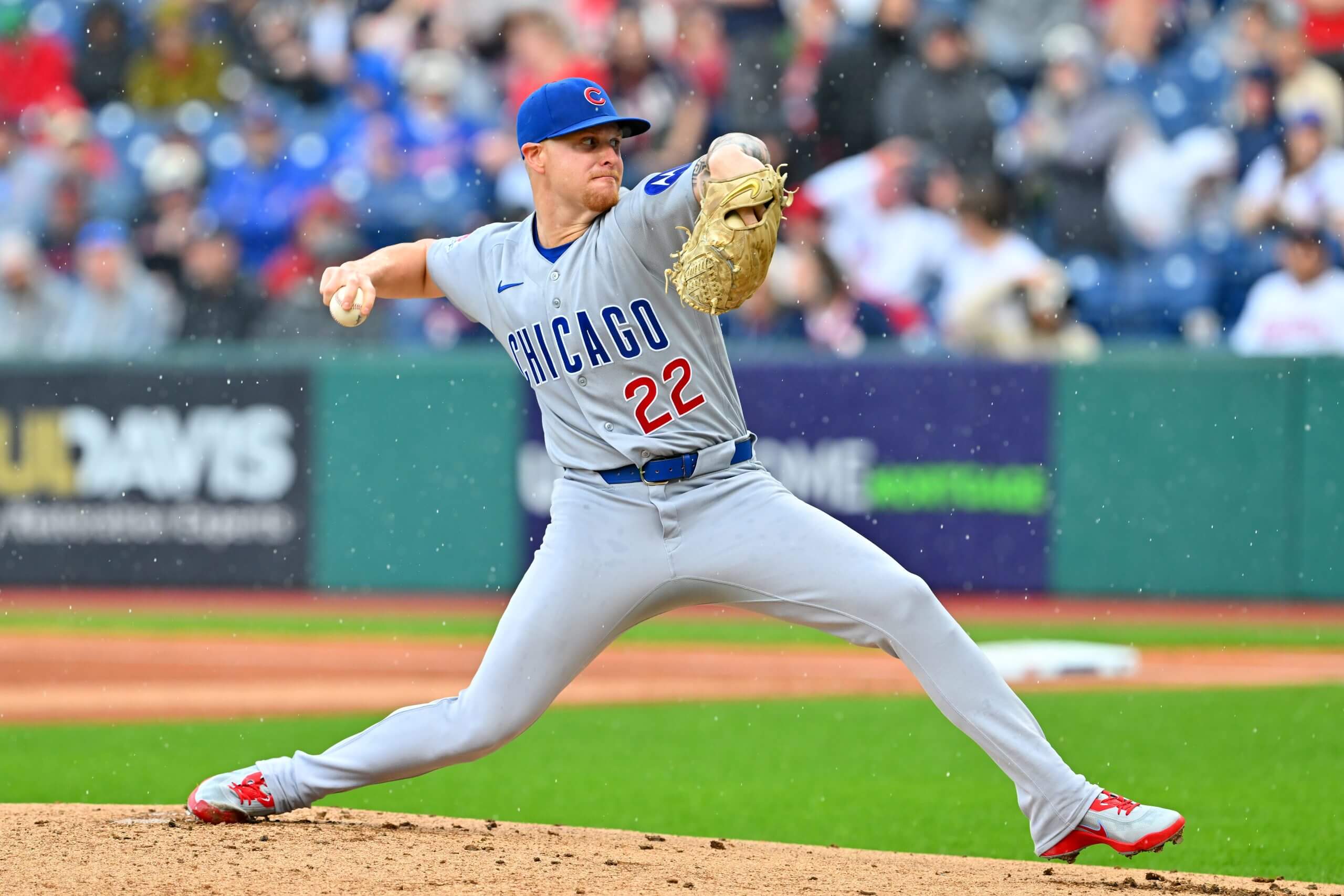
After his outstanding rookie year of 2025, Cade Horton made two starts this season before having elbow surgery. (Jason Miller / Getty Images)
Are the Cubs that unique? The Los Angeles Dodgers regularly deal with pitcher injuries, and it’s not been limited to just one season. When you train for velocity, which almost every organization does, injuries will likely go up.
The good news for the Cubs is that it isn’t a rash of one type of injury. That usually means there isn’t a trend. Pitchers get injured, and the Cubs have just been hit with a string of them.
Should they ignore this? Absolutely not. Is it unique to the Cubs? That’s just not the case. This has been said for years, but the person or team that finds a breakthrough in preventing pitcher injuries or just keeping them healthier in general will change the game.
Are there any internal conversations and questions being asked regarding the consistent pitcher injuries the past two years? — Eamonn M.
Patrick Mooney: Without question, the Cubs are analyzing each individual situation and reviewing their entire process. At the moment, there just may not be an obvious answer.
“You always look at that,” Cubs president of baseball operations Jed Hoyer said at the beginning of May. “We’ve had knees and backs and lats and elbows and shoulders, so it’s not like we’ve consistently had one injury or another. Obviously, in any situation, you’re going to try to think about what you could do better. I think that’s probably how we spend all our time, trying to figure out how we can get better. But I also think there’s probably some randomness in there as well.”
Club officials believe it’s too early to draw any big conclusions. Taking everything into account so far, Chicago’s pitching staff has performed at a high level, which reflects well on the organization’s infrastructure. Staffers spend countless hours behind the scenes, doing the work that is not glamorous, helping players prepare for competition and maintain their programs. Blaming one aspect of the operation would not be fair.
Everything about this season will be viewed through the lens of what happens in October. If the Cubs wind up peaking at the right time, then this trend may be forgotten.
“We’re still sort of in the middle of everything,” Hoyer said. “With every injury, we do a really thorough (analysis) on what happened, what could have been prevented. Listen, I think that, in these jobs, being self-critical (is important). I probably take that to an extreme, at times. Whether it’s a trade, a free-agent signing, an injury, you’ve got to always be looking at: ‘What can we do better? And what can we change?’ It’s certainly no different here. And if we find anything that led to this, certainly we’ll address it.
“In a weird way, I hope we find something. Otherwise, it’s just randomness.”
Will any starters from the Cubs’ Opening Day rotation remain healthy past Memorial Day? — Tim N.
Mooney: Stay tuned.
Edward Cabrera, the injury-prone pitcher the Cubs acquired from the Miami Marlins over the winter, has remained healthy, though his contributions through eight starts have been worth zero bWAR. Given his track record, it’s reasonable to expect better results and some time on the injured list at some point this season.
Shota Imanaga is again performing at a dazzling level, but his strained left hamstring last season showed how everything is connected. One injury — it doesn’t have to involve an elbow or the shoulder — can disrupt a pitcher’s mechanics and throw off his timing and rhythm.
Jameson Taillon has averaged 28 starts and 150-plus innings over the previous five seasons, which is an encouraging track record, but there are no guarantees that he will be able to carry the same workload and repeat his clutch performance from last year’s playoffs.
This is why the Cubs are already being mentioned so prominently in connection to All-Star pitchers such as Freddy Peralta, Logan Webb and Robbie Ray, nearly three months away from the Aug. 3 trade deadline.
Tiger Woods was riddled with injuries later in his career as he tried to optimize his body through lifting and pushing his swing to the extreme. Is it not worth considering if the Cubs’ pitching lab may be putting the same stresses on their pitchers trying to get more miles per hour or spin rate? — Michael T.
Mooney: It’s not necessarily a “Cubs Way” thing. That’s the trade-off at every level of the baseball industry. Amateur pitchers chase velocity to get recruited and drafted, minor-league prospects try to boost their stuff to get to the next level, and major-league players know the projection models reward certain types of free agents. Executives, managers and coaches are all trying to keep their jobs and win. It’s impossible to do that through only finesse.
Have you heard more on Jaxon Wiggins’ injury and progress toward a return? — Gerry W.
Sharma: Wiggins was supposed to throw a live BP over the weekend, and the latest I’ve heard is that he’s currently building back up. The Cubs are intentionally being very careful about this process to try to keep him as healthy as possible. Can they actually do that? Well, see above — it’s not easy.
But rushing Wiggins into game action isn’t in the cards. Getting him back on a minor-league mound may not happen until June (the Cubs aren’t sharing a timeline), and him helping the big-league club probably isn’t a realistic possibility until later in the summer.
What can the Cubs do to start a pipeline of major-league-capable pitchers in their farm system? It seems pretty empty of top-level talent right now. — J.R.
Sharma: This is going to take a combination of drafting and development, with strong collaboration between departments. It should be said that even before Tyler Zombro was promoted in the offseason to vice president of pitching, the Cubs were going to make some changes.
They’ve wanted to get back to velocity training, which was a focus under Craig Breslow but slowed in recent years. They are also likely going to start drafting some pitchers with different characteristics this summer.
Will they go big in the first round? They haven’t since Cade Horton. Drafting more pitchers higher should lead to more talent infusion into the organization. But that can’t be the only way. The Cubs need to find some hidden gems and polish them with smart player development plans.
It should also be noted that they’ve traded away some solid pitching prospects in recent years. Not all have panned out or will, but if names such as DJ Herz, Ty Johnson, Jackson Ferris and Ryan Gallagher were still in the organization, perhaps there wouldn’t be such a negative view of the Cubs in this department.
Still, they are aware that things need to be better and the work is being put in. They aren’t where they want to be in this area. Right now, two names (beyond Wiggins) to watch are Brooks Caple and Kaleb Wing. Beyond that, it will take a surprise or two for the Cubs’ current minor-league pitchers to pop.