
Alex Tobin thought he was fit as a fiddle.
The Australian football icon, 60, is now the Technical Director at Kellyville Kolts Soccer Club, where most days he’s out and about amongst some 2,400 grassroots footballers.
But one night in 2025 everything changed.
“I was shuffling a small goal, down at under-7s – they’re very easy to slide when helping pack up at the end of the day,” he recalled.
“I just noticed – (and) I think I have a good understanding of my fitness levels – I was short of breath moving one of these goals.
“I went to the local GP to check what was going on – he recommended I go straight to emergency.
“Ended up in emergency for the next four weeks.
“Open heart surgery.”
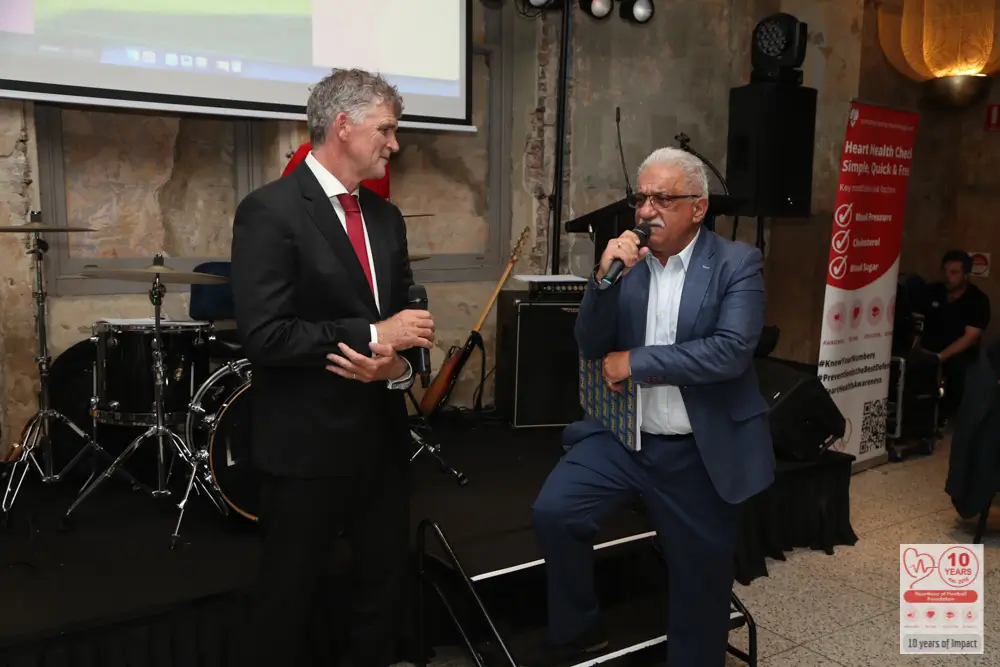
Thankfully, after a difficult recovery, Tobin is now on the mend, and was speaking last weekend at the 10-year anniversary dinner for the Heartbeat of Football Foundation, established, run and championed by Australian football personality Andy Paschalidis.
Tobin is sharing his journey to help Paschalidis with his mission for zero deaths on the sports field; as a former athlete, a fit person, a non smoker and a non drinker, he is proof that heart disease is a silent lurker, encouraging all Australians to proactively look after and monitor their heart health. His mitral valve repair surgery was the same procedure fellow Socceroos legend John Aloisi had to undertake in 2019.
Preventative measures and education are one key pillar in the work Paschalidis is doing, but the other pivotal work is pushing for the continued investment in defibrillators.
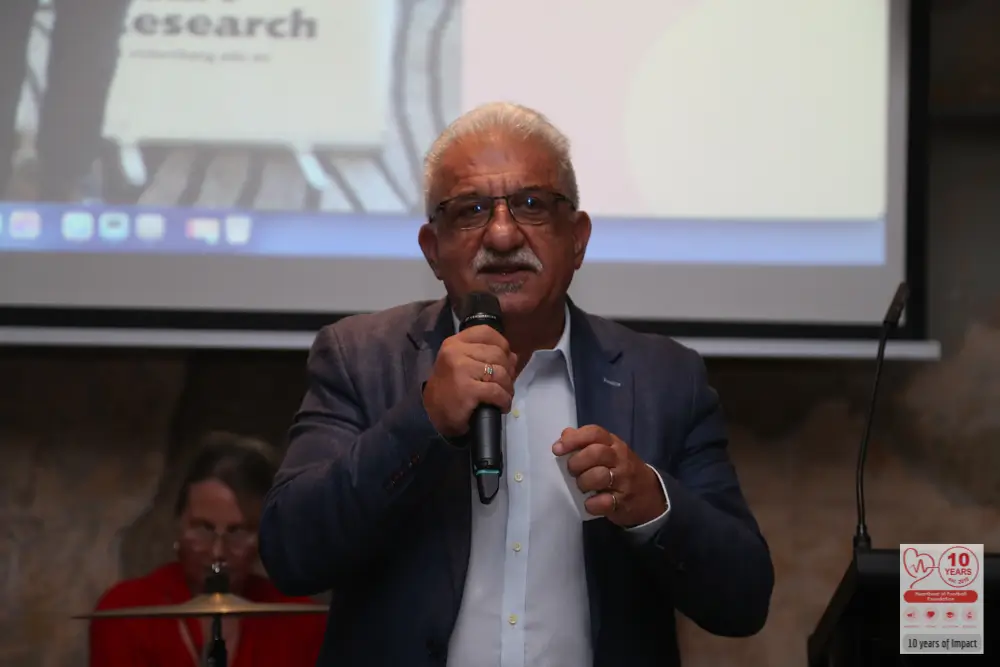 Andy Paschalidis. Photo: David Petranker
“My plan was zero deaths on the field, defibs at every ground and if we save a life we’ve made all the difference,” he told a packed audience.
“I lost half the board (at the start) because they believed players should get themselves checked – that is not going to happen.”
Clearly, that did not rattle his resolve, as he went on knocking on doors in Canberra and across the country, fuelled by his mission and purpose.
10 years ago, Paschalidis lost two teammates dear to him and vowed to ensure these tragedies, doing what so many Australians love, stop.
“We go play a game on Saturday or Sunday, we have a kick around, we don’t know what’s happening inside. We’re all meant to go home,” he said.
He really is a man on a mission.
Since the NSW coalition rolled out a defibrillator program in 2017, 42 footballers have been saved in 50 incidents with a survival rate of 80%.
From 2014 to 2016, the survival rate was 26% – 14 deaths from 19 incidents.
But defibs at venues is one part of the story. Awareness, education, testing and research are such big pillars for the organisation.
With 7, 398 people checked last year thanks to the hard work they do heading out around the country, testing, showing how to perform CPR and raising awareness of their work, 62% unknowingly had high blood pressure, cholesterol or blood sugar levels – test results that most likely triggered measures to stop a path to cardiac arrest. Paschalidis has been told by the Victor Chang Institute that his work has arguably saved the medical system nearly $100 million.
As for the defibs, this isn’t just a measure to solve a problem for “old blokes having a kick around”.
The youngest save in New South Wales was 13; nationwide, it was nine.
Xavier, now 14, was unaware of a rare and life-threatening heart complication, with abnormalities in both of his coronary arteries, when he headed out for his usual football routine.
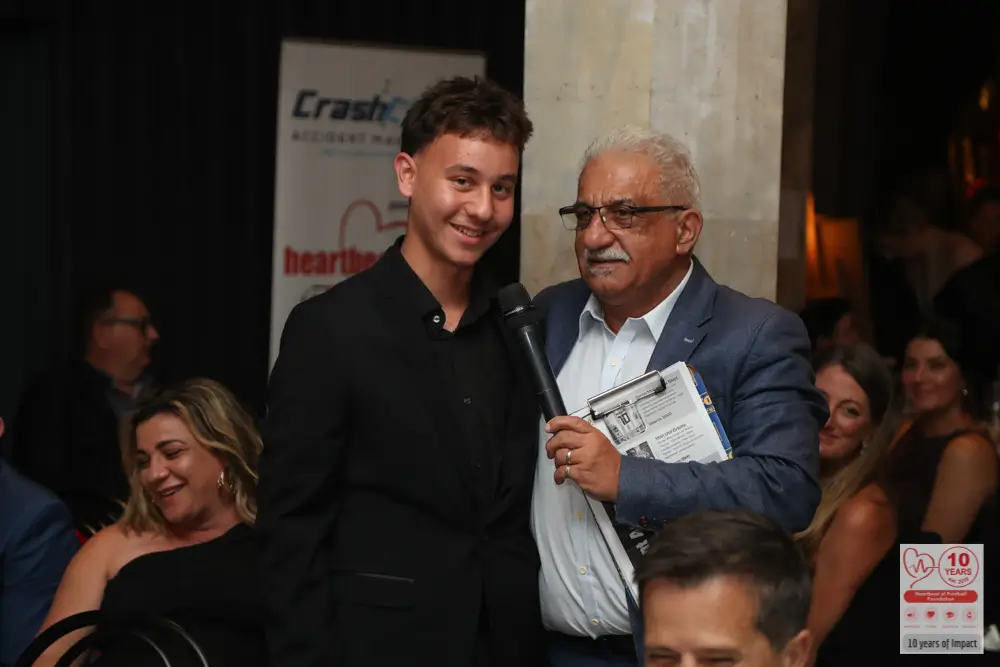 Xavier with Andy Paschalidis. Photo: David Petranker
He was in the room for the celebration, where his mum outlined just how vital the defibrillator investment is.
“If it wasn’t for his defib, Xav wouldn’t be here; without the first responders and the GOODSAM, who pulled together, I wouldn’t have my little boy,” she said.
Back at the same restaurant in Sydney where he launched the charity a decade ago, Paschalidis emphasised the work is far from done.
They are now embarking on the first ever audit of the State Government’s defibrillators, to assess who has and who hasn’t got one at sporting grounds across the state. His aim is for all defibs to be registered with NSW Ambulance and the GOODSAM app.
He points to the Manly Football Association, where it is mandatory for a defib to be on the halfway line before a game starts.
Three lives have been saved from that policy.
“I didn’t envision it to reach the scale it has, it is bloody tough, it is hard,” he said, but added: “Shows you when you push for change, outcomes are brilliant.”
Tobin has long been an advocate for the foundation and his knowledge probably saved his life. Now, through his lived experience, he is sharing that story to help provide even more awareness of the work Paschalidis and his team are doing.
“We need to get heart health out there as a message,” Tobin said.
“All people involved in sport, but football is the most participated sport, by odds, we are likely to be the sport that has the most incidents.
“If the football family can get together and promote it in the way we’re doing, pressure governments, to really support the idea of defibrillators at facilities – if we go back 10 years, the growth is extraordinary…it is the work that these guys have been doing that has contributed to that.”
Tobin added, with reflection on his experience: “I’ve said it to everyone since and for the last 10 years: check your heart, check your health!
“The heart is complicated, as I know even more now…I am just happy I had the knowledge of general heart health and could recognise: why am I out of breath? Questioned it, saw somebody and went straight away to hospital.”
For more information from the Heartbeat of Football, visit their website here