
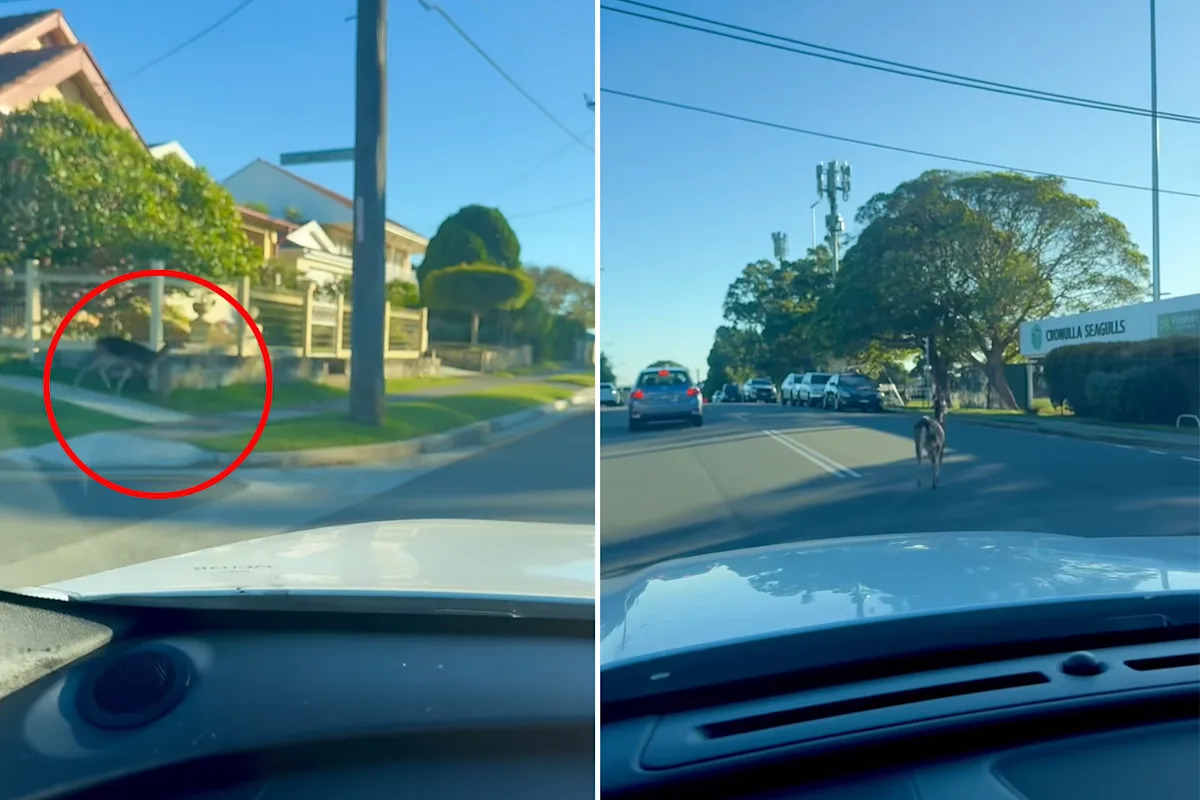
Another striking example of how extensively an introduced species has spread into Australian suburbs has emerged, prompting renewed concern about its expanding presence and the challenges it creates in urban areas.
Deer continue to wreak havoc on roads, throughout communities and fragile ecosystems, with conservationists warning that their impact has drastically worsened in recent years.
This month, a motorist in Sydney’s south shared footage of a deer darting onto a busy road in the Sutherland Shire during peak hour.
“Can someone explain why there was a full-grown deer casually running down Woolooware Road this morning, like that’s a totally normal thing to see before 8am? Where on earth did it come from?” they asked.
The video attracted hundreds of responses, with other locals reporting seeing the animals “everywhere”.
“Had heaps in our backyard lately,” one respondent said.
“Deer have roamed from the [Royal] National Park to various areas of the Shire,” said another.
“I saw two the other night,” a third said.
Do you have an invasive species story? Contact joe.attanasio@yahooinc.com
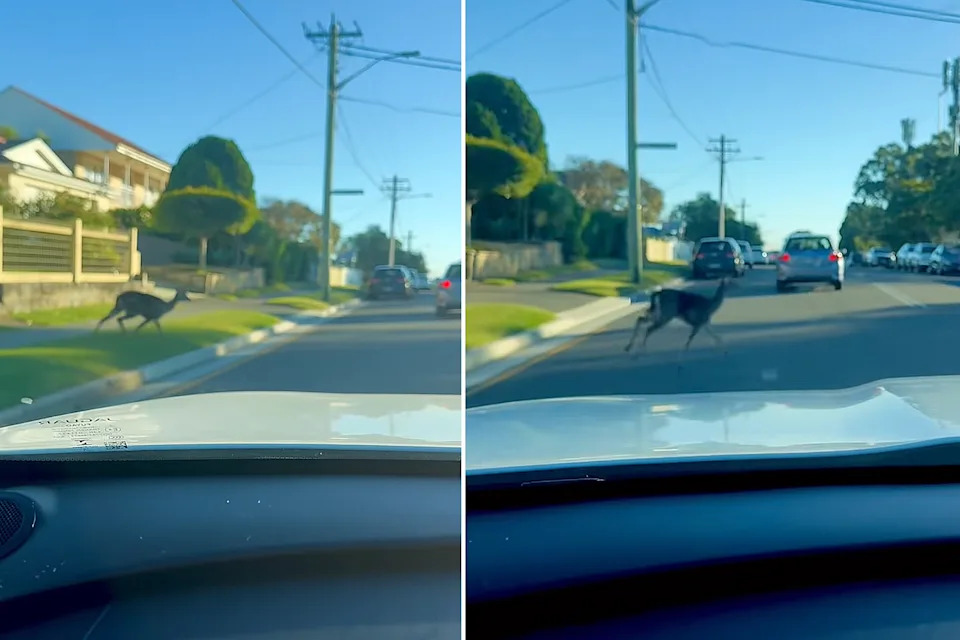
While the Sutherland Shire is in proximity to NSW’s Royal National Park, experts warn animals are spreading further across the continent.
(Allen N Jayde Ward)
It’s one example among a rapidly increasing number of reports from the public of deer being sighted more frequently across suburban areas.
It’s an issue Yahoo News Australia has covered extensively, speaking with Jack Gough, CEO of the Invasive Species Council, last month on the topic.
Gough warned that if urgent government funding isn’t locked in soon, deer — alongside other notorious pests like rabbits, foxes and cats — will only continue to grow in numbers.
“The only way to get on top of these species is by using a combination of baiting and aerial control,” he said.
Are deer prolific breeders?
Deer reproduce quickly and lack natural predators, meaning population control requires multiple approaches — from ground-based methods to aerial shooting using thermal technology, Gough argued.
“We know that after pretty good seasonal conditions over several years, feral animals have spread into new areas,” he said.
“If governments aren’t serious and don’t make some important decisions to increase, not decrease, the funding available, we could go seriously backward across this country.”
What kind of impact do deer have?
Just last week, Victorian farmer Rob Endersby shared that he was forced to sell his daffodil farm, which had been in the family for more than five decades, because it was repeatedly targeted by deer.
Rob’s story isn’t unique.
The Invasive Species Council said feral deer numbers have surged to nearly a million nationally, transforming from a novelty into a serious pest.
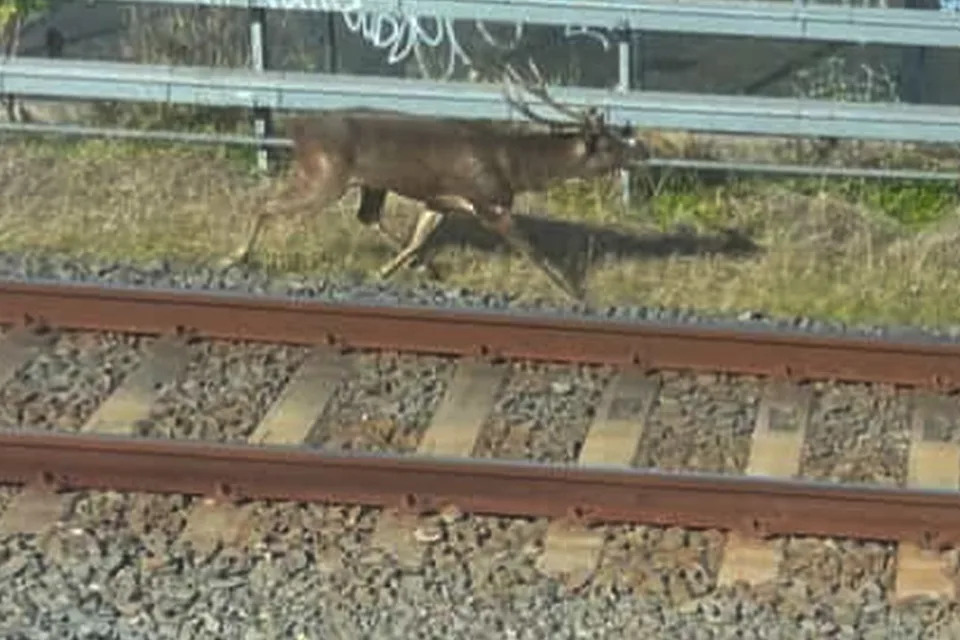
Deer colliding with trains is an issue estimated to cost millions in damages annually. Source: humansofeastwooddaily
Increasingly, they’re being spotted in major cities like Sydney, Melbourne and Adelaide, in backyards, on roads and on trainlines.
RELATED:
Due to their size and unpredictable behaviour, collisions with deer can be deadly.
Not only for the animals themselves, but in some cases for drivers and passengers as well.
Deer can also cause significant environmental damage, trampling native vegetation, degrading habitats and placing pressure on fragile ecosystems through overgrazing.
Are deer becoming more common in urban areas?
Sydney MP Simon Kennedy shared a video of a huge deer in Gymea Bay, also within the Sutherland Shire, in March.
The mature animal was seen rummaging through suburban properties, likely in search of food, undeterred by the presence of nearby people in a car.
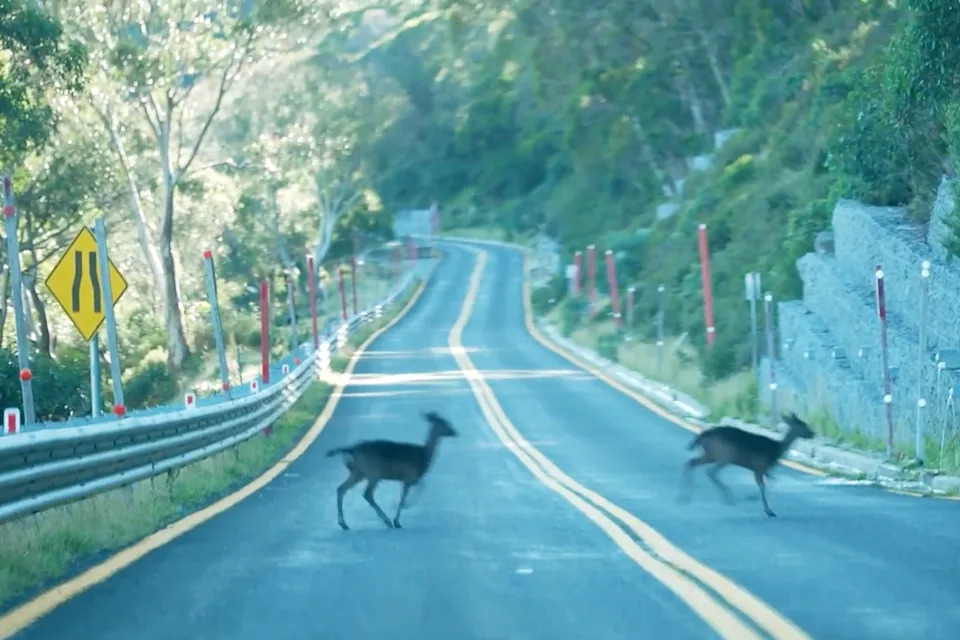
Invasive deer are among the most common animal encounters on roads. Source: NRMA
Residents, not just in Sydney but around the country, have recently reported animals browsing backyards, overturning bins in search of food, and moving freely along roadsides.
This shift reflects not just growing numbers, but a behaviour change.
Once, deer were largely confined to bushland, but they are now exploiting suburban environments, attracted by easily accessible food and fewer natural predators.
You can also follow us on Facebook, Instagram, TikTok, X and YouTube.