
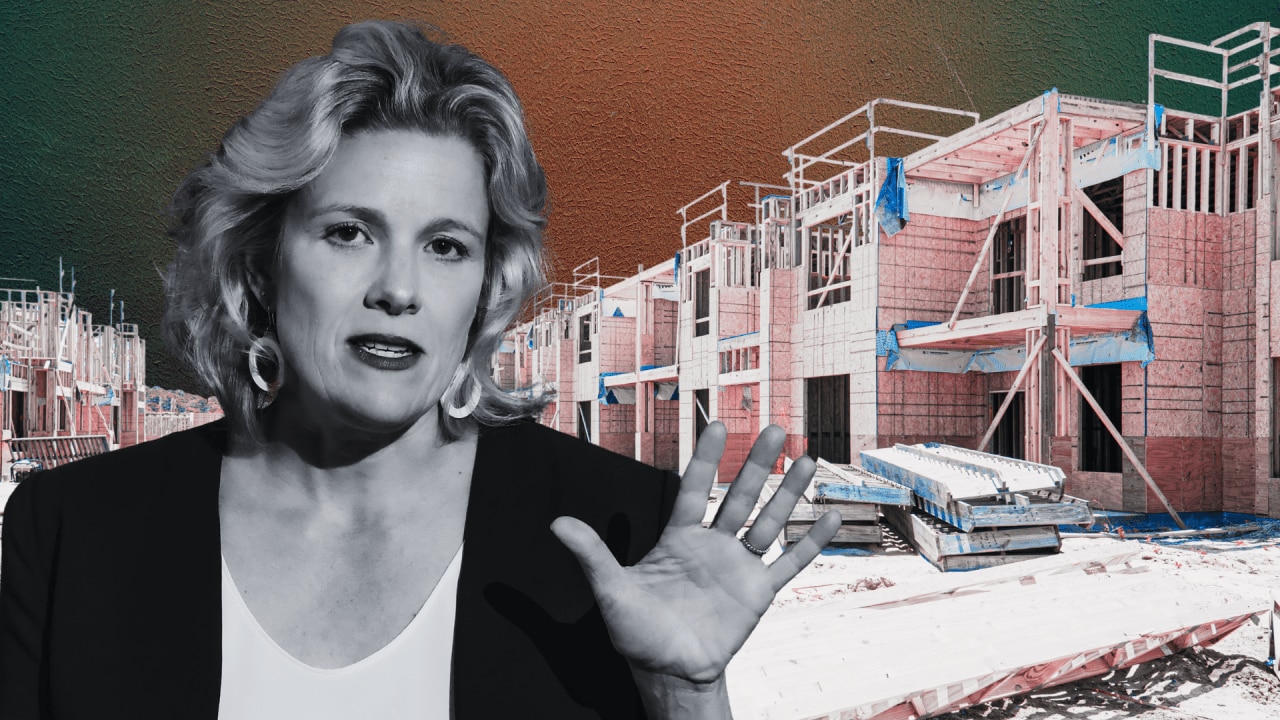
Housing Minister Clare O’Neil has conceded she is unable to guarantee whether young Australians will enter “negative equity” in the long run, despite lauding Labor’s radical budget modifications.
Speaking to Sky News Sunday Agenda, Ms O’Neil said Treasury had found that housing prices would continue to go up but at a “slower rate”, before evading questions on whether first home buyers would find themselves in a financial hole in the long run.
The Albanese government broke election promises in the 2026 federal budget by making changes to negative gearing and the capital gains tax discount.
Treasurer Jim Chalmers revealed a $2 billion Local Infrastructure Fund to help councils and state utilities deliver the “last mile” infrastructure needed for housing, including water, power, sewerage and roads.
Additionally, the 50 per cent CGT discount for individuals, trusts and partnerships will be replaced with cost base indexation and a 30 per cent minimum tax rate.
Ms O’Neil said the measures would add 30,000 new homes that were “desperately needed” and called the raft of reforms a “really good step forward for us”.
Sky News Political Editor Andrew Clennell pressed Ms O’Neil on whether the new economic measures would impact the value of homes for young buyers.
“Clare O’Neil, you keep saying ‘level playing field’, but if I’m a young, first-home buyer, I’m trying to buy a house in outer suburban Sydney for a million bucks, and the person who bought it, bought it for $200,000 … that’s not really a level playing field, is it?” Clennell said.
Ms O’Neil said the housing system was “cooked” and that she was concerned that young couples are “half as likely” to own their own home as they were in 1980.
“We want people on normal incomes around our nation to have a fair shot at getting into housing. Now, this is not going to fix the problem overnight, but these tax concessions are a really meaningful part of the challenge,” she said.
“If I take a low-income young couple today, they’re half as likely to own their own home in Australia than they were in the year that I was born. That’s not good for them, and it is really not good for the country.”
Treasury modelling forecasts housing prices slowing by about 2 percentage points over the next couple of years, with 75,000 additional owner-occupiers entering the market over the decade.
Rents are predicted to rise by less than $2 per week above their baseline trajectory.
Ms O’Neil could not confirm if property values would sink below loan amounts, causing “negative equity” for young buyers.
The Housing Minister refused to answer the question twice, telling Sky News a quarter of a million young Australians had bought their first home with Labor’s five per cent deposit scheme.
Ms O’Neil was asked to answer the question, to which she conceded that house prices will continue to go up, flagging that prices will end up just $20,000 lower than they would have been.
“Price movements occur in the housing market,” Ms O’Neil said.
“What Treasury is predicting is that housing prices will continue to grow, but they will grow at a slower rate.
“The truth is we’ve got the balance right here. The Treasury modelling shows us the likely effect of these changes is a moderate reduction in the pace of growth of house prices that will lead to somewhere around a $20,000 reduction for the first home buyer who’s paying it at the end of the day.”
Ms O’Neil then launched into an attack on the opposition, claiming the Liberals were floundering on the issue.
On Sunday, Opposition Leader Angus Taylor revealed the Coalition’s sweeping new immigration policy would slash migrant arrivals by at least 70 per cent.
Mr Taylor announced the proposal to tie immigration levels to housing supply in his budget reply as part of an effort to end “mass migration”.
The proposal would cap immigration according to housing construction, meaning government could not bring in more people than the country could accommodate.