
A Coles shopper picking up meat for dinner has noticed a small detail at the checkout that raised a red flag.
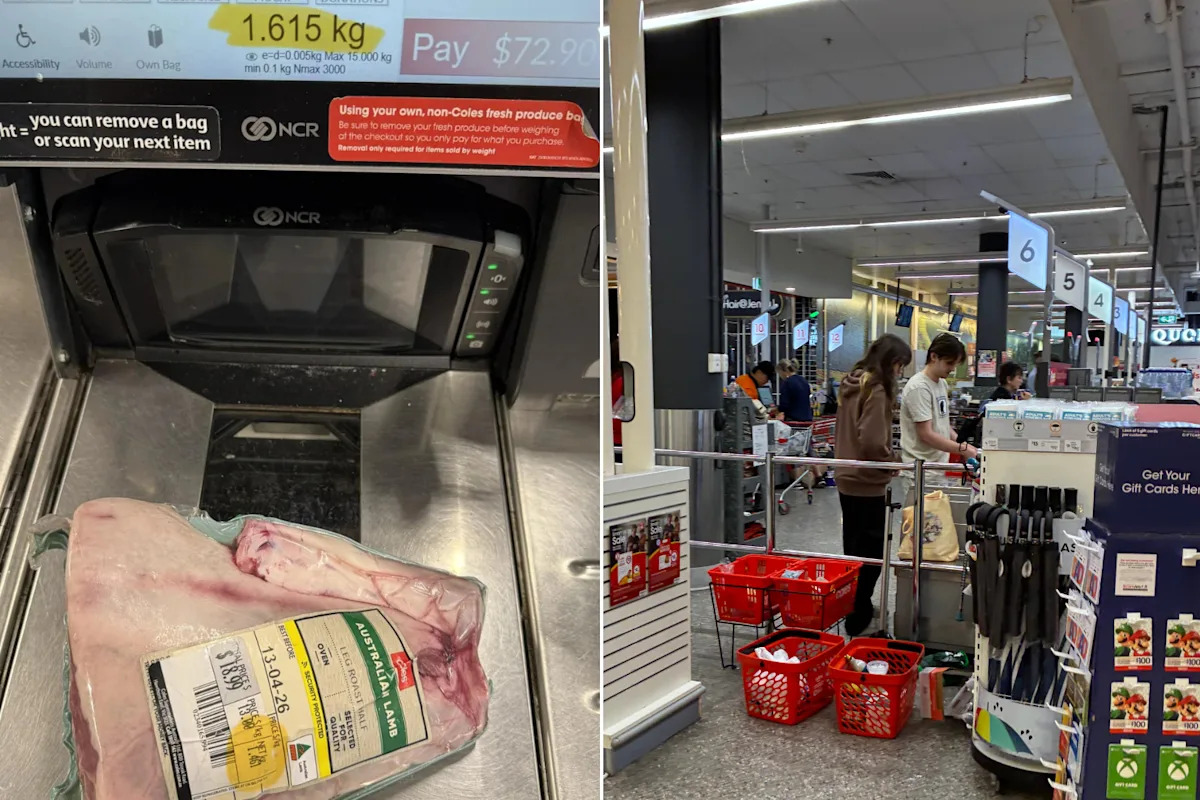
The customer noticed a 154g discrepancy between the weight of the lamb leg and the scale reading, leading them to claim that the supermarket giant was “scamming” other shoppers.
It comes just days after Coles was found guilty of misleading customers through its ‘Down Down’ campaign, offering discounts that were deceptively marketed.
In a photo shared online, the sticker on the lamb recorded a weight of 1.461kg, while the weight on the scale reads 1.615kg — 154g more than the label.
And while some might think the shopper scored a bargain with a heavier cut of meat at a cheaper price, the shopper was convinced that the scales were off, potentially making items heavier for any customers who used the checkout before them.
“If I was weighing ginger or shallots that’s a massive discrepancy,” they said.
“Another scam to rip off customers for profit.”
Fresh ginger is sold for $33/kg at Coles, meaning a 154g discrepancy could cost a customer more than $5.
However, the supermarket giant is debunking the theory.
RELATED:Coles defends scales from inaccuracy doubts
Coles told Yahoo News the scale was not the issue.
“We want our customers to know they are getting what they pay for,” they said.
The lamb’s white label with the price and the weight is added by staff in store.
Yahoo News understands that the lamb was mistakenly labelled, giving the customer an extra 154g of meat.
The Coles spokesperson explained the scales at the checkout are not used to calculate the weight or price of prepackaged meat, and also said their scale were tested regularly for accuracy.
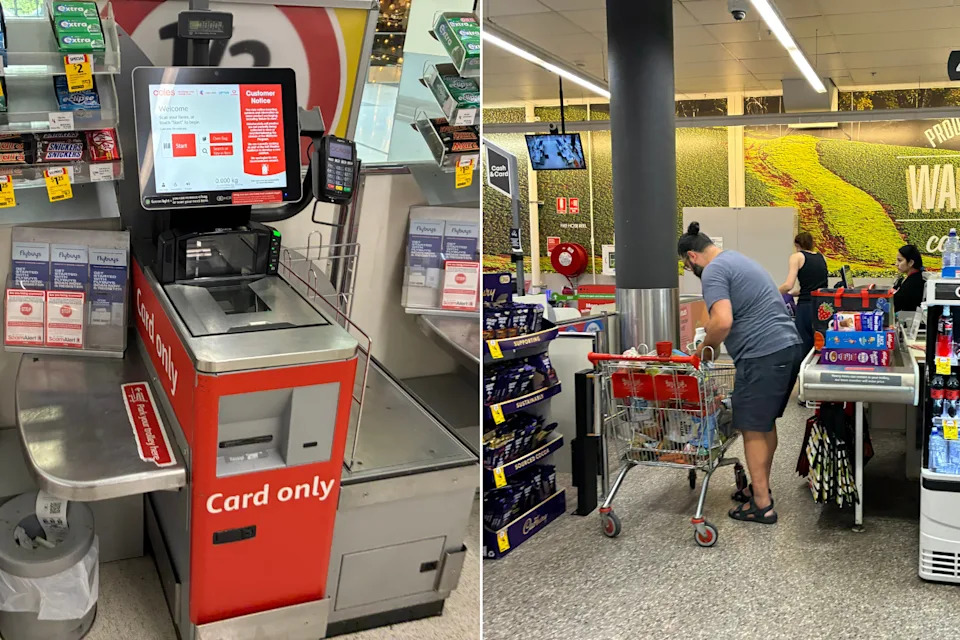
A spokesperson is debunking a shoppers “scam” claims and says Coles has a process to test its scales regularly for accuracy. Source: Yahoo News Australia
“If an issue is identified, the scale is placed out of service until it has been serviced by a licensed technician and reverified,” they said.
If an issue arises at the checkout, customers are encouraged to speak with a staff member. And if they do, they could be in for a free item.
“If a customer identifies an error where an item scans at a higher price than the advertised or ticketed price, they should bring it to our team’s attention so we can assist them in line with our Price Scanning Policy.”
This policy means that if an item is scanned at the register for a price higher than its label or advertised price, the shopper gets the first item for free.
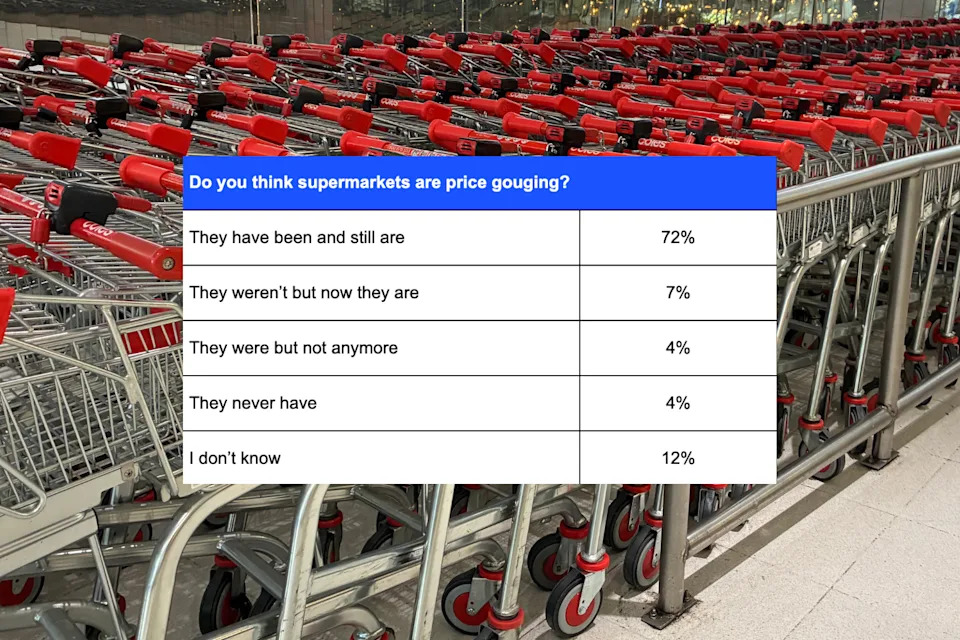
Finder survey of 1,003 respondents, January 2026 to ask, “Do you think supermarkets are price gouging?” Source: Finder
Price gouging paranoia spreads across Australia
The scale discrepancy comes amid a spike in apparent distrust of major supermarkets.
New research found 79 per cent of the 1,003 Australians surveyed believed they are being price-gouged at the checkout, according to Finder.
Personal finance expert Sarah Megginson at Finder is calling it “an extraordinary level of distrust for an essential service”.
You can also follow us on Facebook, Instagram, TikTok, X and YouTube.