
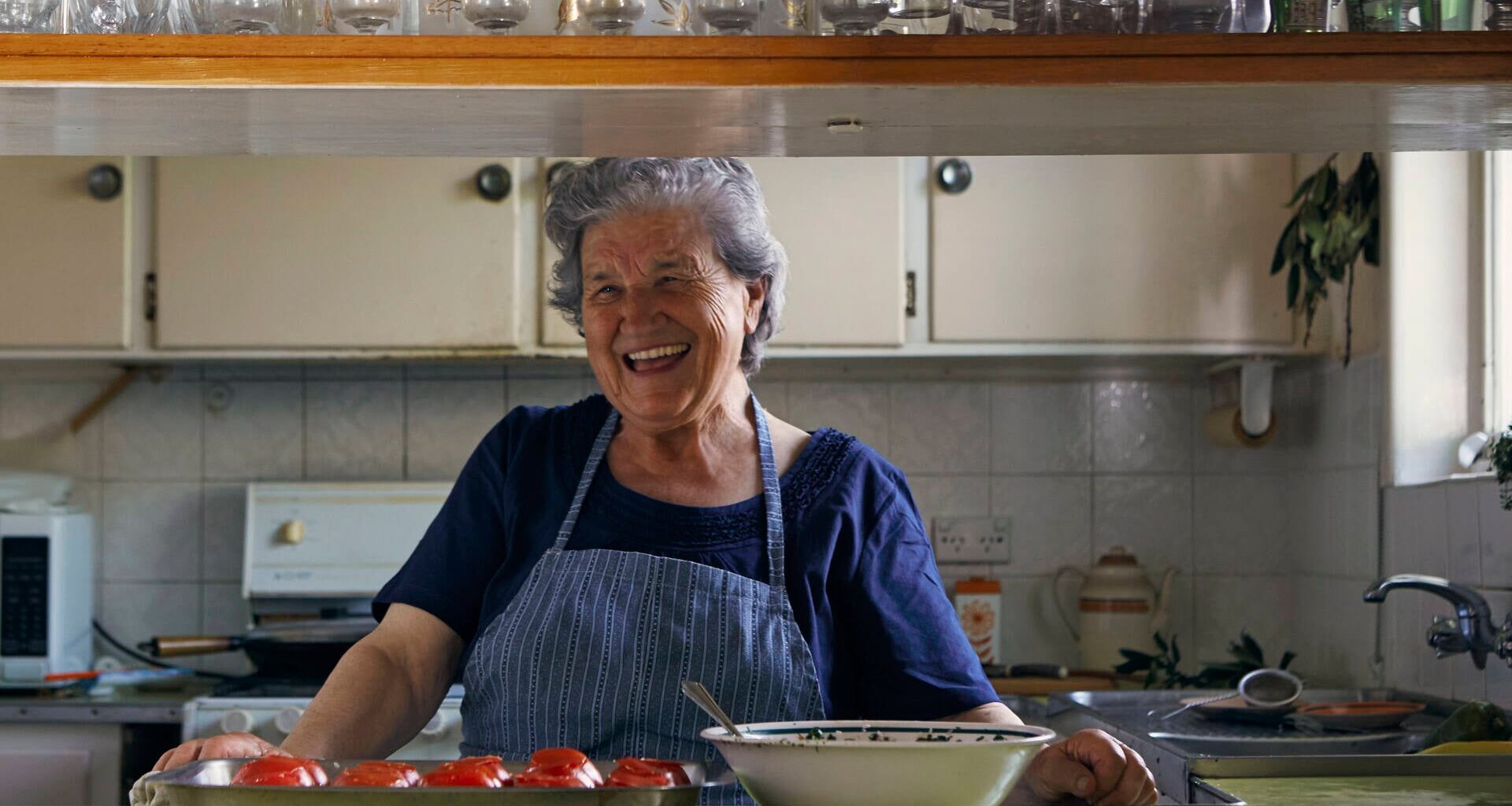
A new project by photographer Heather Dinas, Mothers Table, looks at our mothers and grandmothers and their kitchen tables — symbols of home, hearth, family and matriarchal power. Our mother’s table is the symbolic centre of the family: the place where, as migrant families, we congregated with syblings, cousins, uncles, aunties and grandparents. Heather Dinas is creating a testament to those women and the tables around which family life unfolded — and to the cooking that brought everyone together.
Three decades behind the camera
Dinas has sustained a photographic career spanning three decades and has successfuly colonised the space between advertising and art photography — in fact, she has made a living out of it.
Dinas as a teenager searched for something “artistic”. She studied Year 12 art and design then completed a BA in Photography and later an MA at RMIT University.
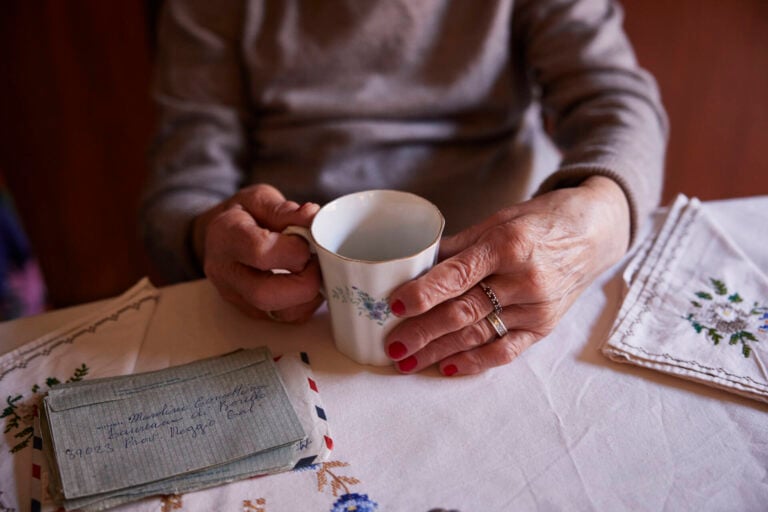 The hands of an older woman holding a cup — a portrait in which the viewer senses the whole person without ever seeing her face. Photo: Heather Dinas
“I tried different things — guitar, ceramics and painting, all sorts of things — but, I remember even framing scenes with my fingers. Sounds corny but it’s true, I didn’t even have a camera and I was framing scenes with my fingers.”
The moment she first did photography it became a “compulsion” it was she says “unstoppable” and had “no clue where it would pan out”.
Dinas’s studio and website, Mother Studios, is the cave for Dinas. She was a finalist in the National Portrait Prize, the Australian Centre of Photography and the Josephine Ulrick & Win Schubert Photography Award.
A body of Dinas’s work, The Space Between, was exhibited at the Head On Photo Festival in Sydney and at the International Biennale of the Photo Museum of Thessaloniki in Greece.
The photographer behind Gourmet Traveller and countless high-end advertising campaigns has found a new hearth as she says has “come back home”.
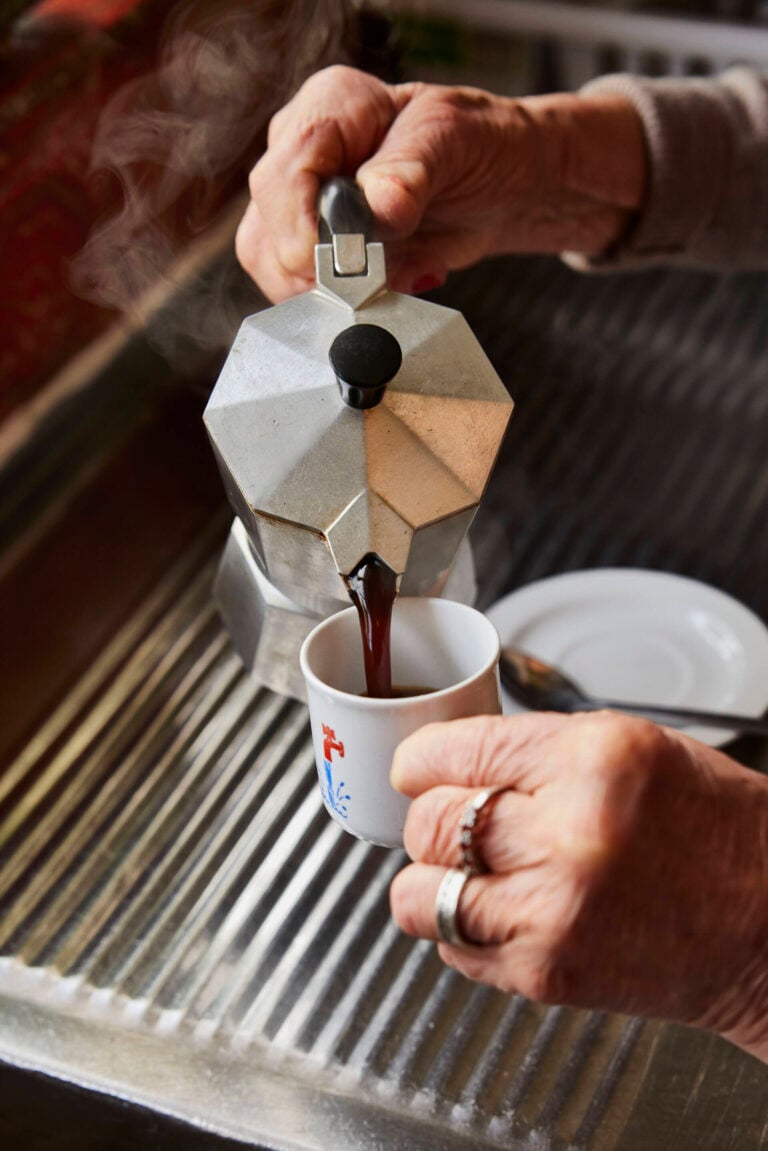 The beautiful Nonna Fortunata (aka Tina), in her 90s, is making coffee. Photo: Heather Dinas
Our mothers and our tables
In Mothers Table, there is warmth and intimacy; a gentleness of spirit, of knowingness. For example, the hands of an older woman holding a cup, where the viewer is cognisant of the entire person without ever seeing the face.
Dinas is a storyteller at heart and says, “it’s about telling their [Mothers’s] story, and through Mothers Table [sic], it’s both a portrait and a celebration. I am honouring those women I’m photographing”.
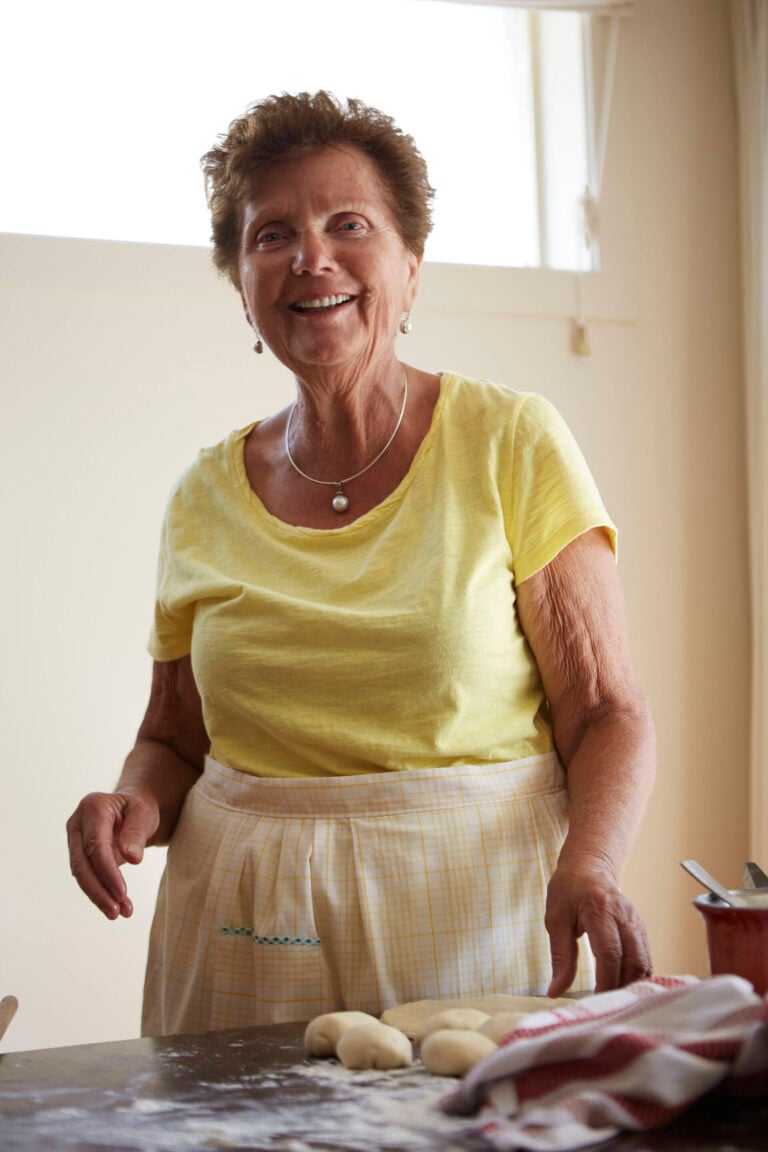 Dinas did not realise it would be the last time she would capture her mother’s vitality before her health declined once again. Photo: Heather Dinas
“The spaces, the things, a picture up on the wall, the wonderful way they had about themselves, just observing them do little things. I photographed the beautiful Nonna Fortunata, (aka Tina), in her 90s as she was making coffees.”
“All the little things around it. Her recipe book that was worn and yellowed, written by the heart. That notebook is a story in itself.”
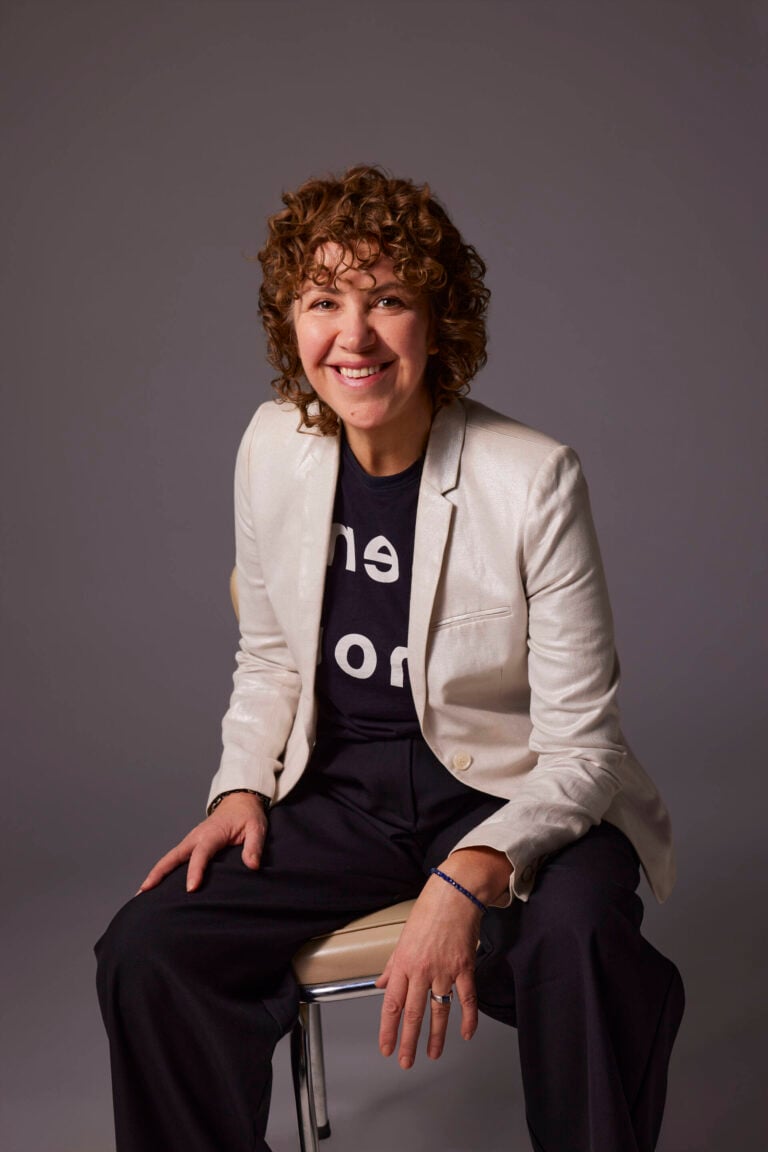 For more than three decades, Heather Dinas has successfully bridged the worlds of advertising and art photography, building a career — and a living — in the space between the two. Photo: Heather Dinas
Maria, her mother in a capsule of memory
Mothers Table emerged from Dinas’s desire to photograph her own mother after a period of illness and recovery.
“Mum had been unwell, and I was busy photographing commercial campaigns. My partner kept pointing out that it would be a ‘really good idea to capture your mum’ because her health came back and her vitality.”
Dinas’s mother arrived in Australia at 18, like so many others, and she understands the pangs of pleasure and pain in growing up as the child of migrants. The nostalgia of another time, both good and bad.
A time when all there was was a black-and-white photo, maybe a saturated Polaroid in the 1970s, but no digital trails.
“I was at the Hellenic Museum and they had a display with this beautiful big black and white photo of a ship coming into the Melbourne Port and they dubbed it the ‘bride ship’ and I realised that’s the ship mum actually came on.”
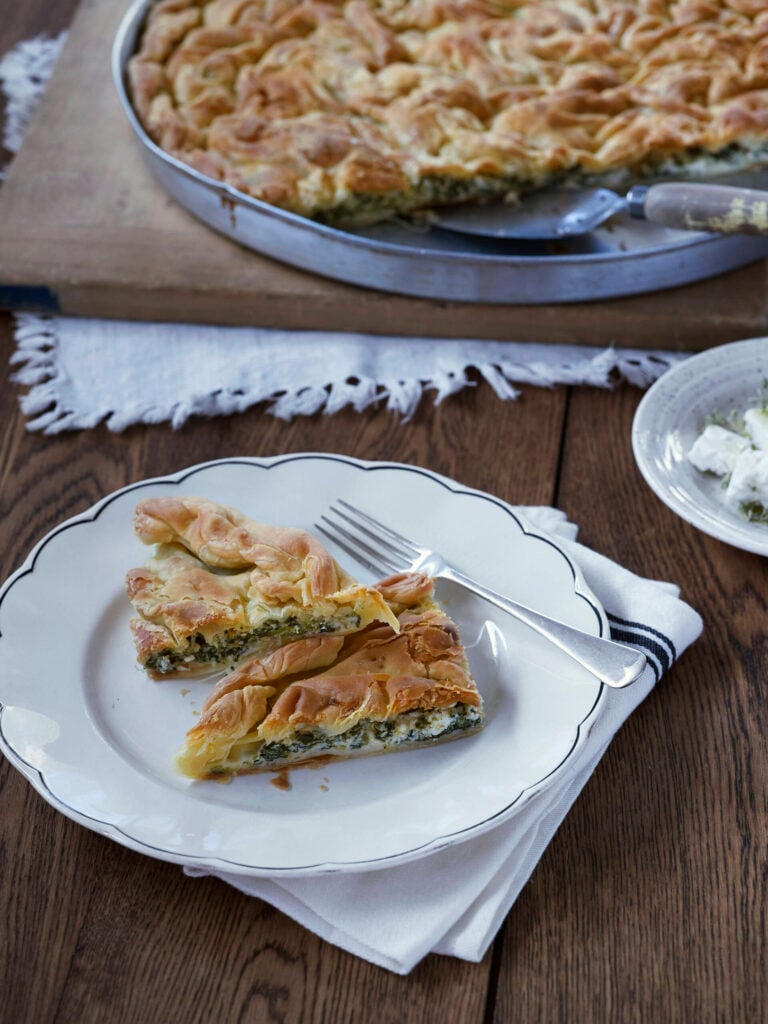 “I loved capturing her hand, making the filo pastry and the spanakopita,” Dinas said. Photo: Heather Dinas
Being part of the migration story and telling it through photographs is part of Dinas’s “DNA”, she says.
“Photography tells a story — it may sound banal — but it tells a story without words.”
Her mother Dinas says was a “dynamic and effervescent woman”.
“She had a positive spirit, and, she could cook up a storm. So, I photographed her and I didn’t realise that it was a moment in time,” she says.
“I loved capturing her handmaking the filo pastry and the spanakopita.”
Dinas did not realise it would be the last time she would capture her mother’s vitality, as her health declined again.
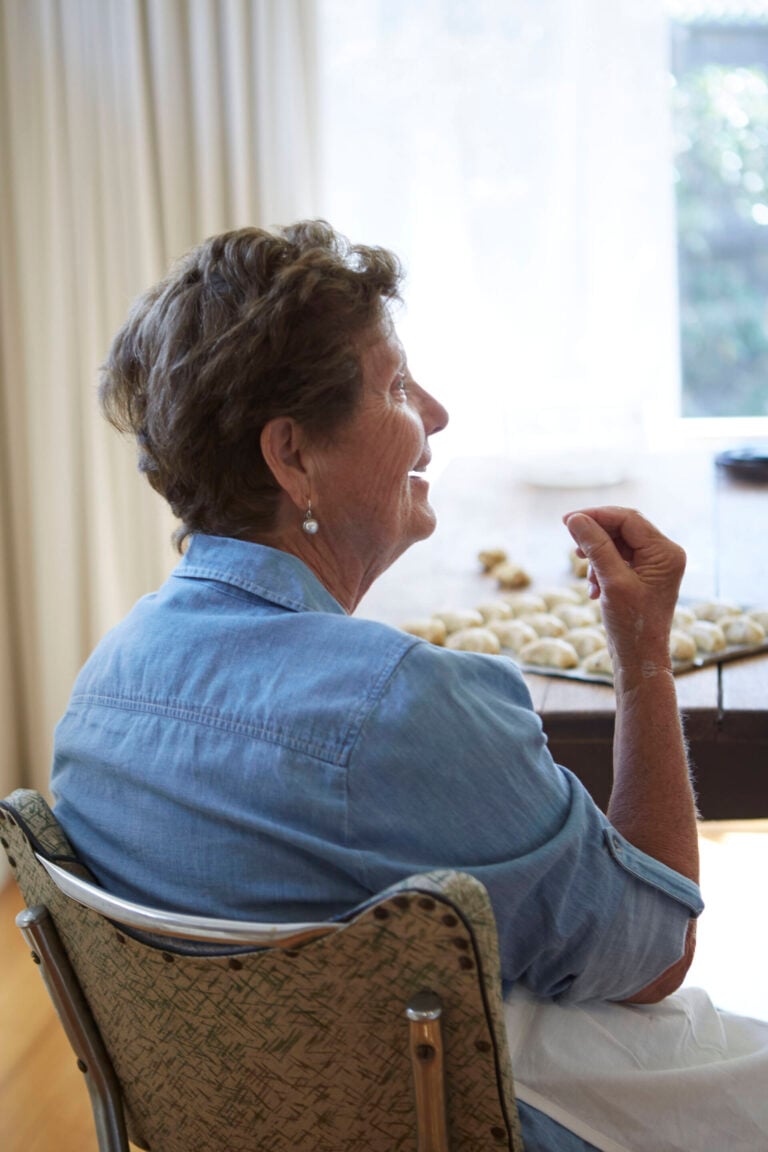 Heather Dinas’s mother arrived in Australia at 18, and like many children of migrants, this photo session became a capsule in time. Photo: Heather Dinas
“It is a beautiful time capsule of my mum. I look at the photos and my mum doesn’t look like that anymore. I’m grateful that I got it.”
Dinas recalls the “challenging experience of packing up” her parents’ home.
“All those little things that have been amassed over 47 years they lived there.”
The house becomes a shell. The humanity that once infused it is gone, so photographs become the only trace of the lives once lived there.
“The thing is, my mum was the heart of that home, and that’s something I realised,” she says.
“One of the last items we took out of the home was the dining table. I just looked at it and I just felt so emotional, and, you know… all those beautiful times sitting around it…”
Dinas’s voice breaks, as a sadness of past and present colliding becomes evident.
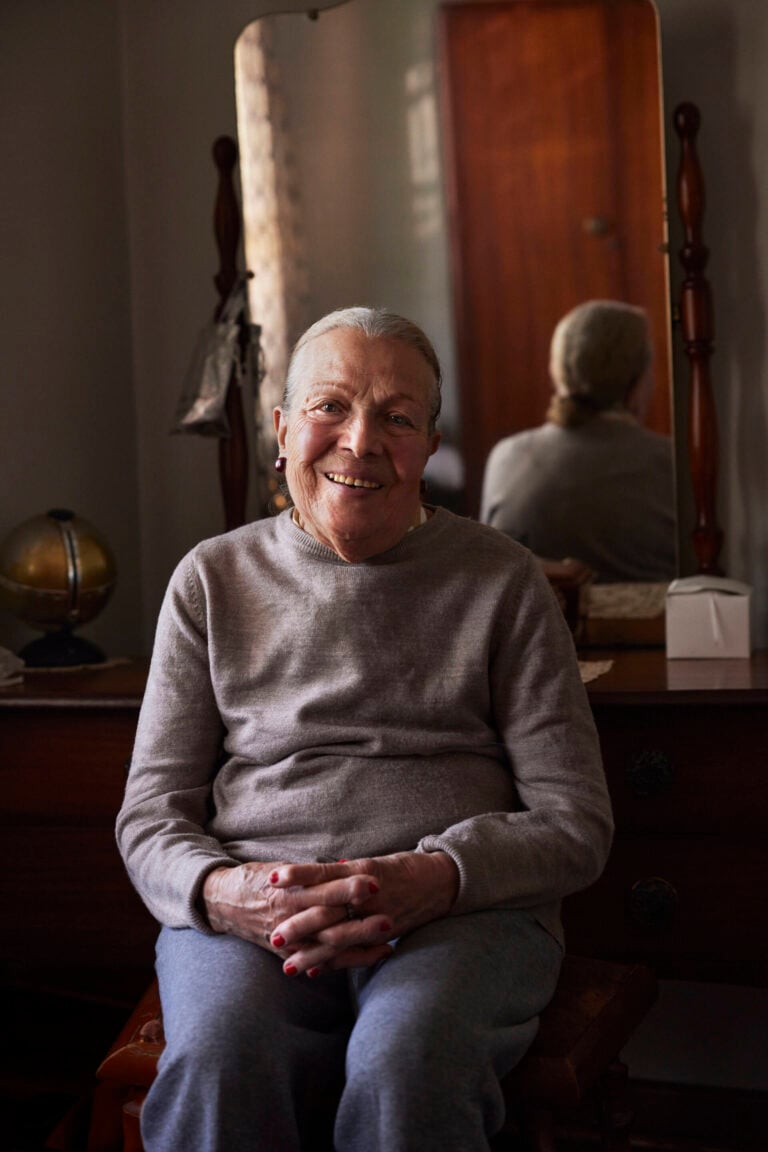 Nonna Fortunata, (aka Tina), in her 90s. Photo: Heather Dinas
A gift to migrant women
She understood “what a gift it is” to photograph people in these intimate spaces.
“I want to gift people, you can actually photograph in these beautiful spaces and with the background that I’ve got.”
In many ways, she is grafting onto memory itself, creating intimate photographs of people brought here — and born here — through migration.
“I am interested in immigrant women, their children, their daughters, and I’m quite fascinated by culture and heritage handed down through the matriarchs.”
She laughs at the notion of patriarchy and talks of how Greeks, Italians and others know “the actual power lies with the matriarch”.
The nostalgia mirage
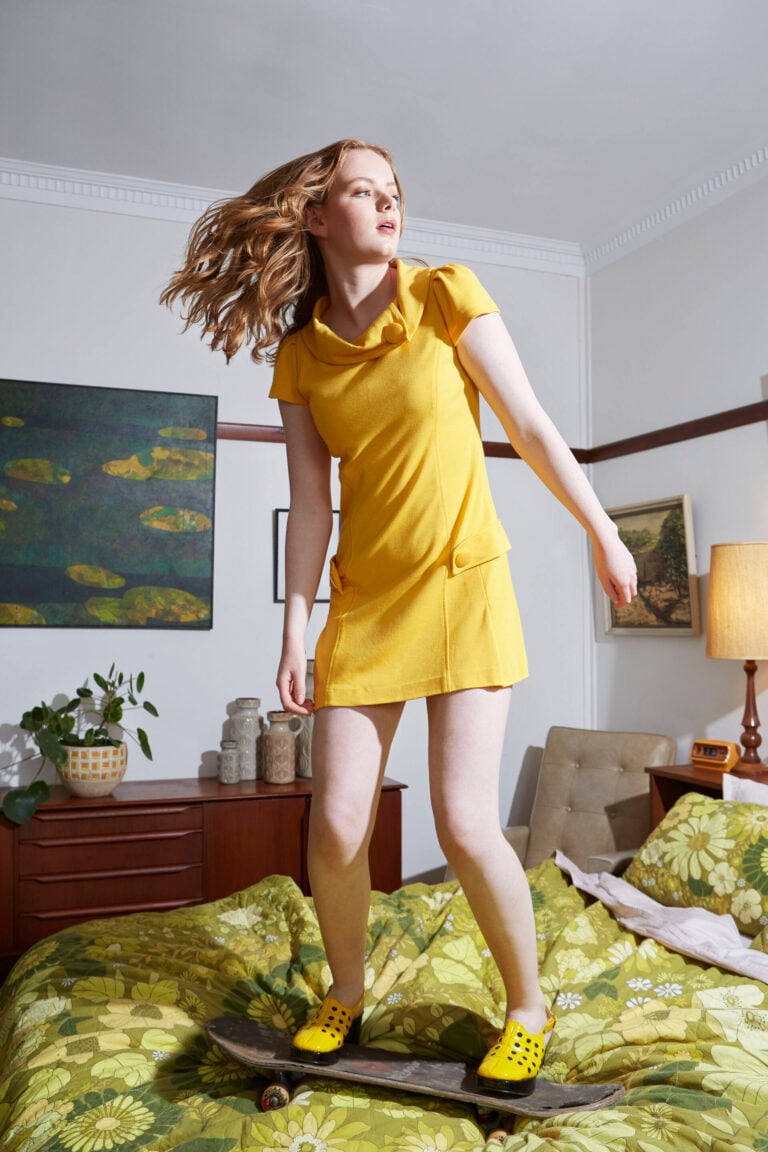
Dinas’s other work like Living in the 70s — a take on the Skyhooks song — has a patina of 70s coolness and reflects what she grew up with.
“I am a child of the 70s,” she declares.
The mirage of nostalgia is played out in burnt oranges, and baby blues — yet they are not recreations. They are contemporary reflections with a touch of irony.
“It’s a reflection but it has contemporary references.”
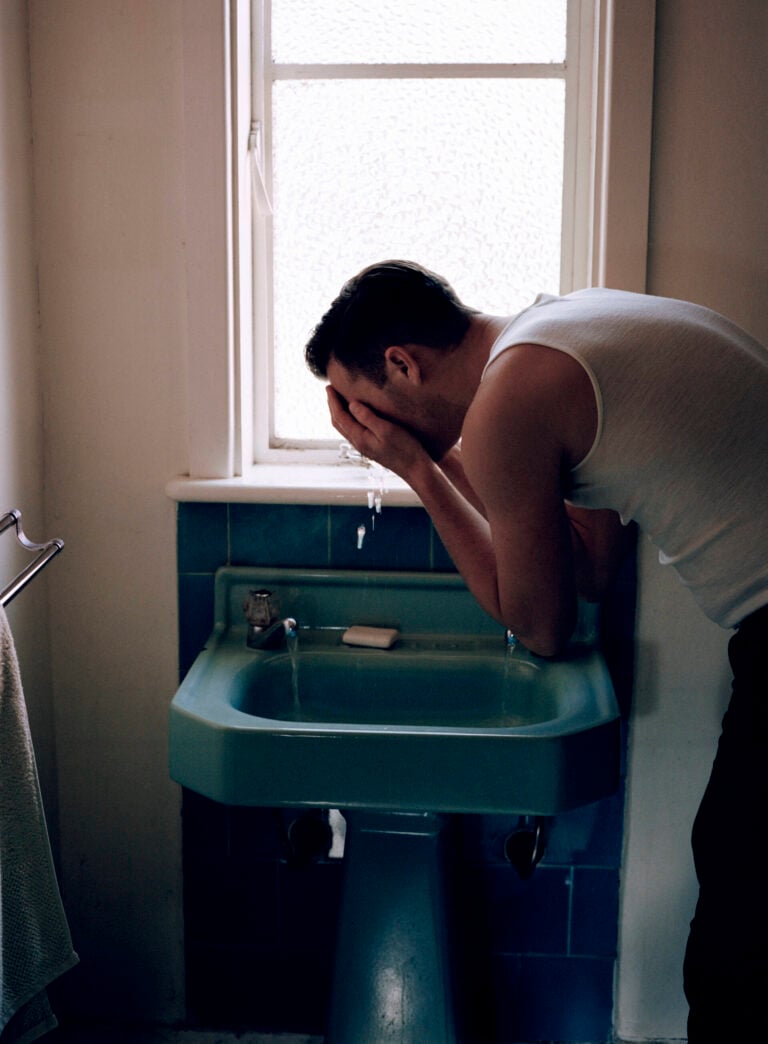
She points to a series called Marital Bed, “shot on medium format film”.
There is a gentle musky eroticism in the series. Hazy, dreamlike 1950s migrants’ bedrooms. A black-and-white wedding photo on the dresser; a woman in a slip doing up her hair in front of the mirror; a man in a white singlet washing his face over a 1950s basin. They are our migrant parents as young, vibrant adults — not parents. The would we never saw, or maybe just caught an uncomfortable glimse of as childtren.
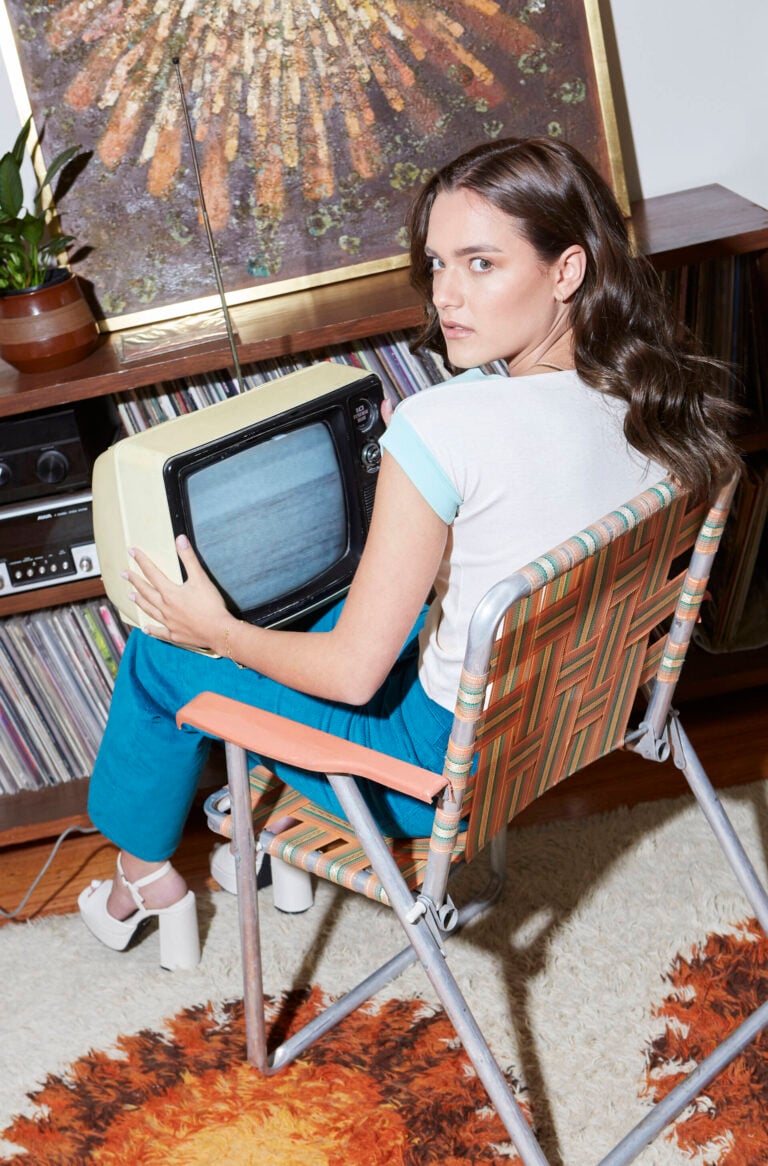 Heather Dinas’s other work, including Living in the 70s — inspired by the Living in the 70’s by Skyhooks — carries a distinct 1970s coolness, reflecting the world and culture she grew up with. Photo: Heather Dinas
A mentor of Dinas’s once said that all photographers have something at the heart of what they do, and that her “work is threaded by nostalgia, or a sense of nostalgia”.
A wedding photograph in one of the photos is of her parents, Dinas says.
“I had a moment when I was setting up, my head down, moving things around, equipment, whatnot, and for a split second I looked up and I saw mum and dad’s wedding portrait and I looked at the room.
“I actually forgot what I was doing. I’m like, what’s going on?”
Scenes of past lives, as fictional nostalgia, seep through the series like ghosts on film. They annimate a spaces Dinas’s memory.
Creating meaning and coming home
There’s something sentimental about working with film Dinas says and time has come to create meaning.
“Photographers talk about that moment where they develop their first black and white in the dark room, they see the scene they’ve captured by the magic of those lights in the dark room — it’s incredible.”
Thatworld of the darkroom — an image appearing as if by magic on silver gelatin photographic paper — is lost to digitisation.
“You are looking at silver gelatin paper, and there it is, and even the whole notion of how light goes through the lens and is reflected off objects outside. It goes through a lens, it turns upside down in the camera.”
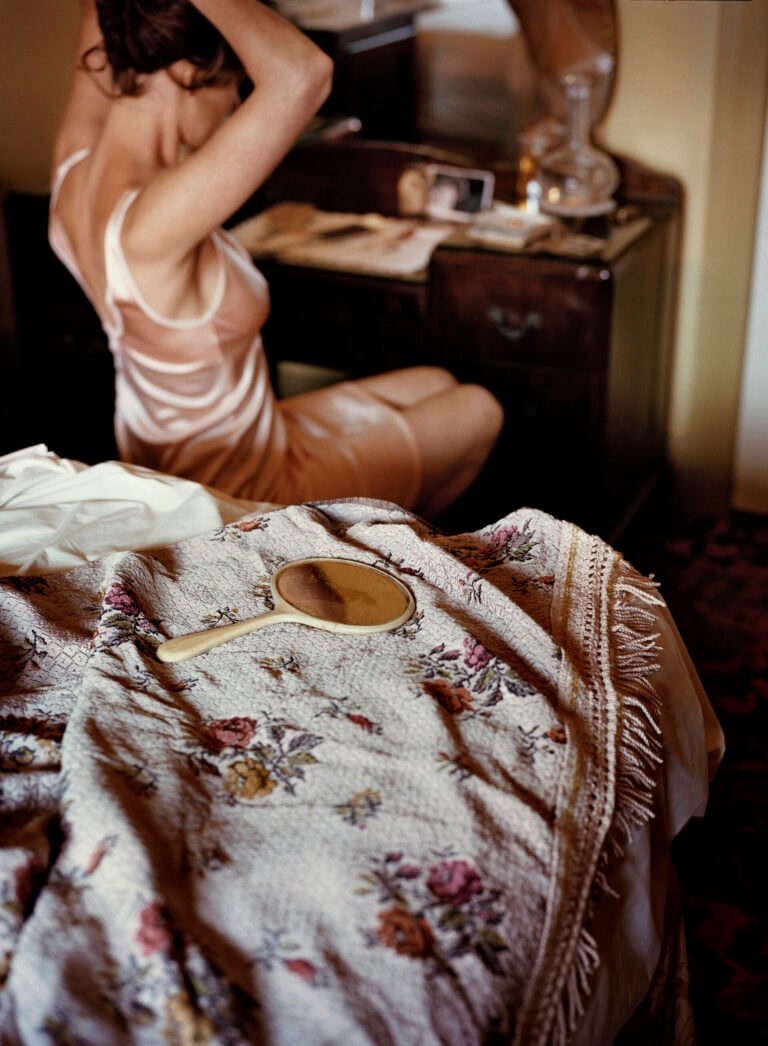 Dreamlike 1950s migrant bedrooms: a woman fixing her hair, a man washing at a basin — our parents as adults in intimate spaces, not as parents. Photo: Heather Dinas
The camera obscura, a phenomenon used by Renaissance artists, and which, through photography, augments an agency and power in showing truths.
Mothers Table a departure from the billboards, the glamour magazines loike Gourmet Traveller and campaigns for global brands. Dinas says she has “come back home”.
“I loved doing campaigns, but at the end of the day, I’ve had to ask what I want my work to mean.”
Dinas is calling on Greek Australians to contact her as she develops Mothers Table. The project will no doubt become a series of exhibitions and books. It is an important project for all of us.
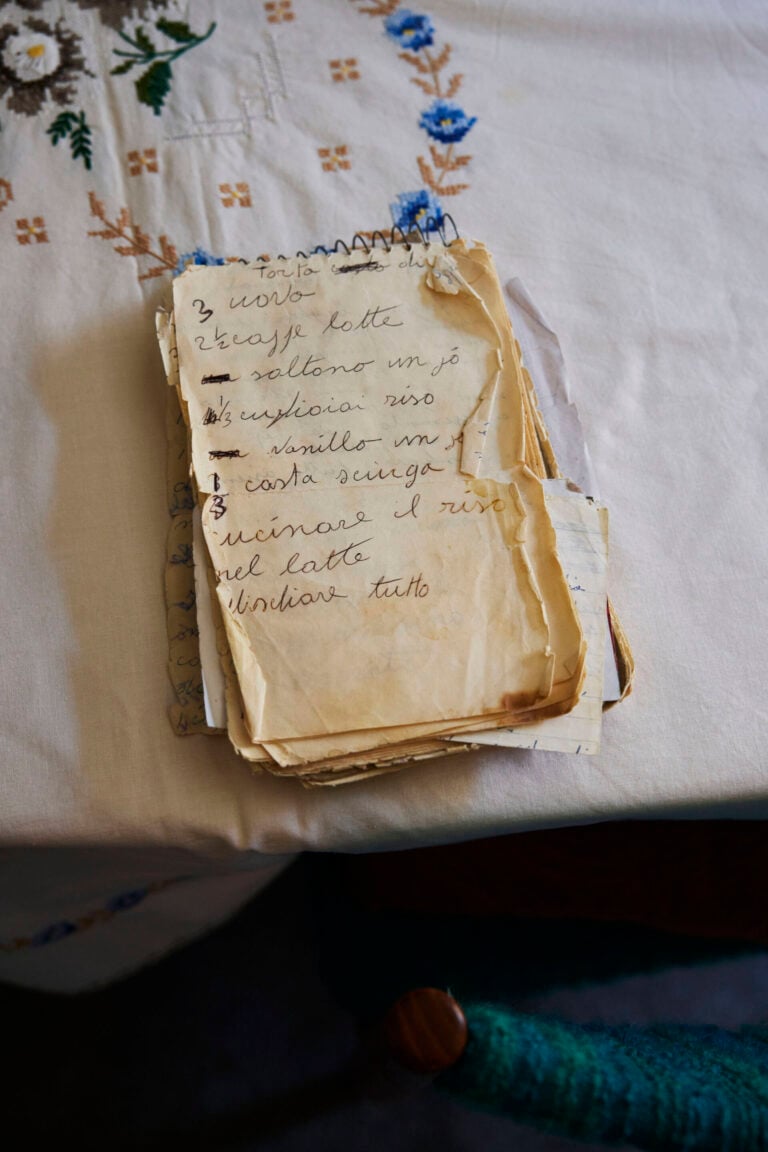 Nonna Tina’s recipe book, worn and yellowed, a narrative of its own. Photo: Heather Dinas
Heather Dinas wants to hear from Greek Australian migrants who may believe their mothers and or grandmothers may be great subjects for the project here.