
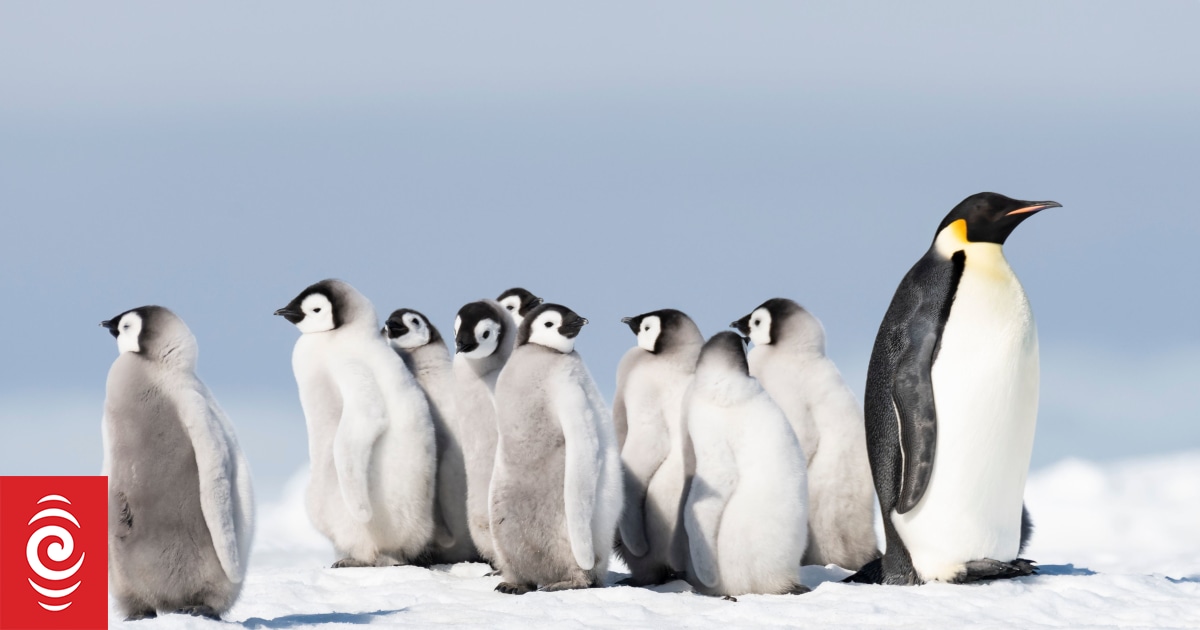
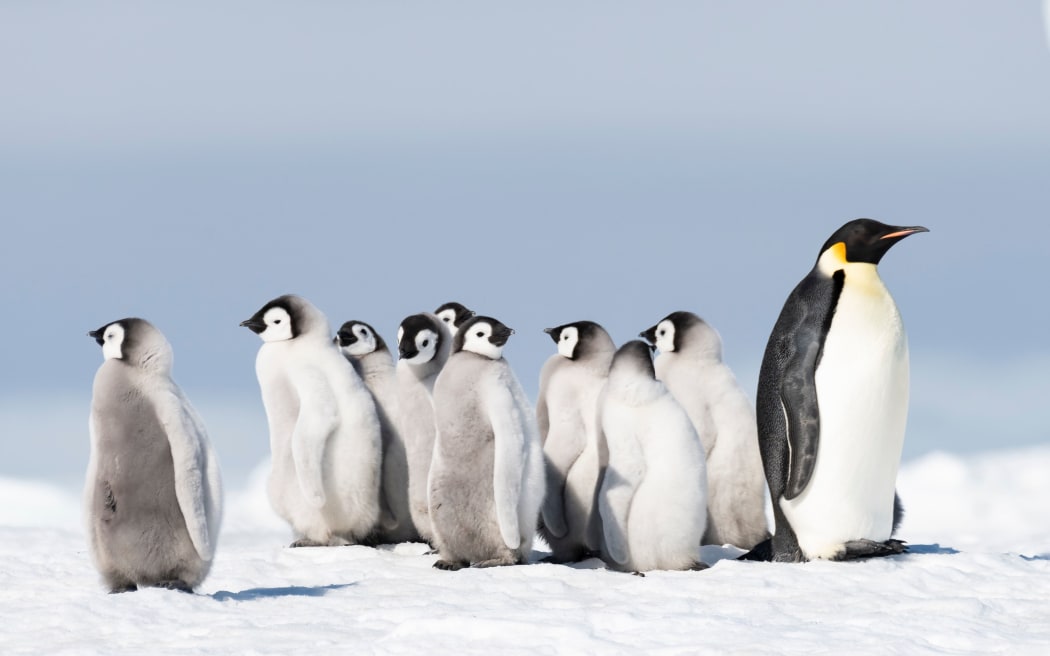
Almost half the breeding colonies in Antarctica have seen increased or complete failure since 2016.
Photo: 123RF
By Antarctic reporter Jano Gibson, ABC
China and Russia have been accused of blocking global efforts to protect the emperor penguin, amid concerns the species could become extinct by the end of the century.
The annual meeting of Antarctic Treaty nations wrapped up on Thursday, after 11 days of high-level talks held behind closed doors in the Japanese city of Hiroshima.
One of the key agenda items advocated by Australia and other countries was the proposed designation of the emperor penguin as a ‘Specially Protected Species’.
The conservation push followed last month’s listing of the emperor penguin as ‘endangered’ on the IUCN’s Red List of Threatened Species.
Since 2016, almost half of the 60 emperor penguin colonies in Antarctica have experienced increased or complete breeding failure, due to the loss of fast ice.
Scientists believe the iconic Antarctic species faces an existential threat, because of rapid changes to its breeding habitat, due to climate change.
“Given the threats to emperor penguin survival that have emerged in recent years, it is appropriate that the committee considers the use of available conservation tools… including the potential listing of the species as an Antarctic Specially Protected Species,” a submission co-authored by Australia stated.
In its communiqué, host nation Japan said the “overwhelming majority” of parties “strongly supported” the measure, which could have led to strict controls on shipping and tourism activities, among other conservation efforts.
Meeting chair Hideki Uyama of Japan was quoted as saying China had “strongly opposed” the designation, with “Russia aligning itself with China”.
“It was very disappointing that we failed to reach consensus,” Uyama said, according to Agence France-Presse.
“While the ATCM made incremental progress, with parties re-affirming the protection of the emperor penguin as a priority, the meeting stopped short of formally declaring Specially Protected Species status,” ASOC said.
“The proposal, opposed by only a small minority of parties, would have triggered a co-ordinated framework of conservation measures aimed at protecting emperor penguins from accelerating habitat loss and the risk of functional extinction by 2100 under ‘business-as-usual’ emissions trajectories.”
International conservation group WWF, which is a member of ASOC, said the emperor penguin needed urgent protection.
“The barometer is flashing red, yet critical protections are still being stymied by a small number of parties,” WWF chief advisor on polar and oceans Rod Downie said. “The endangered emperor penguin is a stark reminder of how the climate and nature crises are intertwined.
“We must look now to next year’s meeting in the Republic of Korea to deliver meaningful action to protect this icon on ice.”
Tourism, transparency also on agenda
The ATCM is not open to the public or the media, drawing criticisms that it is held behind an “ice curtain”.
Many details of what takes place at the annual event usually only emerge after the ATCM’s official report is published about a month after the event, but Japan has provided a brief summary of the outcome of several key topics at this year’s meeting, including:
A failure to reach consensus on applications by Canada, Belarus and Turkey to be given decision-making powers under the treaty
Increased exchange of information between parties to increase transparency
An agreement to continue discussions on the development of a framework for the regulation and management of tourism in Antarctica
The establishment of two new Antarctic Specially Protected Areas
“While the meeting was marked by a significant focus on peace, science, education and the 35th Anniversary of the Environmental Protocol, the Antarctic and Southern Ocean Coalition warns that critical scientific warnings are failing to translate into policy action,” ASOC executive director Claire Christian said.
“The pace of diplomatic decision-making remains dangerously slow, compared to the rapid climate and biodiversity [changes] unfolding in Antarctica.”
The next ATCM will be held in Icheon, Korea, in May, 2027.
– ABC