


Updated May 21, 2026 — 6:03pm,first published 3:11pm
Save
You have reached your maximum number of saved items.
Remove items from your saved list to add more.
AAA
Junior doctors at a Sydney hospital are furious after receiving a memo from their bosses that they characterise as a thinly veiled threat to their careers, and the suggestion that they’re not tough enough to work in the state’s healthcare system.
The email sent by Nepean Hospital’s administration to junior medical officers last week is emblematic of the ongoing tension – expressed in all caps – between NSW’s public hospitals’ attempts to adequately staff increasingly busy emergency departments and inpatient units, and overworked junior doctors who are expected to do unpaid overtime.
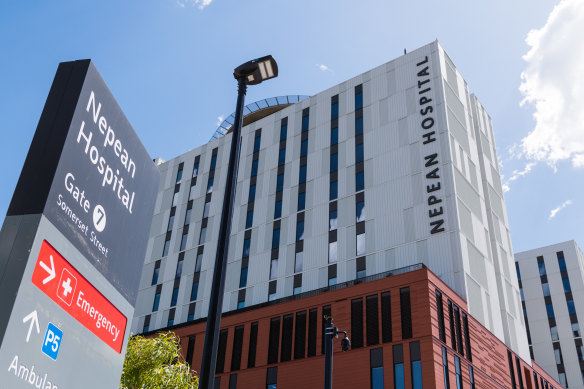 The letter sent by Nepean Hospital administrators is the latest attempt to blame individual junior doctors for systemic failings, ASMOF NSW said.James Brickwood
Meanwhile, a report released on Thursday by the doctors’ union suggested one in three doctors employed by NSW public hospitals is considering resigning due to working up to 70 hours a week.
The stated aim of the note to Nepean’s junior doctors was to “clarify some trends” and “misunderstandings of rostering” and appeared to address inappropriate use of sick leave, reminding junior doctors that it is to be used when they are ill, not for life events or future engagements.
“IT IS YOUR RESPONSIBILITY to swap out of the shifts [sic],” read the letter posted on Reddit.
Related Article
“Collegiality should result in offers to help those helping you,” it read.
The note acknowledged the risk of fatigue, noting “the roster is designed to ensure NO ONE is exhausted”, and suggests some junior doctors were constantly covering shifts for their colleagues.
“[T]here is an implicit acceptance when entering medicine, you are going to be exposed to after-hours and nights BECAUSE all doctors cover these hours because healthcare is 24/7,” it continued.
“Your careers will be hopefully long .. [sic],” the note concluded: “Please come and make contact if you are struggling now, as it’s not a great indicator for longevity in the profession if you are already feeling the strain from rosters, which unfortunately are absolutely standard for health [sic].”
In a statement, a spokesperson for the Nepean Blue Mountains Local Health District apologised to the junior medical officers (JMOs) for the email.
“We know JMOs are the future of healthcare, and we deeply value their contribution,” the spokesperson said. “Supporting the wellbeing of our JMOs is a priority for our district, and we acknowledge this email did not reflect this.”
The spokesperson said senior doctors met JMOs to discuss rostering practices, and stated rostering was in line with safe working standards and fatigue management guidelines.
A Nepean staff specialist not authorised to speak publicly said their junior doctors’ colleagues were deeply upset by the note, which “amounted to a thinly veiled threat”.
“It essentially implied that they would be blacklisted,” the staff specialist said. “We already have a recruitment and retention problem … these are the [junior doctors] who chose to stay when the vast majority leave, and they are being punished for it.”
Junior doctors agreed that sick leave should be used appropriately, the staff specialist said. But the tone of the email was insulting, given that many had raised concerns about being overworked or about their units being understaffed, and they were met with a sluggish response.
“Every cohort is going to have people who call in sick when they’re not sick, especially if they are disgruntled because they are getting treated terribly … it’s a tale as old as time,” they said.
The Australian Salaried Medical Officers Federation (ASMOF) NSW said the statement was indicative of administrators blaming doctors for systemic failures, including ongoing recruitment and retention issues.
Last year, NSW Health apologised after an administrator at John Hunter Hospital accidentally sent an email to junior doctors calling them a “workforce of clinical marshmallows [sic]” in response to rostering issues.
“NSW Health does not place any maximum limit on the number of hours a doctor can work in a day,” the union’s president, Dr Nicholas Spooner, said. “A bus driver is legislatively prohibited from working more than 12 hours a day.”
Doctors at Nepean reported working up to 17-hour days, often back-to-back for up to two weeks.
Spooner said failures to manage fatigue were having severe psychological impacts on doctors and risked compromising patient care.
Junior clinicians and senior specialists have repeatedly warned that unpaid overtime is baked into Australia’s hospital system as a Band-Aid for understaffing, and overworking junior staff to the point of exhaustion can lead to medical errors.
A spokesperson for NSW Health said that situations will arise in which doctors may be required to work additional hours to ensure patients can be confident they are receiving the highest-quality medical care, and staff can perform their duties without adverse effects from fatigue.
From June, NSW Health will meet regularly with ASMOF and the Health Services Union to develop additional standards, controls and strategies to support fatigue management for JMOs, the spokesperson said.
ASMOF and NSW Health are in arbitration before the Industrial Relations Commission, with the union seeking pay parity with other states for NSW’s public hospital-employed doctors.
Some key findings from a survey of 2681 NSW public hospital doctorsOne in two worked more than 50 hours in the previous weekOne in three worked more than 55 hoursOne in eight worked more than 70 hours63.5 per cent said excessive workloads were affecting their health and wellbeing69 per cent said they had worked sick or injured32.6 per cent said their roster did not allow the mandated 10 hours’ rest between shifts (overtime and on-call duties meant the true prevalence was likely higher)32.1 per cent said they had considered resigningStaffing shortages were seen as routine and poorly managed
Source: ‘Results of the ASMOF Award Arbitration Survey 2025’, Dr Sarah Wise et al, School of Public Health, UTS. Commissioned by ASMOF NSW
A 2020 Black Dog Institute study involving just under 43,000 Australian doctors found that more than one-quarter of junior doctors were working unsafe hours, which doubled their risk of developing mental health problems and suicidal ideation.
Save
You have reached your maximum number of saved items.
Remove items from your saved list to add more.
From our partners