
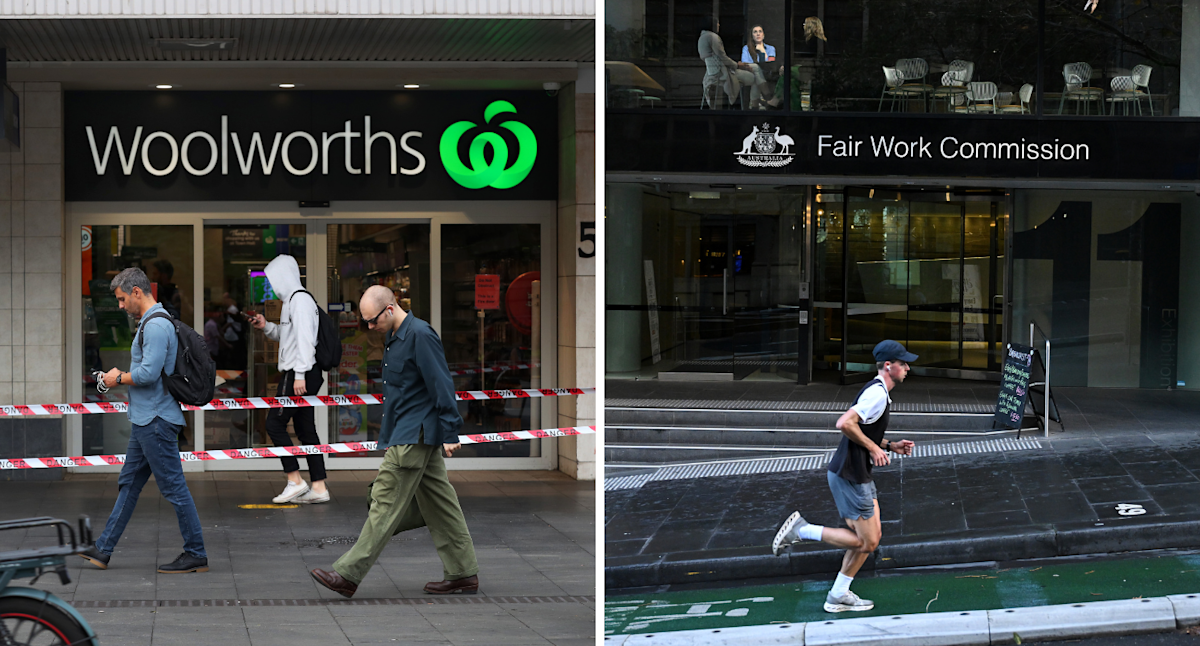
An employer group is calling for a major crackdown on Fair Work Commission claims following a spate of baseless and AI-generated applications. The Fair Work Commission is being swamped with a surge of people suing their bosses, with platforms like ChatGPT able to write applications in a matter of minutes.
The Australian Resources and Energy Employer Association (AREEA) has called for the current $89.70 filing fee to be increased to $500 and for any fee waivers to face stricter scrutiny. It argued there was now “virtually no downside to having a crack”, something that was laid bare in a recent Woolworths worker case thrown out by the Commission.
A Department of Employment and Workplace Relations spokesperson told Yahoo Finance the government was “aware” of the pressures on the Fair Work Commission caused by its rising caseload.
RELATED
“The government is considering options to assist the commission, including amendments to the Fair Work Act,” the spokesperson said.
Workplace Relations Minister Amanda Rishworth previously told the Australian Financial Review the government was considering “all possible options that don’t dilute the rights of workers”.
She stressed that claims needed to be “accessible to workers” and “costs should not deter a worker from actually seeking justice”, so claims needed to remain low-cost.
Do you have a story to share? Contact tamika.seeto@yahooinc.com
Woolworths ‘plumber’s crack’ case shows problem facing Commission
AREEA chief executive Steve Knott said a recent decision by Fair Work Commission deputy president Alan Colman laid bare the problem facing both employers and the Commission.
The claim was filed by a Woolworths employee seeking compensation from the supermarket giant following an embarrassing interaction with a co-worker.
During a casual shift, he was told by a co-worker “in rude terms” to cover his plumber’s crack, or as Colman put it, “the cleft of his bottom [which] was protruding from his trousers”.
Throwing out the claim, Colman said there was never actually any dismissal. The man had continued to work shifts after lodging his claim, before he later stopped turning up for work.
“This case had nothing to do with dismissal … It was evidently a speculative claim made in pursuit of a monetary settlement that would spare Woolworths the nuisance of defending it,” Colman said.
Colman said such unmeritorious claims compounded the Commission’s “burgeoning caseload”, but claimants had little to lose and there was no disincentive for the speculative claims.
He noted it was the man’s fifth Fair Work application in two years.
Knott said employers were spending thousands of dollars defending claims “that should never have made it through the front door”.
“The problem is structural. Until there are real consequences for speculative applications, the volume will continue to grow,” he said.
“Access to justice should never mean open season on employers.”
In February, Fair Work Commission president Adam Hatcher said he expected up to 55,000 lodgements this financial year, an increase of 70 per cent in the space of three years.
Hatcher said the Commission’s operations were being “significantly disrupted by the availability and use of AI tools”, and there was no sign of the growth plateauing out.
Hatcher has since launched internal reforms, including requiring applicants to disclose use of AI in their applications or face costs orders.
Get the latest Yahoo Finance news – follow us on Facebook, LinkedIn and Instagram.