
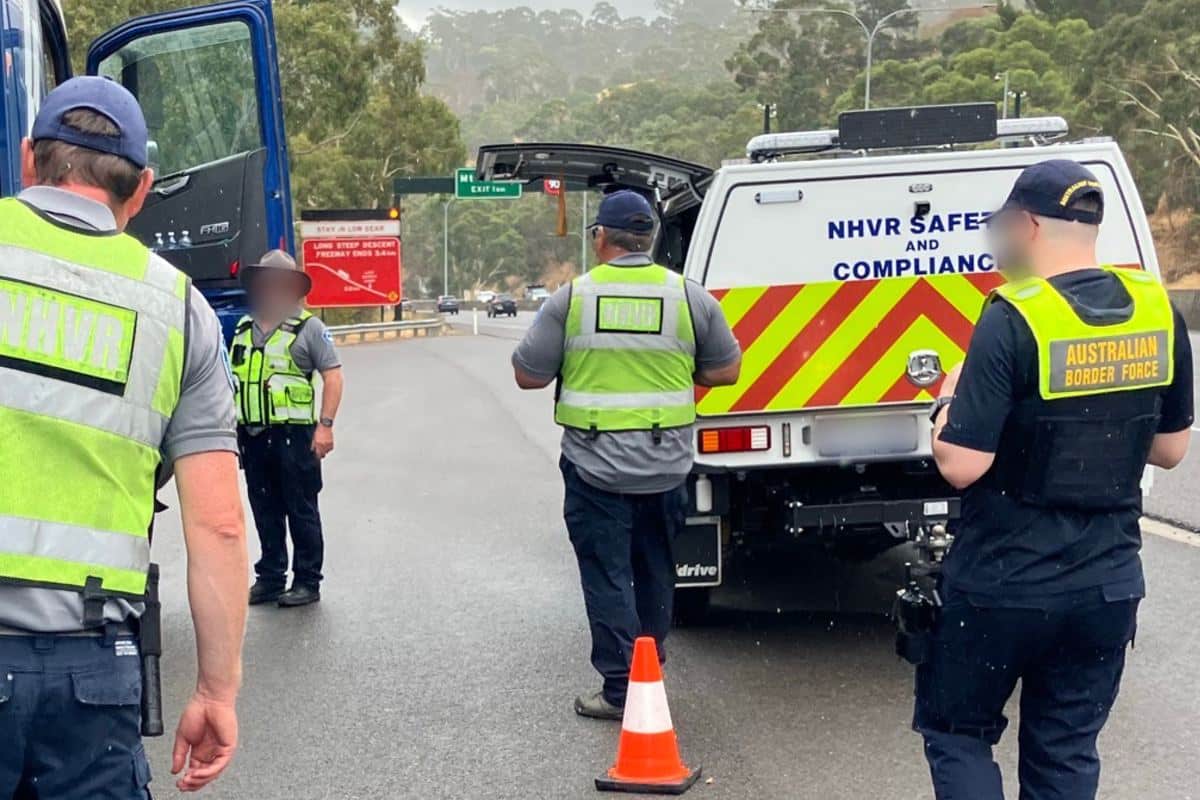
Senator Glenn Sterle described the current level of cooperation between agencies as unprecedented for the trucking industry. Image: ABF
An on-going multi-agency crackdown on sham contracting and alleged worker exploitation is shaping as the biggest operation of its kind the trucking industry has ever seen, said WA Senator Glenn Sterle.
Speaking to Big Rigs after a recent Melbourne roundtable involving the Fair Work Ombudsman (FWO), National Heavy Vehicle Regulator (NHVR), Australian Border Force and Australian Taxation Office, and leading associations, Sterle said there had been a seismic shift in both engagement and enforcement activity across the sector.
“The feeling in the room is one of positivity that we’ve never seen before,” said Sterle who convened the multi-agency follow-up to the initial operations held earlier this year.
“Before November last year, we had no engagement. Now the agencies are all on the same page as us, doing everything they can.”
While acknowledging the process was still evolving, Sterle described the current level of cooperation between agencies as unprecedented for the trucking industry.
“This has never happened before,” he said.
“We want them to go damn hard – and go even harder. I’d be very happy to see people put out of business for this illegal behaviour.”
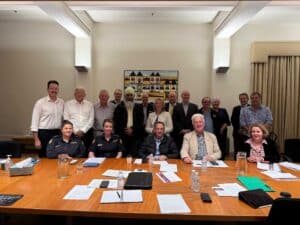 Senator Glenn Sterle, front centre, convened another multi-agency roundtable this week. Image: Senator Glenn Sterle
The FWO revealed it had written to 45 road transport companies, notifying them of its interest in addressing sham contracting and misclassification arrangements.
“The FWO has also recently conducted site visits and has a number of ongoing investigations into alleged sham contracting arrangements in the road transport industry.”
A recent NHVR crackdown resulted in prohibition notices grounding several heavy vehicle businesses flouting safety regulations across the country, following intelligence-led investigations into the small number of highest-risk operators presenting significant risks to public safety.
In a statement to Big Rigs, the NHVR said 21 operators had been identified as highest-risk, with nine no longer accredited by the regulator.
Another 10 are in the process of having their accreditation eligibility reviewed and two have been issued notices warning of potential accreditation action.
The NHVR has also issued 15 prohibition notices to five operators and directors. The regulator has not revealed any names.
NHVR CEO Nicole Rosie said the regulator was also continuing to work closely with government and industry partners to address sham contracting practices across the sector.
“The majority of the heavy vehicle industry operates safely and professionally, often under significant pressure. These businesses invest in compliance, maintain their vehicles, and prioritise the safety of their drivers and the community,” said Rosie, who also discusses the crackdown on the latest episode of the NHVR’s What’s Your 20? podcast.
“Our focus is increasingly on the small cohort of highest-risk operators – those who repeatedly fail to comply with the law, are involved in serious incidents, or do not act on known risks.
“If you are a high-risk operator and you do not meet your obligations, we will take action.”
Sterle said an “absolutely massive light” had been shone in a very dark corner of the industry.
He also revealed there had been more than 140 tip-offs from within the industry since the crackdown intensified, suggesting growing frustration among operators and drivers over alleged unlawful behaviour.
Sterle said the ultimate goal was not simply to target drivers, but to hold parties throughout the supply chain accountable through stronger use of chain of responsibility laws.
“It’s got to go up the chain,” he said.
“Employers and companies that are demanding these cuts in their contracts need to be exposed and they need to be caught up in the chain of responsibility.”
He said the crackdown was also closely tied to road safety concerns, with regulators increasingly identifying links between alleged sham contracting arrangements and poor vehicle maintenance practices.
“The correlation, when the evidence is gathered, that when they found participants in sham contracting, the link to poor maintenance was smack bang hand in hand,” Sterle said.
“It leads to unsafe practices and unhealthy practices.”