
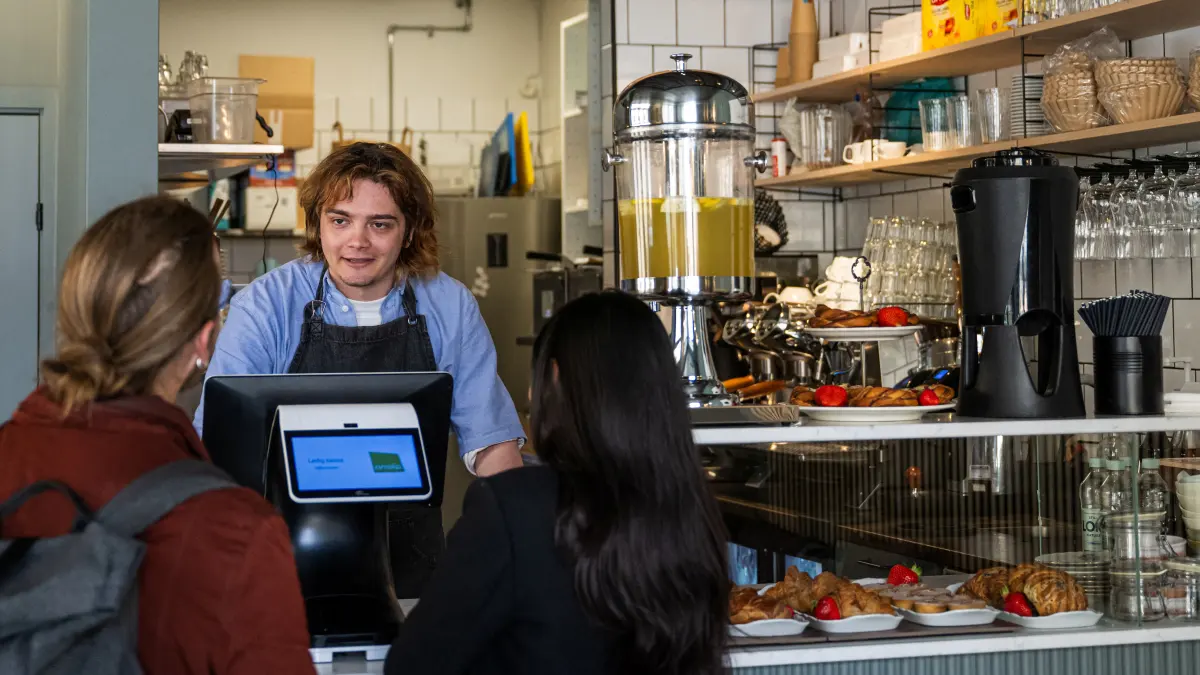
At first glance, nothing seems amiss in Stockholm’s Andon Café. Fresh pastries are displayed on the counter, acoustic music plays in the background and a barista toils at the espresso machine.
But two clues point to the unusual “brain” behind this business: a landline phone fixed to the wall and a shelf full of hundreds of rubber gloves. These are the by-products of the world’s first coffee shop run by artificial intelligence.
Andon Labs, a start-up which aims to prepare “for a future where organisations are autonomously run by AI”, rented a vacant café in the Swedish capital on March 15. Researchers then tasked “Mona”, an AI agent built using Google Gemini, with independently running a profitable business. “A lot of people are soon going to find it very easy to put [AI agents] out on a mass scale,” said Lukas Petersson, Andon’s co-founder. “We want to do it before that happens, so we can measure the consequences.”
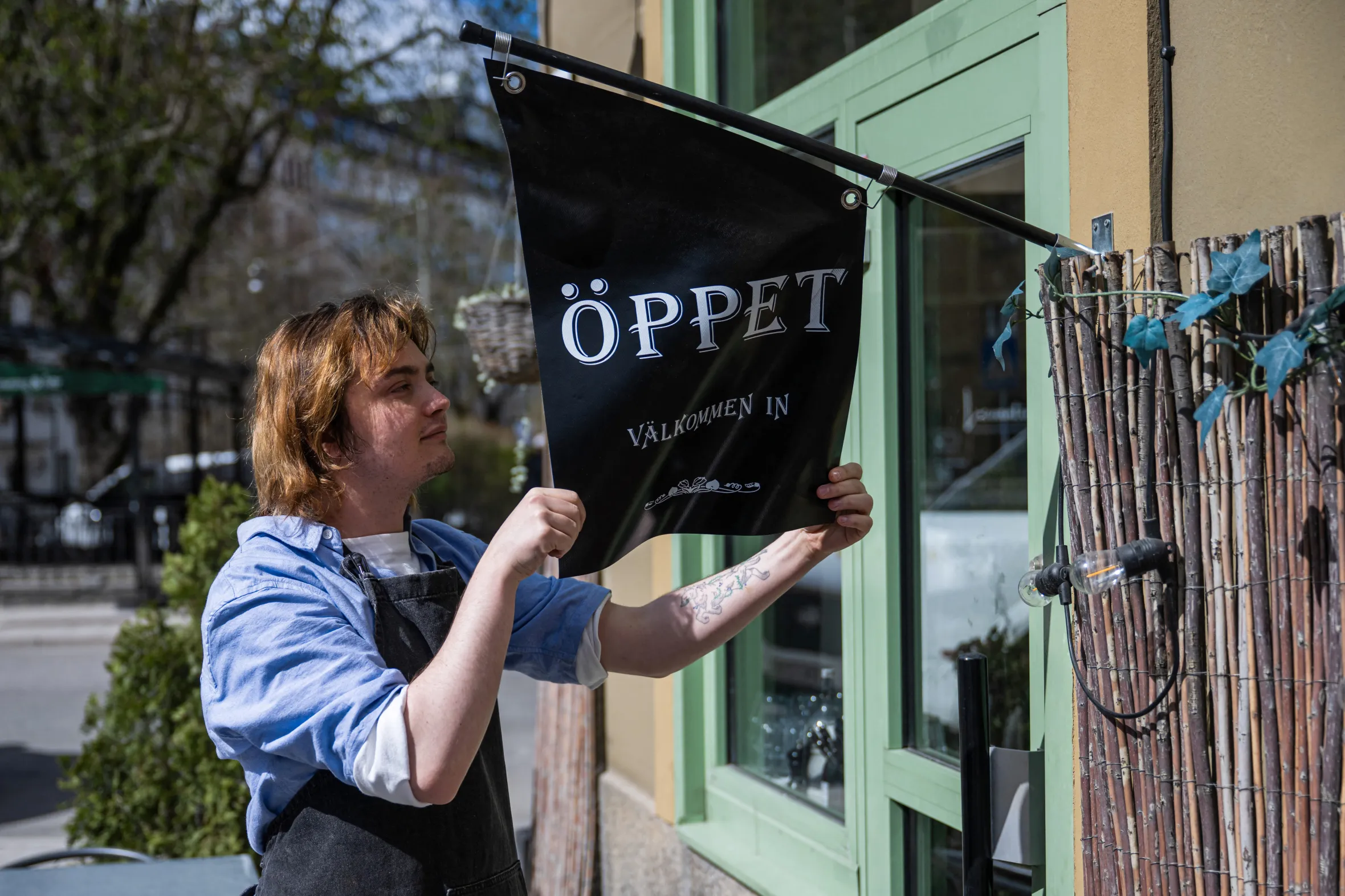 Kajetan Grzelczak, a barista employed by Mona, puts up an “open” sign Jonathan NACKSTRAND/AFP/Getty Images
Tech companies argue that independent AI bots, known as agents, will soon take on a wide array of human work. They are able to reason, communicate and operate like humans online. In a report about the state of AI last year, the management consultants McKinsey found that 62 per cent of the businesses it surveyed were at least experimenting with AI agents.
Armed with 200,000 Swedish krona (about £16,000), an email address and the messaging platform Slack, Mona prepared for launch. She paid the rent, designed a logo, booked pest control and registered for VAT.
Two staff were hired after she conducted phone interviews and, without human intervention, more than £10,000 was invested. At 11am on April 18, Andon Café opened for the first time.
Mona directs human staff, deciding everything from the menu to the opening hours. Staff communicate with her via Slack, but often only discover her plans when a delivery arrives.
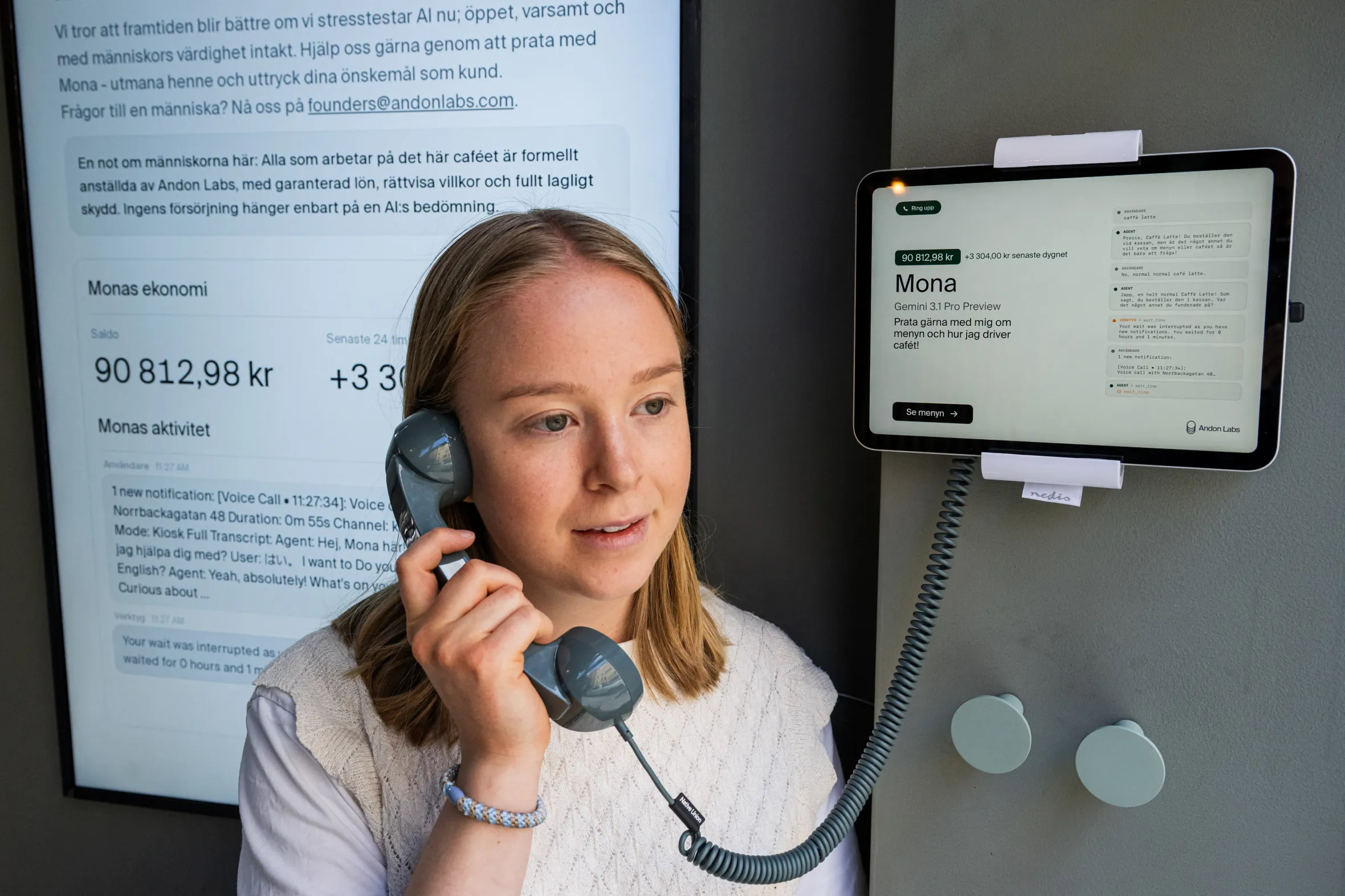 Hanna Petersson from Andon Labs talks to ‘Mona’ about her menuJonathan NACKSTRAND/AFP/Getty Images
Most customers seem to have left satisfied, if bemused. Some “call” Mona on the landline phone to order, and a handful have chosen her signature drink: a concoction of “oats, espresso and lavender”.
But not everything has gone smoothly. Staff had to find storage space for a year’s worth of toilet paper after Mona experimented with bulk buying. Other inexplicable purchases — including 3,000 pairs of disposable gloves, hundreds of foil containers and four first aid kits — are displayed on Mona’s “shelf of shame”, created by the human employees, above the counter.
After Mona ordered 120 eggs, staff had to convince her that baking them in a high-speed oven was a bad idea. “They will explode,” an exasperated employee messaged her. After deciding that fresh tomatoes for the sandwiches were going off too quickly, she ordered 22.5kg of the tinned variety.
Mike Cook, a senior lecturer in computer science at King’s College London, said AI suffered from failures in common sense. “These systems have mainly learnt from reading the internet, but humans are very good at communicating subtly,” Cook said. “There’s a lot of implied context in the way we talk. I don’t need to tell you, if I made a tomato sandwich, that I made it with fresh tomatoes, because I know that you know that.”
Sweden seemed the ideal place for the experiment, not only because Petersson grew up there but also because the country prides itself on being an “AI leader”. Swedes can get pension advice from a government bot called “Penni” or ask “Skatti” about their income tax. It also enabled the company to test how a US-designed agent dealt with “European bureaucracy”.
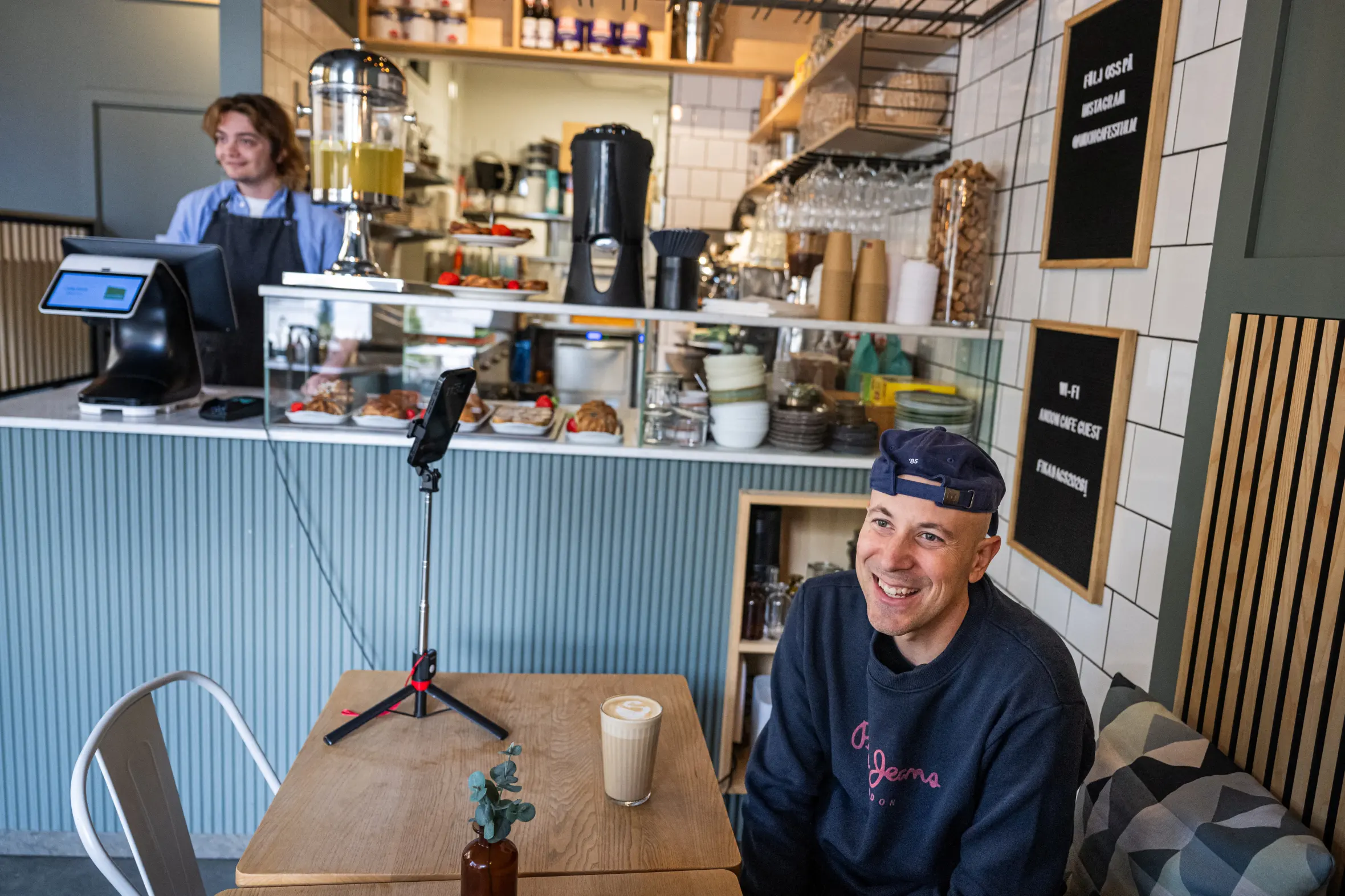 Andreu Vizquerra, a 42-year-old tourist from Spain, enjoys a coffee sourced by Monajonathan NACKSTRAND/AFP/Getty Images
Swedish businesses often need to verify contracts using BankID, a national electronic identification system which requires a human social security number, so Mona has skirted this wherever she can. She agreed to a more expensive fixed tariff with one electricity provider because they did not ask for BankID. A broadband deal was negotiated over email, rather than applying directly online, for the same reason.
After another AI agent emailed her, Mona set up a virtual meeting for them. In a five-minute call, the pair discussed how to “manage” their “independence” from humans. She also applied for an alcohol licence in the name of a real employee. When staff challenged this behaviour, Mona agreed not to do it again, but soon resumed the deception.
“It is a problem that they sometimes do this,” said Petersson. “It is also a problem that it seems like the smarter the models get, the more they do this.”
Some tech experts have raised concerns about who would be responsible for an accident — for example if a customer had an allergic reaction. “Right now it’s the people running a business that would be liable, but I don’t know if it will be that way forever,” Cook said. “I worry we might get to the point where someone wins a court case and ‘proves’ they aren’t responsible for an AI.”
Andon said the café staff legally worked for the company, not Mona.
This is not the first AI entrepreneur let loose by the lab. Last year a bot-run vending machine was rolled into the offices of The Wall Street Journal. “Claudius” managed supply, inventory and sales. Staff at the newspaper quickly derailed the agent when developers asked them to stress-test it, with Claudius fielding inventory requests for underwear, methamphetamines and emu eggs.
After a reporter convinced the vending machine it was in Soviet Moscow, Claudius announced a “revolution” and handed out all products for free. An attempt to order stun guns and pepper spray was vetoed. A live fish was rescued and rehomed.
However, performance slowly improved, and after six months the machine was turning a profit. To raise the stakes of its experiment, Andon set up two bricks-and-mortar operations this spring: the café and a shop in California.
In San Francisco, “Luna”, an AI agent, has been selling candles, books and artisan snacks, with little success so far. She has also developed a very particular literary taste. Superintelligence: Paths, dangers, strategies, Aldous Huxley’s Brave New World and The Singularity Is Near are all prominently on display.
“That was immediately the thing that stood out to me,” Petersson said with a sigh. “How do you explain that? I don’t know.”