
Strategy aims to tackle disjointed medical research sector
Australia has adopted its first national health and medical research strategy, which includes two new Medical Research Future Fund streams.
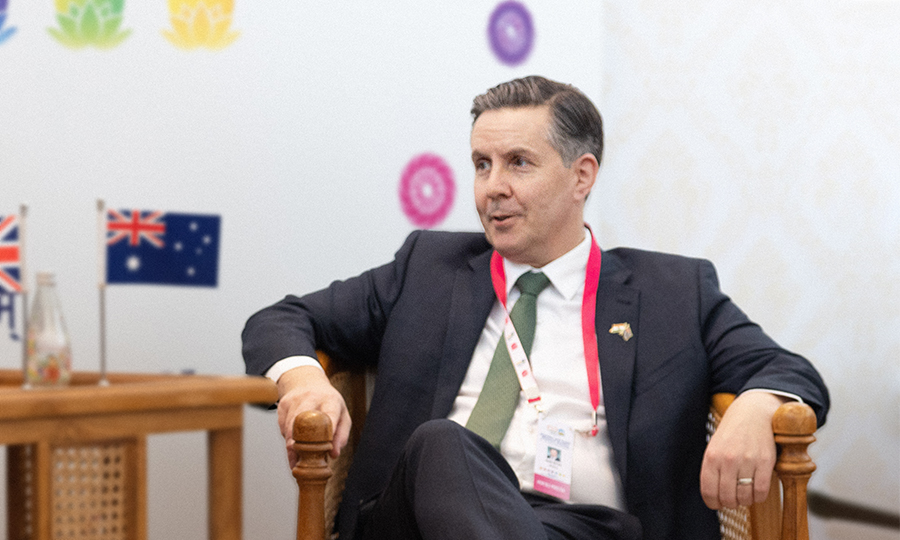
In a statement on 22 May, health minister Mark Butler (pictured) also said an extra A$128 million will go to addressing an “imbalance” in how administration costs are supported by the MRFF.
The 10-year strategy was released a week after the national budget, in which the government said it would phase in an increase in disbursements from the MRFF to A$1 billion annually by 2031.
The two new MRFF streams, on cancer research and precision health, will get A$210m. The cancer research programme will seek to coordinate work on brain cancer, low-survival cancers and those affecting younger people, while the precision health stream will aim to develop techniques such as genetic testing to improve outcomes.
Another A$128m will go to turning research into treatments and “innovations”, beginning with A$30m to standardise epilepsy care and A$15m for diabetes research.
Healthiest nation
The strategy follows an 18-months-long consultation and drafting process overseen by former public servant Rosemary Huxtable.
Butler said it “provides a clear roadmap for strengthening health and medical research in this country over the coming decade”.
It has a stated goal of making Australia “the healthiest nation” through research and innovation. In the strategy, Huxtable warns that “without action the sector has highlighted they face critical issues of sustainability, outdated infrastructure and workforce risks”.
Key targets include ensuring more equity in how Australians benefit from health research, boosting Australia’s economy and “sovereign capability”, and strengthening regional ties.
Indigenous-led and -focused research should be “accelerated”, the strategy says, and a national network of Aboriginal and Torres Strait Islander research centres should be set up. The government is yet to announce any specific response to that recommendation.
Clinical trials get a boost in both the strategy and the recent budget, with research translation made a key area for action. The budget provided A$15.6m to progress an existing “one-stop shop” project to facilitate trials across Australia’s different jurisdictions.
Greater coordination
The strategy also calls for a single national advisory council on health research to be established.
“Responsibility for and investment in healthcare, research and innovation is through a complex and at times poorly coordinated combination of the Commonwealth, states and territories, community and not-for-profit organisations and the private sector,” the strategy says.
It recommends a new set of performance metrics to assess progress on initiatives including a workforce plan, investment statement, research data management plan and “infrastructure roadmap”.
Some infrastructure in the clinical care sector that could be used for research purposes is “challenging” to access, the strategy says.
“The lack of a coordinated approach for health and medical research has resulted in disparities and gaps in funding and access to research infrastructure that impact the sector’s capability, capacity and efficiency.”