
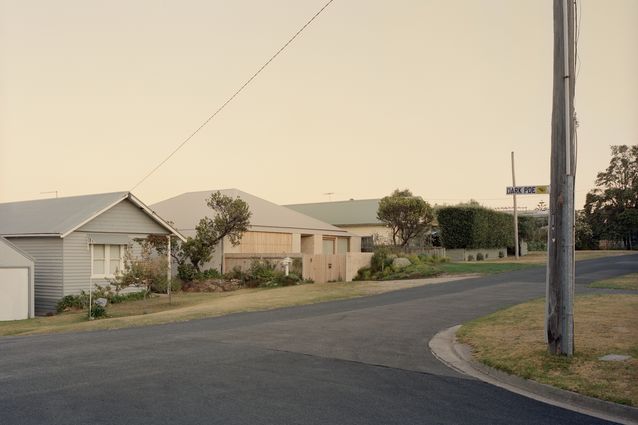
Sorrento, a beachside town on the tip of Victoria’s Mornington Peninsula, has been building over itself for decades. New houses often arrive larger and louder than those that came before, asserting themselves on streets that were once fronted by modest shacks built of fibro, weatherboard and corrugated iron. Sorrento House by Victoria Merrett Architects does something different – something a little quieter.
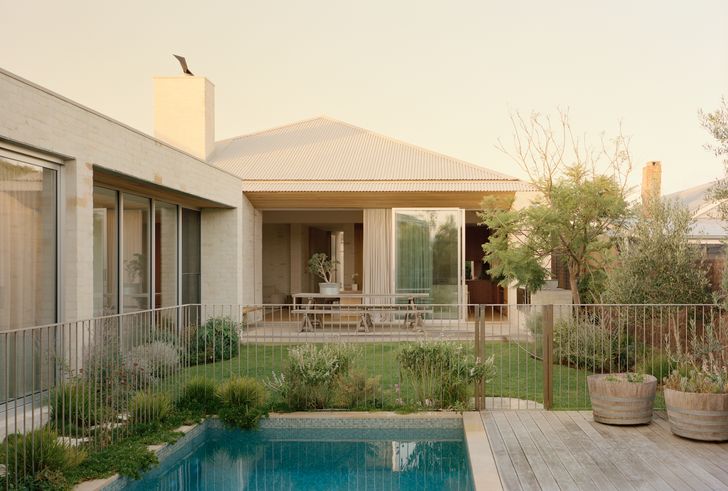
The house is set one metre into the ground, so that its roofline sits close to those of its neighbours despite a client brief for a generous family home. The materials – recycled brick with sand and cement render, blackbutt timber and corrugated Colorbond in ‘Dune’ – are drawn from the tones and textures of the area. The render gives the brick a bleached, chalky quality, a finish that recognises its locale: limestone, coastal scrub, the particular tone of afternoon light on the Mornington Peninsula. As Victoria explains it, the house’s presence is not asserted, but rather “assembled from what feels appropriate.” In other words, it looks like it has been here longer than it has.
View gallery
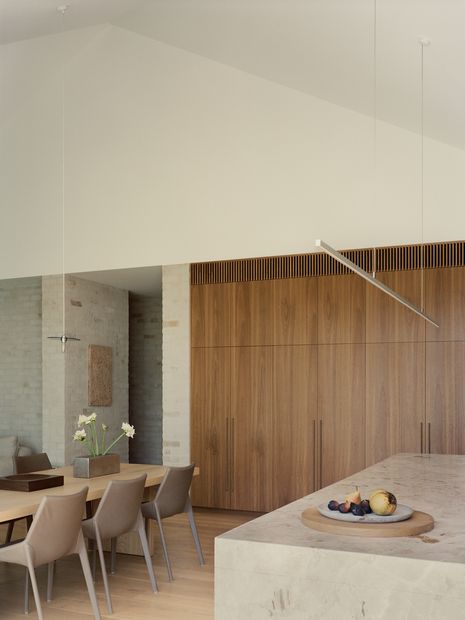
Inside, the same logic continues. Brick and blackbutt define the rooms with clarity: the material is the surface, without further elaboration. Living, kitchen and dining spaces gather beneath a raking ceiling that lifts light deep into the plan. Occupation is not prescribed but carefully provisioned; furnishings and use settle naturally into these conditions. At the rear, wide sliding doors open onto a deck and garden, a generosity that sits in gentle contrast to the more considered face the house presents to the street.
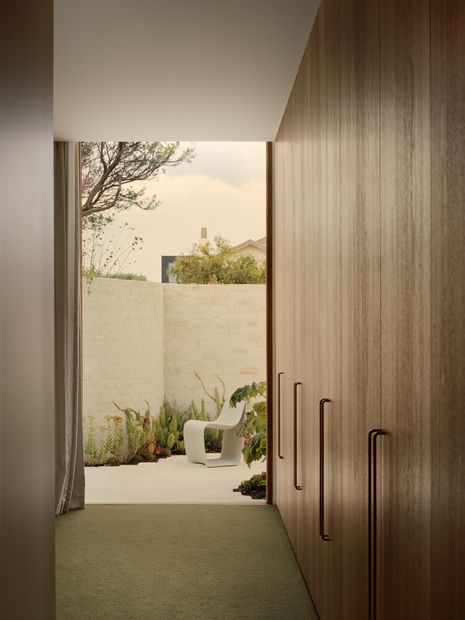
A corridor organised off the main entry axis, glazed along one side to frame the garden, reads less as a passage and more as a narrow room in its own right – a sunroom that happens to connect spaces. A private courtyard off the main bedroom, enclosed by curved, rendered walls and planted densely with coastal species, offers something more sheltered: a secondary world shaped as much by where the house is as by what the brief required.
View gallery
What’s notable here isn’t what the house does, but what it resists doing. It doesn’t announce itself. It takes the existing scale of the street seriously – as something worth retaining and belonging to, which, in Sorrento today, takes some conviction.
View gallery