
At Marco Verratti’s wedding, Kylian Mbappe introduced himself to Zlatan Ibrahimovic. He wanted some advice. “In your opinion, Zlatan, what should I do?” Ibrahimovic had a recommendation for him. “You should go to Real Madrid and get to know a club with a different philosophy and different codes of conduct,” he told Mbappe. As you can imagine, once this got back to Paris Saint-Germain’s president Nasser Al-Khelaifi, he wanted to know what on earth Ibrahimovic was playing at.
Throughout his time at the Parc des Princes, Ibrahimovic came to the following conclusion: PSG had too many stars making too few sacrifices. “They use only half of their potential and they win all the same. If the top of the pyramid is weak, the base will be weak too.” His analysis angered Al-Khelaifi. Quintessentially provocative, Ibrahimovic, now a senior adviser to Milan’s owners RedBird Capital Partners, claimed to offer himself as a sporting director.
Overall, the Swede’s feeling was PSG lacked discipline. As he details in his book Adrenaline, “if there were more rigour, everyone would run on the pitch. No one would be late to training. No one would be allowed to do whatever they wanted. If it were down to me, I wouldn’t ask the players to do what I wanted. I’d order them to do it.” He didn’t believe Leonardo, the sporting director at the time, was imposing enough, as, in his experience at PSG, if a coach tried to lay down the law and a player didn’t like it, the player would complain to Al-Khelaifi.
“Let me summarise PSG for you,” Ibra said. “Do they pay your wages? Yes. Do they win the league? Yes. Is life good in Paris? Yes. There are 40 players, but none of them want to leave, even if they don’t play, because life there is just too good.”
Mbappe would eventually follow Ibrahimovic’s suggestion. But his much-anticipated move to Real Madrid only came many years later. When he left for the Bernabeu, ironically, PSG had become a different club from the one Ibrahimovic described. They had become the club Ibrahimovic wanted.
Al-Khelaifi has authorised €2.5billion (£2.2bn, $2.9bn) in signings since Qatar Sports Investments acquired the club 15 years ago. It is a gross figure in economic and moral terms. PSG broke the world transfer record for Neymar. They signed the greatest player of all-time in Lionel Messi. And together with the Paris-born Mbappe, they were expected not only to pass the ball to one another but the Ballon d’Or too. And yet, as Al-Khelaifi told CBS earlier this month, “my best decision” was not buying one of these players. It was hiring Luis Enrique.
The Asturian delivered the discipline and rigour Ibrahimovic believed Mbappe needed to leave for Madrid to find. Mbappe found this out for himself in the one year he spent with Enrique at PSG. Everyone has seen the video of Enrique and Mbappe having a one-on-one analysis session at the PSG Campus in which Enrique says: “I’ve read that you like Michael Jordan. Michael Jordan grabbed all his team-mates by the balls and defended like a son of a b****. You’ve got to give that example, first as a person and as a player, to go and defend.”
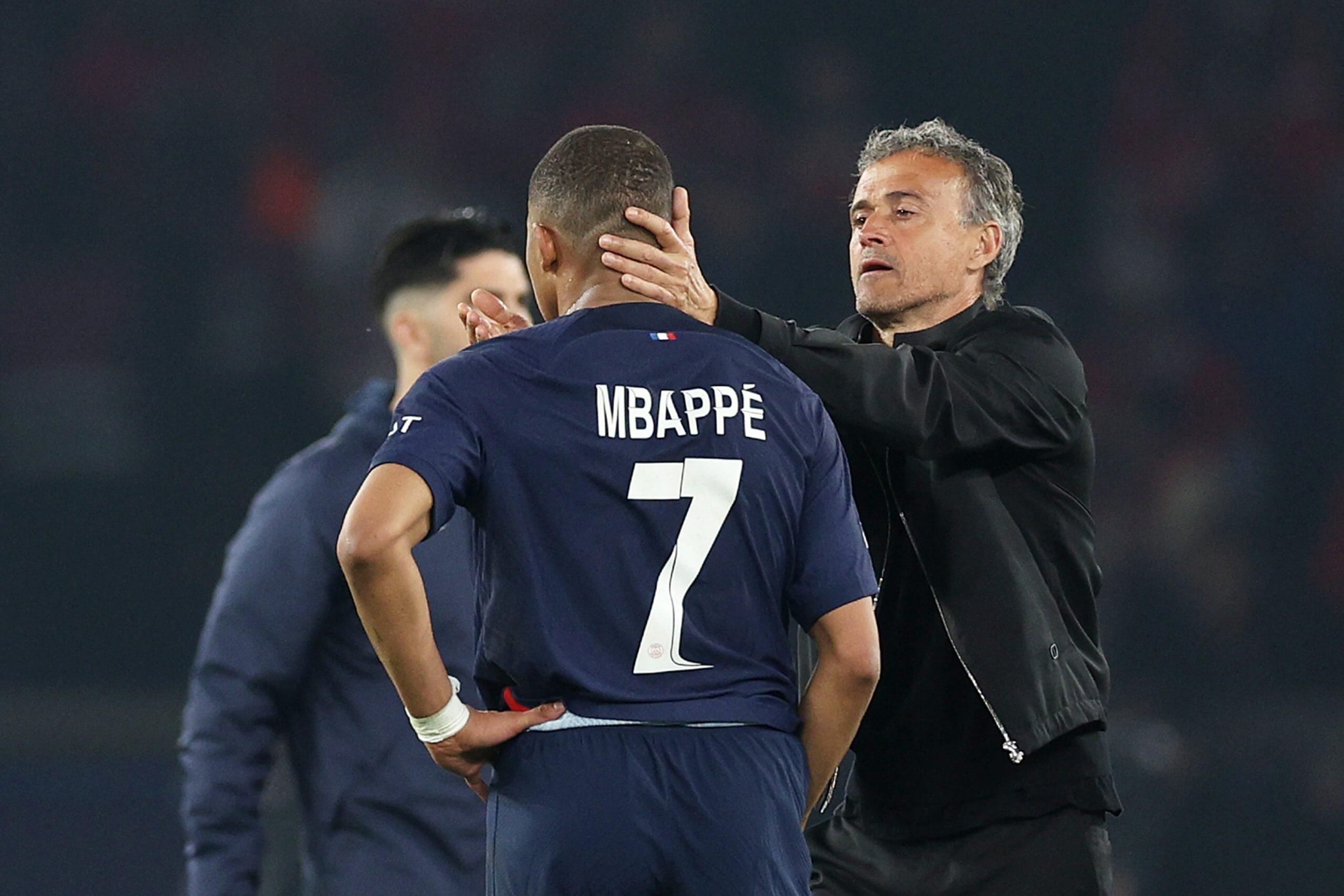
PSG and Enrique have reached consecutive Champions League finals since Mbappe moved on (Richard Heathcote/Getty Images)
Enrique has done what no one else was capable of at PSG. Yes, he won the French club its first Champions League and treble. Yes, he did it replicating the style of the 2015 Barcelona team with which he achieved his first treble. The overlap, a decade apart, is uncanny, as it was Enrique’s Barcelona that recorded the most dribbles in a single Champions League season until his PSG surpassed it last year.
It would be wrong, however, to class these achievements as near identical. At Barcelona, there was an element of continuity between his rise and that of Pep Guardiola. Both played for Barca. Both started coaching with Barca B. Both worked with early Messi. At PSG, Enrique broke with continuity. He transformed a football club.
It is a rare feat in football. Identities are almost impossible to change once they take shape. A club’s DNA very often cannot be altered. Cultures become immovable. Stereotypes stick. Enrique unstuck them.
This is what he does. When Franco Baldini hired Enrique at Roma 15 years ago, it was because he believed he could change not only the club but Italian football. The ultras initially bought into it, unfurling a banner in the Curva Sud. It said Roma were no longer “slaves to the result”. The banner gave Baldini goosebumps. It showed an understanding that a club needed to judge itself on more than just wins and losses. It needed to judge itself on performances, on standards, on hard work, as embodied by Enrique, who cycled to training and back every day, an 80km round trip.
No one could be indulged. Not even Francesco Totti, the club’s captain and one of the most talented Italian players of all-time. It was Baldini’s belief that Totti needed to be taken out of his comfort zone. He called the untouchable No 10 “lazy” and would have sold him if it were down to him.
Enrique and Totti also had previous. One had given the other a kicking when Barcelona played Roma a decade earlier and when Enrique dropped him for the first leg of a Europa League play-off, a 1-0 defeat to Slovan Bratislava in August, Totti conspicuously showed up at training in a T-Shirt with the slogan “Basta” printed on it. Enough! To the Roman papers, it looked like they might never get on.
“In reality, all these fears were quickly dispelled by the conduct of a coach and, above all, a man of integrity,” Totti recalled in his biography Un Capitano. “Many of us fell in love with Luis Enrique, starting with Daniele (De Rossi) and myself, because he brought new ideas and explained them with the passion of a prophet. The first thing to note is that he turned everything that came before on its head.”
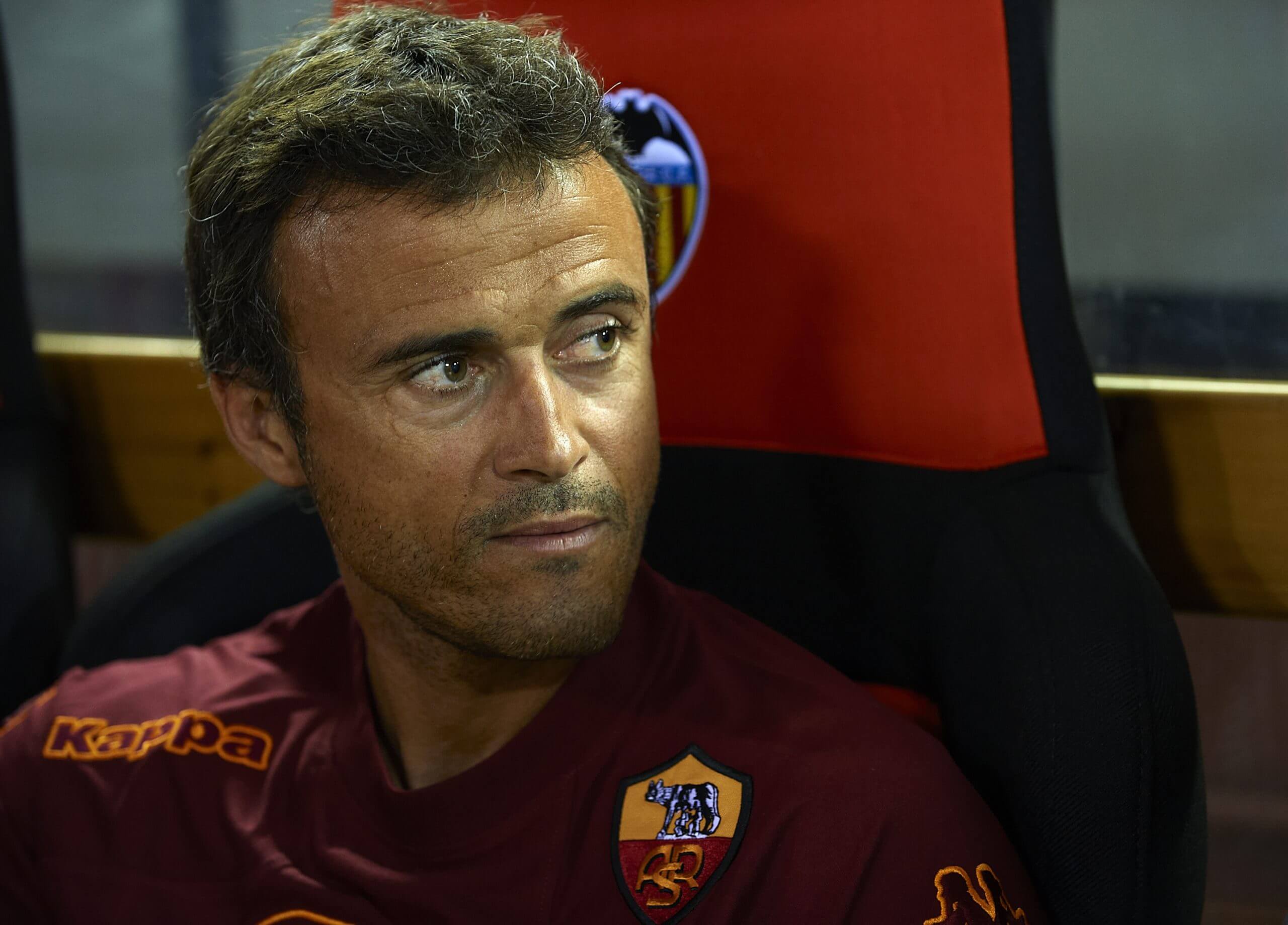
Enrique only spent a season at Roma but made a lasting impression (Manuel Queimadelos Alonso/Getty Images)
De Rossi — dropped for arriving seconds late to a team meeting before an Atalanta game — says the year they spent together was so inspiring that Enrique ranks alongside Luciano Spalletti as the most influential coach of his career. Enrique was the first to persuade him to drop between the centre-backs, opening his mind to a new way of playing.
Enrique did not stay in Rome long. He left of his own accord after one season. At the time, he was inexperienced, his style didn’t immediately take hold, and Roma finished seventh. Still, the players were reluctant to see him go. They knew he’d go on to have a great career with someone else. “He’s shown he isn’t the idiot people made him out to be in Rome,” De Rossi said.
If the culture still hasn’t changed in Rome, it has, with a little more persistence, in Paris. This is no small feat. The club itself has had to mature and figure out this thing called football.
PSG have tried all kinds of coaches. Carlo Ancelotti was Al-Khelaifi and Leonardo’s first appointment. He is Mr Champions League. Winning it was their north star. “They only had eyes for the Champions League,” Ancelotti reflected in his latest book The Dream. Alas, he could not deliver one.
Laurent Blanc was, until recently, the longest-serving coach under the Qataris. French and a World Cup winner, he was the local option. Then Unai Emery arrived as the overachiever. Mauricio Pochettino came with a reputation as a club-builder. Thomas Tuchel was the next big thing out of the German gegenpressing gang, the preeminent tactical trend of the era, along with the Spanish juego de posicion. All of them won things without winning the thing. All of them ran up against the same problems.
As the most successful coach in the history of the Champions League and a renowned man-manager of the game’s biggest egos, Ancelotti should have been perfect for PSG. Usually unflappable, he found PSG to be “ridiculous” and wanted out at the end of his first full season.
Ahead of a game against Porto at the Parc des Princes, the last of the group stage in his first and only full season in charge, PSG lost to Nice in Ligue 1. PSG had already qualified for the knock-uts but Ancelotti claims Al-Khelaifi and Leonardo, who he knew from his time at Milan, threatened him with the sack.
“It just introduced a sense of instability and mistrust. So I decided there and then that I would leave at the end of the season, irrespective of what might happen for the rest of it. I told Leonardo as much. If that was how they showed their faith in me, then I didn’t want to stay, even if we went on to win the Champions League.”
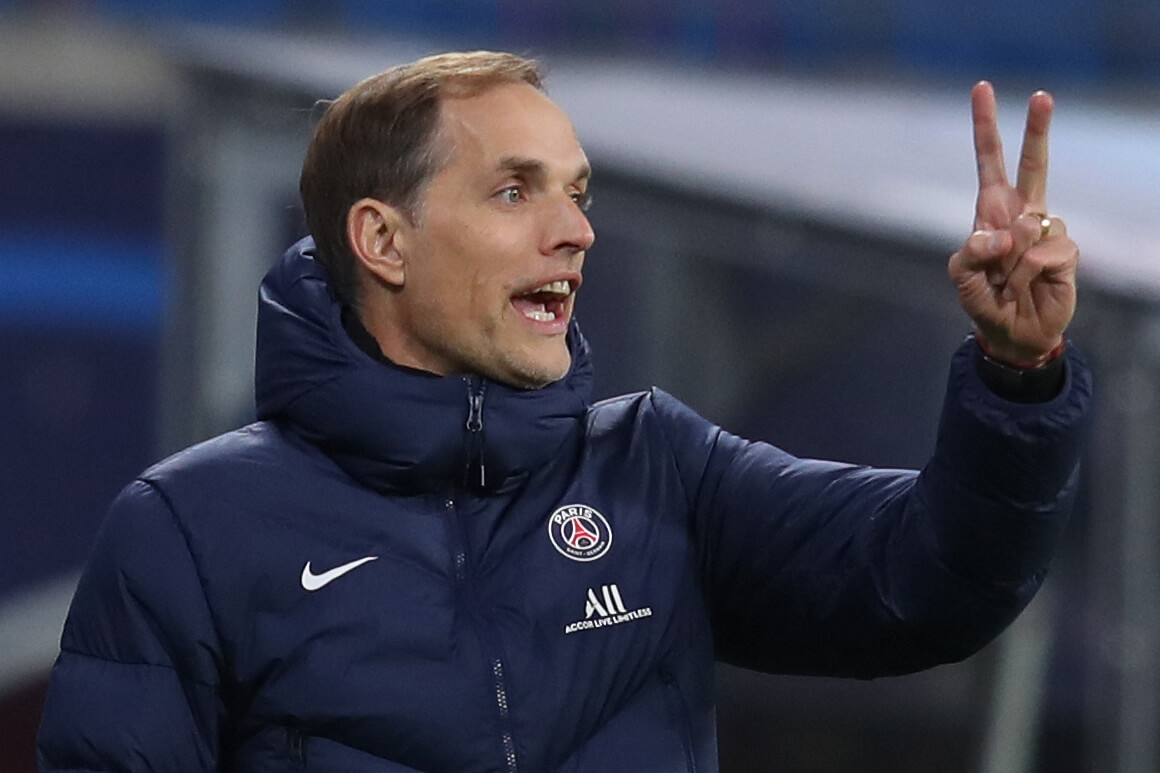
PSG have had several big-name managers, including Thomas Tuchel (Ronny Hartmann / AFP via Getty Images)
Emery’s experience was a little different. He did not feel undermined by the hierarchy at PSG. The Basque claimed Al-Khelaifi made it clear to the players the coach was the boss. At the same time, reflecting on his career as a whole to El Pais, Emery said: “If the players have access to the president and aren’t clear that it’s the coach they should listen to, then my role is weakened.
“I’ve had problems because of this in some places. In others, the positions have been very clear. This has to do with leadership. In Spain, the contrast is interesting. Florentino Pérez is the most visible leader at Real Madrid; at Atlético, that leadership is embodied by (Diego) Simeone; you go to Barça, and you find (Lionel) Messi; and at Sevilla, Monchi…”
And in PSG, it always, externally at least, looked as if the players were the stars, not the coach, particularly in the run-up to the World Cup staged by PSG’s owners Qatar. Rather than build a club for a coach, as Manchester City and Abu Dhabi did for Guardiola, it felt like PSG was built for a World Cup, as they symbolically brought together the poster-boys for the tournament, Messi, Neymar and Mbappe.
“To arrive at Paris and make (Messi) press like it was Son at 21 or Harry Kane at 20 years old…” was improbable, Pochettino told The Overlap. “I said, you cannot say to Messi, go to press. We tried, but it’s difficult. Not easy. When you coach this type of player, it’s not only about the player or the man that you coach. You need to care not only about when you coach, but every single decision has a consequence from the outside.”
On the eve of his dismissal in 2020, Tuchel was reported to have said: “Am I still a manager or am I a politician in sport, a minister for sports?” He subsequently claimed he’d been misquoted and it was a joke in German. “I didn’t say it’s more about politics than sport, nor that I lost the fun of training. This is not true,” Tuchel clarified to Canal+. But this was an impression others formed of PSG regardless.
Enrique has definitively shifted it. Circumstances have helped. The Qatar World Cup came and went. Luis Campos, the club’s new football and strategic advisor, acknowledged in the Movistar documentary ‘You Have No F***ing Idea’: “Honestly, before we were too individualistic. We need to think as a collectif.”
Al-Khelaifi announced a new phase of the PSG story to Le Parisien. “Perhaps we should change our slogan,” he said. “Dream bigger is good, but today we must be realistic, we don’t want flashy, bling-bling anymore, it’s the end of the glitter.”
This signalled to Enrique that he could work for PSG. “PSG was never an option for me because they had this policy of signing big-name players. I think there’s a clear change and they’ve said this. Basically, they want a proper team.”
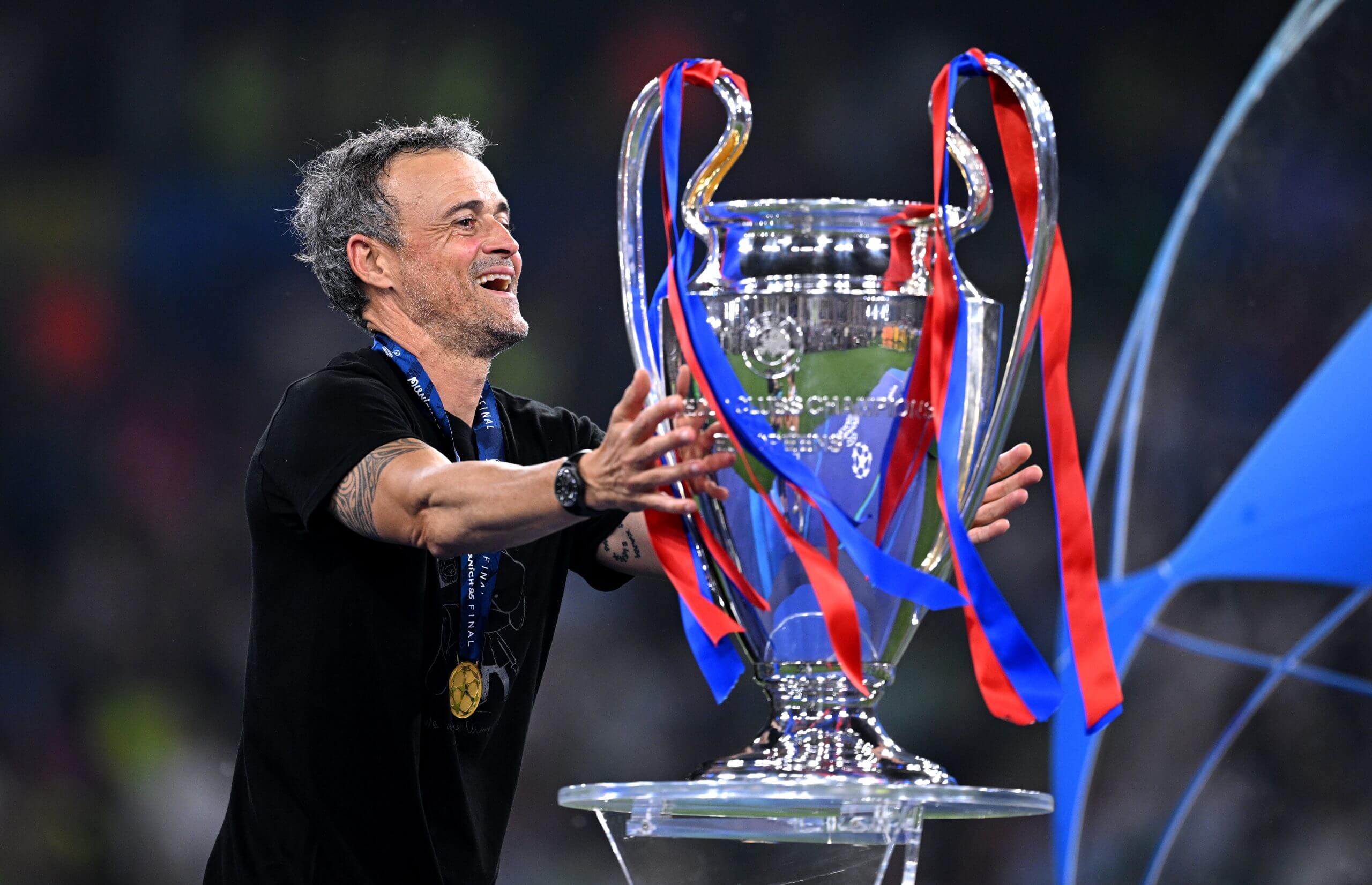
Enrique ended PSG’s long wait for Champions League glory in Munich last May (Justin Setterfield/Getty Images)
Messi and Neymar, the duo Enrique worked with at Barcelona, left as he arrived at PSG. He had not been hired to reheat two-thirds of the MSN front-line Enrique enjoyed at Barcelona, which scored 363 goals between the three of them in three seasons. Sergio Ramos’ forgettable two years at PSG ended, as did Marco Verratti’s time at the Parc. Verratti had spent more than a decade in Paris, a nonchalant player and one of the faces of the Qatari era.
PSG still spent as they’ve always done under QSI. They blew €95m on Randal Kolo Muani and €65m on Goncalo Ramos. Recruitment has not been perfect. But instead of approaching it like a director casting for a Marvel movie or Ocean’s Eleven, they have tried and succeed in making a critically acclaimed Academy Award winner instead. Enrique was empowered in a way previous coaches were apparently not and, as such, PSG built a team that ran counter to the image of the club. Exquisitely balanced and largely ego-free, PSG have gone from the model of how not to run a super club to the blueprint. “It was easy to understand that Luis was really the piece that was missing,” Campos said.
There is a moment in the Movistar doc in which Enrique looks down at his waistline and remarks on his own weight. He says he can’t remember the last time his belly looked so big. To everyone else watching, he still looks wiry and in the single digits when it comes to body fat. He is fitter and leaner than some of the current generation of footballers; this is a consequence of running marathons, completing Iron Man events and the Quebrantahuesos — or bone crusher — cycling Gran Fondo in the Pyrenees. These are the standards to which he holds himself and his players and what they produced was an unprecedented 5-0 win in last year’s Champions League final against Inter.
In addition to the youthful exuberance of man of the match Desire Doue and impact sub Senny Mayulu, what stood out was Ousmane Dembele staring down and pressing Inter goalkeeper Yann Sommer, and Willian Pacho keeping a lost cause in play and watching his team then go up the other end and score. This season, Enrique has erected a giant tactics board overlooking the training pitch at the PSG Campus. He has instructed goalkeeper Matvey Safonov to repeatedly kick for touch against Bayern Munich so his PSG players could then gather around Michael Olise, hem him in and deny the Frenchman the space he’d get in open play.

The Barcelona way, it ain’t. PSG win with style. PSG win through talent. But PSG also do whatever it takes to win. Perhaps this is the Real Madrid side of Enrique’s brain.
As PSG prepare to play back-to-back Champions League finals, Enrique figures as arguably the most complete coach in world football at the moment. In the week Guardiola left Manchester City, Enrique said on Movistar: “For me, he is the best of all time — not for the number of trophies. That’s not important to me. It’s for what he’s passed on, how he’s passed it on, how he’s changed the game, for what he’s done with centre-backs and inverting full-backs.
“One day, he’ll play centre-backs up front and everyone will start copying him. Very few have that ability, and in that sense he’s No 1.” But without Guardiola and without Jurgen Klopp, doesn’t Enrique deserve to be considered as much now?