
With the luck of one ping-pong ball last May, the New York Islanders’ trajectory changed.
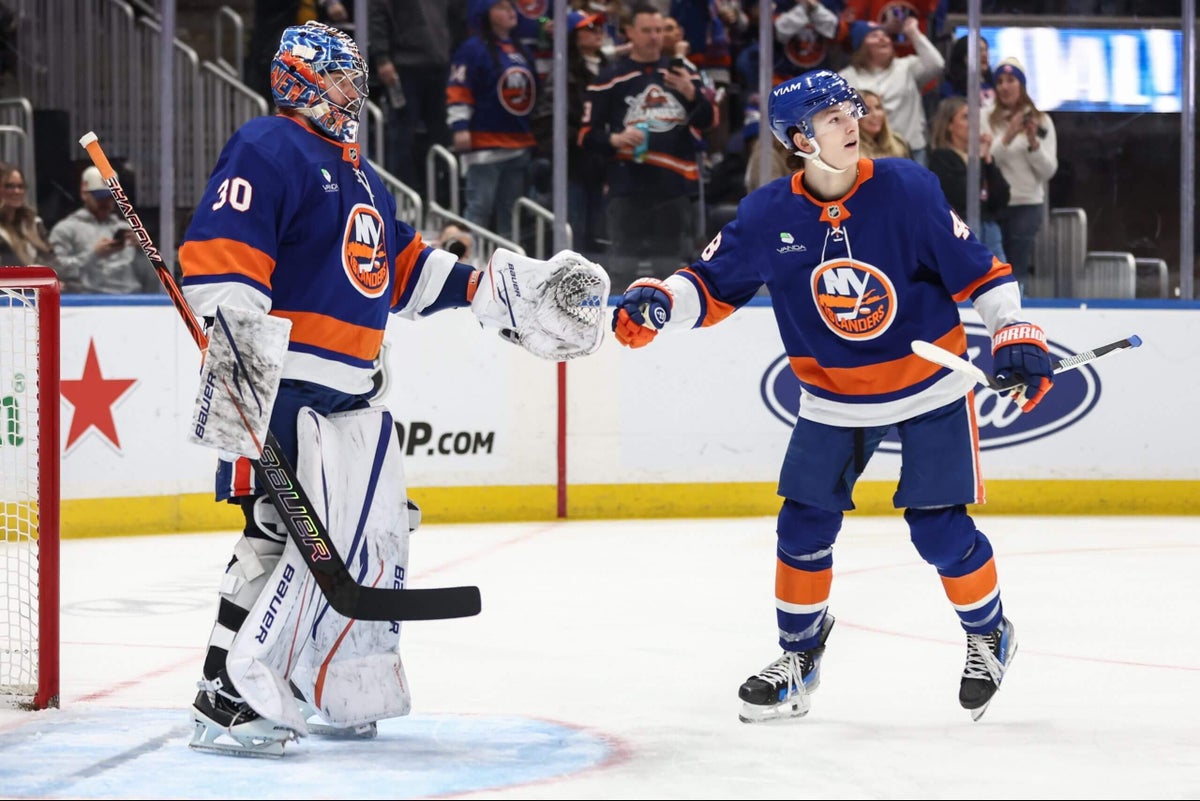
Matthew Schaefer didn’t change the long-term outlook on Long Island; he transformed the team in Year 1. His game-breaking play as a rookie, plus Ilya Sorokin’s brilliance in net, was almost enough to reach the playoffs — until it wasn’t.
The Islanders’ late-season collapse led to a surprising coaching change with just four games left. Hiring Pete DeBoer was a step in the right direction, but there’s still more work to do to bring the team back to contention.
Here’s where the Islanders stand going into the 2026-27 season using the Stanley Cup Checklist. All projected values are age-adjusted based on each player’s profile of comparable peers.

What the Islanders have
It’s easy to look at this year’s final four playoff teams and think goaltending doesn’t matter that much. But the 2025-26 Islanders, who seriously struggled to defend the rush, wouldn’t have been anywhere near the playoff picture if it weren’t for Sorokin. His 27.5 goals saved above expected, which ranked second in the regular season, were a reminder that this is a true franchise goaltender who can carry his team to defy the odds. He just needs a little more support to do it across a full season.
Schaefer is the first wave of that, after an incredible rookie season. A player is drafted No. 1 because 1) they have an elite ceiling and 2) are thought to hit impact status sooner rather than later. But even with that in mind, what Schaefer did as an 18-year-old defenseman was unprecedented. Not only did he prove that he belonged at this level immediately, Schaefer grew and adapted to an increasingly difficult workload on the fly. With a projected plus-14.4 Net Rating next year, this is an elite cornerstone with an incredibly bright future.
Behind Schaefer, Adam Pelech and Ryan Pulock’s shutdown strengths add more layers of support on the back end.
What the Islanders need
Schaefer’s immediate emergence helps slot players such as Pelech and Pulock into more fitting top-four roles. A healthy Alexander Romanov, plus direction from a more defensively minded coach such as DeBoer, could help shore up play in the Islanders’ zone, too. But there’s still a gap in between that has to be filled with a scoring defenseman. The only internal option for that may be Kashawn Aitcheson. He’s No. 36 on colleague Corey Pronman’s list of top under-23 players, and could help build an encouraging foundation with Schaefer on the back end.
Up front, there’s a lot more work to do.
Technically, Mathew Barzal checks the boxes for a shutdown forward even though he doesn’t fit the mold for that role. The good news is it means the team has at least one elite core forward in place for the 2026-27 season. The bad news is that it’s Barzal in this capacity, when his raw skill set and offensive talents should fit higher.
Between his elite transition game and dynamic playmaking, Barzal has the tools to be a star forward. But the Islanders have only seen glimpses of that player; he hasn’t performed consistently enough to stack up to that No. 1 or No. 2 slot on a contender. Neither has Bo Horvat at this point in his career, even after upping his all-around game this season on Long Island.
A coaching change alone likely won’t be enough to change that, either. Maybe DeBoer could unlock Barzal more consistently, or help Horvat maintain his level of play from this past season. But even if they each bump up a slot, it still leaves the team without a franchise forward.
While the Islanders have some depth, the team still needs another supporting forward in the middle six, plus reinforcements as some of their veterans age out. So the Islanders have to hope their short-lived retooling efforts are enough to fill out those tiers.
As it stands, the Islanders’ pipeline has an encouraging group of young forwards coming, plus a decent draft pick (No. 13).
It would be unfair to assume any of the Islanders’ prospects will be ready to become the franchise forward they’re missing on this checklist in the near future, but perhaps one will bring more of a jolt than expected in supporting roles. Calum Ritchie (No. 47) and Victor Eklund (No. 49) both made Pronman’s list of top under-23 players, and colleague Scott Wheeler believes Cole Eiserman could become a 30-plus goal scorer.
Ritchie, still only 21, showed flashes of potential in his first full NHL season, scoring 13 goals in 65 games. He’s Wheeler’s top-ranked Islanders prospect, so maybe there’s more in the tank than this past season showed. He showed similar traits to players such as Josh Bailey and Sam Bennett, and that path could lead him to take over that supporting forward role well. Maybe Simon Holmstrom could move up the ranks, too, if he continues on a similar path to Brock Nelson or Adam Henrique. But like Ritchie, some of Holmstrom’s comps point toward a dicier path, which won’t help the Islanders solve some lineup holes.
Even if the Islanders get the best-case scenario from both, this team still needs to get younger and more skilled at the top of the lineup. And that’s what makes last year’s deadline moves so questionable: the team not only spent assets, it committed multiple years to Braydenn Schenn and Jean-Gabriel Pageau, who are both in their mid-30s.
The big question
How can the Islanders get a true franchise forward?
Schaefer is a revelation for the Islanders and drastically expedited their timeline. Between him and Sorokin, the Islanders have two of the hardest parts of the checklist on their roster. But Barzal hasn’t emerged as an elite No. 1 center, and Horvat — as capable a goal scorer and responsible a presence as he is — has never been a point-per-game player in his career. To become true contenders, New York needs to find a way to either acquire or develop more elite-level forward talent.
We touched on internal development options above. Darche might also have to sign or trade for another elite talent at some point. That’s easier said than done. Most elite players don’t reach unrestricted free agency, and when they do, teams risk overpaying them. That leaves trades. But to pull off one for a big name, Darche would have to dip into his precious pool of young players, prospects and draft picks. Is that worth it at this point in the contention cycle?
Hiring DeBoer — a win-now coach — shows the Islanders view themselves as a team with playoff hopes next season. Kyle Palmieri returning from injury will help bolster the forward group, but the team will still need some positive developments to return to the playoffs in 2027. To become a true contender, though, they will need more drastic roster improvements at forward. Making that happen will be one of Darche’s tests in his early tenure.
Sorokin and Schaefer may have sped up the Islanders’ timeline this year, but there’s a difference between an accelerated process and a rushed one. Management needs to find a measured approach that can build a sustainable contender around these two cornerstones.