
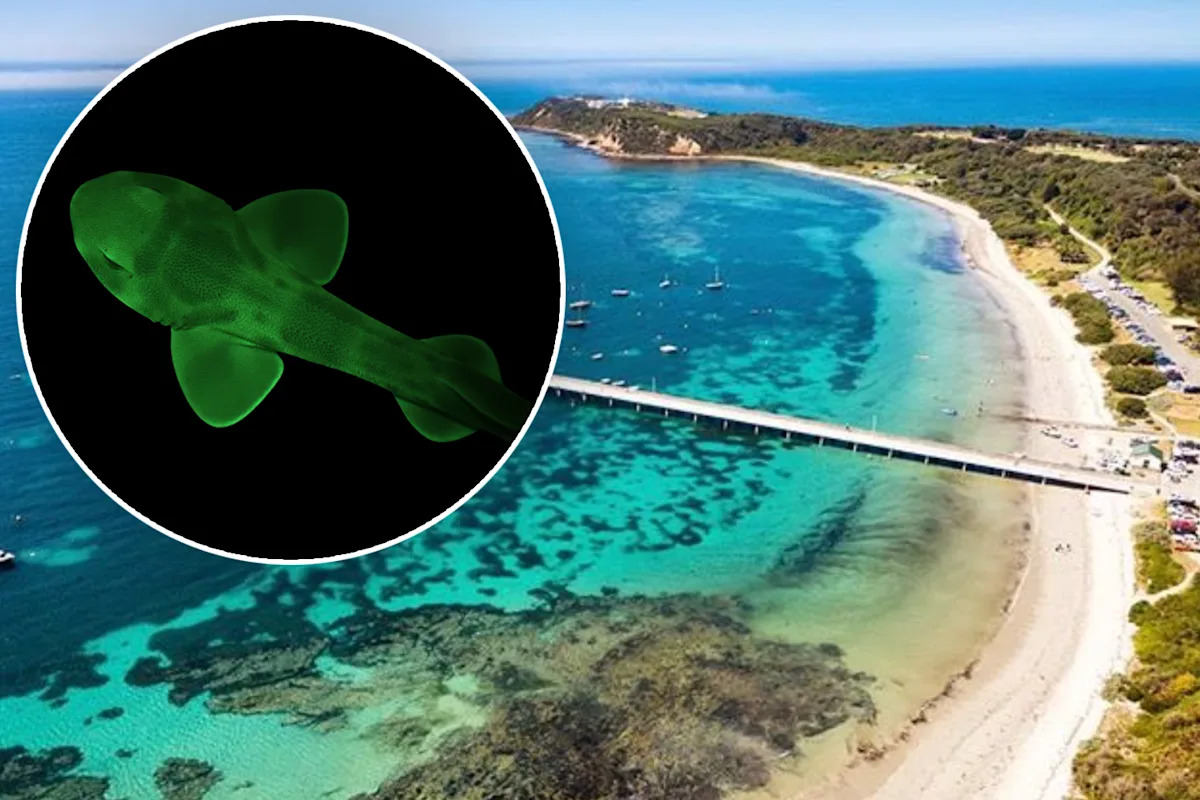
An extraordinary underwater discovery off Australia’s southeastern coastline is shining new light on one of our lesser-known marine species.
Filmmakers documenting Western Port Bay in Victoria captured a phenomenon never before recorded in Swell Sharks, something they say is nothing short of “extraordinary”.
Filmmakers working on an underwater documentary were stunned to witness the species glowing underwater — the first known documented case of biofluorescence in the species.
The glowing effect, which cannot be seen by the human eye under ordinary conditions, was revealed using specialised underwater lighting equipment during night filming.
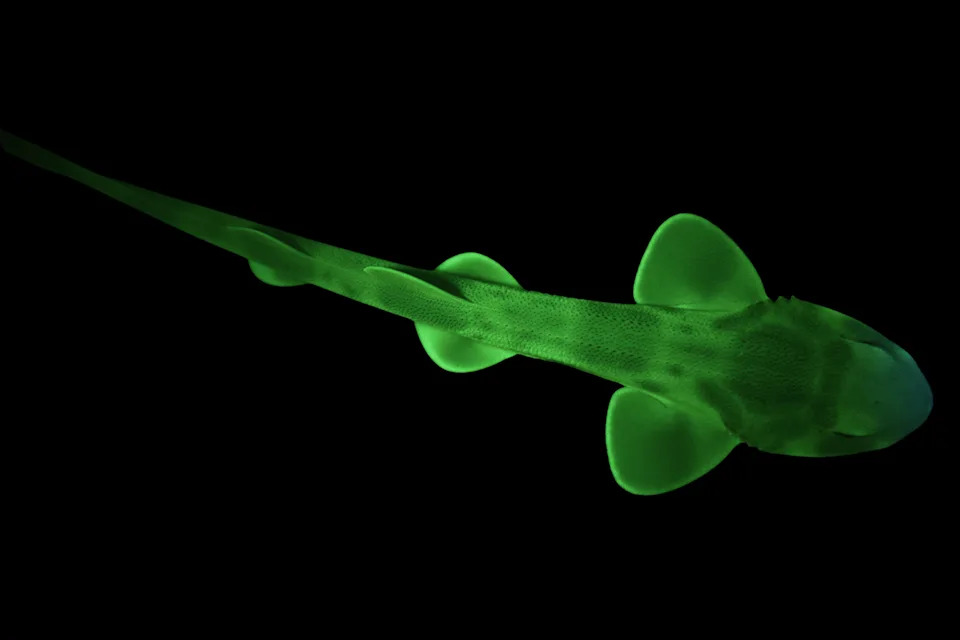
The glowing effect, which cannot be seen by the human eye under ordinary conditions, was revealed using specialised underwater lighting equipment.
(Western Port Down Under)Why does biofluorescence occur in nature?
Biofluorescence occurs when living organisms absorb light and emit it again as a different colour, creating an eerie glowing appearance underwater.
While the phenomenon has previously been identified in some marine animals around the world, it had never before been recorded in the Swell Shark.
RELATED:
The footage was captured as part of Western Port Down Under, a social impact documentary and awareness campaign aimed at highlighting the biodiversity and ecological significance of marine environments in and around Western Port Bay.
Marine biologist Sheree Marris said the discovery challenged assumptions about familiar Australian marine life.
“To see a species we thought we knew suddenly reveal a hidden side completely changes how we see our own backyard,” she said.
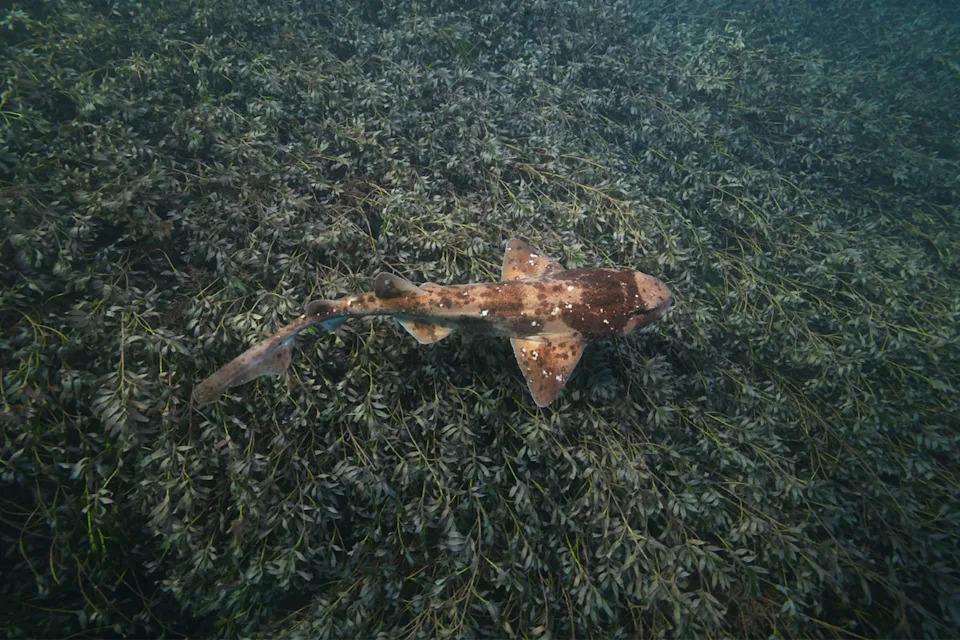
Swellsharks are named for their unusual ability to rapidly inflate their bodies with water or air as a defence mechanism against predators.
(Western Port Down Under)What does the discovery mean?
The discovery has since been verified by Dr Travis Dutka from La Trobe University, who confirmed it represents the first recorded observation of biofluorescence in the species.
He said the finding reinforced how much remains unknown about Australia’s marine ecosystems, even in relatively accessible coastal regions.
“Discoveries like this remind us how little we still know… even familiar animals may be hiding extraordinary adaptations,” Dr Dutka said.
Cinematographer Jack Breedon, who filmed the glowing shark sequence, described the moment as unlike anything the crew had anticipated during production.
“Seeing that glow appear through the lens was surreal… our southern ocean sharks are still largely unexplored,” he said.
The project’s creators hope the discovery will encourage greater public interest in Victoria’s marine life, particularly species and ecosystems that often receive far less attention than tropical reef environments elsewhere in the country.
Western Port Bay’s unique ecosystems
Despite being located close to Melbourne, Western Port Bay contains extensive seagrass habitats, reefs and diverse marine wildlife, much of which remains under-documented compared with other Australian coastal regions.
The filmmakers say the discovery demonstrates that remarkable scientific findings are still possible in local waters and that many marine species may possess hidden traits yet to be observed.
While glowing marine creatures are often associated with remote deep-sea environments or tropical oceans, the newly documented phenomenon in the Swell Shark — Cephaloscyllium laticeps — suggests extraordinary biological adaptations may exist much closer to shore than many realise.
The footage is expected to feature prominently in the upcoming Western Port Down Under documentary campaign, which aims to shift public perceptions of the nation’s southern marine ecosystems and high.
You can also follow us on Facebook, Instagram, TikTok, X and YouTube.