
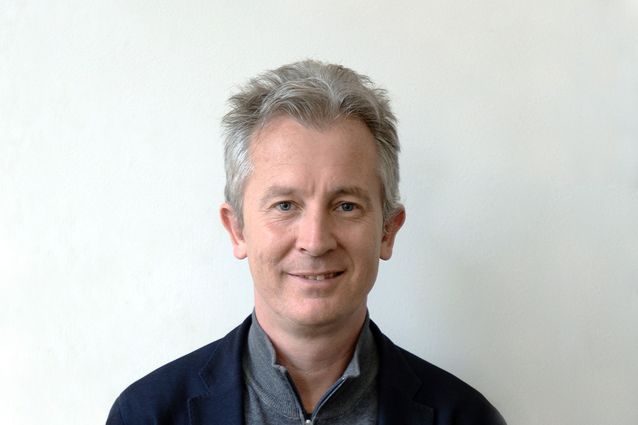
In this installment of Products in Practice we speak to architect Andrew Benn, founder of Sydney-based practice, Benn+Penna. Definining moments in childhood have shaped Benn’s penchant for celebrating Australia’s natural environment, resulting in a body of work that is deeply rooted in material clarity and authenticity. Today, he discusses Birchgrove Husks, a residential project in Sydney’s inner west and the kiln-dried timber product he wrapped around its facade.
What’s your favourite architectural product right now, and what do you love about it?
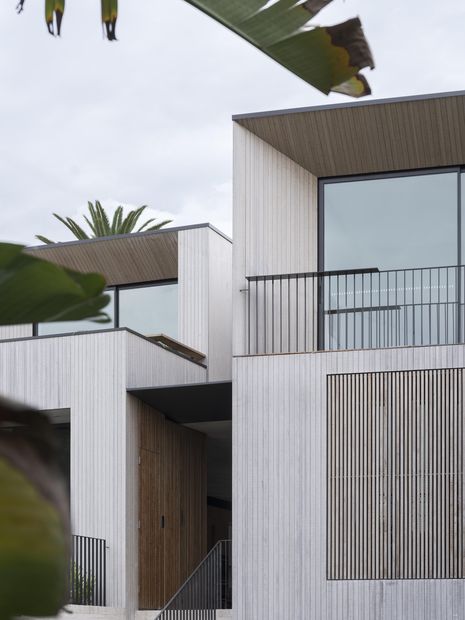
We generally love using timber claddings, especially those that age gracefully. Among them, Abodo’s Vulcan Cladding stands out for its durability and beauty. As a thermally-modified timber, it performs reliably without chemical treatments. Its consistent pale tone and clean grain suit contemporary architecture, while its strong sustainability credentials make it a good choice.
If you had to describe Abodo’s Vulcan Cladding in just three words, what would they be?
Beautiful, raw, sensual.
View gallery
Can you talk us through how you’ve used it in a recent project?
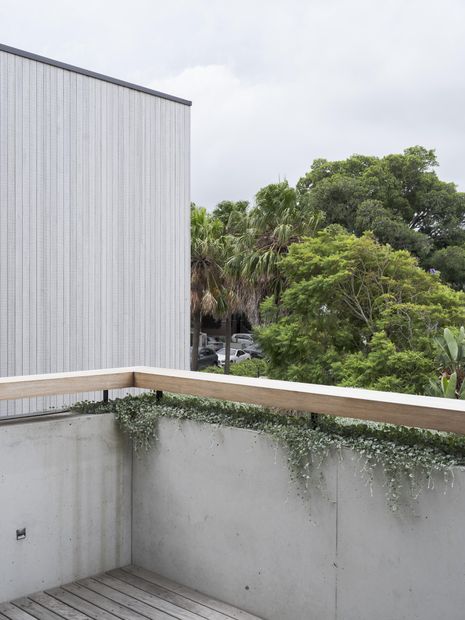
We’ve wrapped the house almost entirely in Abodo Vulcan, letting it form a continuous timber husk that feels protective and quietly expressive. The cladding reads as a single, tactile skin – soft toned and fine grained – giving the building a calm, crafted presence.
By committing to one material, the architecture feels both contemporary and elemental, as if the house has been carved from a single, living surface.
What feedback have you received from clients about the cladding?
Our clients consistently tell us how much they love the warmth and calmness of the Vulcan cladding – it feels natural without looking rustic. They’ve been surprised by how stable the appearance has remained, with the boards holding their tone far more consistently than typical softwoods. They love how it feels ‘new but lived‑in,’ as if the timber has settled into the buildings appearance.
View gallery
Do you have any tips for other designers looking to specify Vulcan’s cladding products?
Pay attention to profile selection and board width because the shadow behaviour is subtle, and that subtlety is part of its charm. And don’t overthink longevity: We’ve found it far more consistent in tone and texture than most softwoods. But still recognise that it does subtly change over time, particularly under eaves and areas that are less exposed.
What’s an architectural product you’re keen to experiment with that you haven’t used previously?
I’m keen to experiment with rammed earth, particularly for its ability to deliver an incredible sense of mass, but also its wonderful textural qualities. It offers a kind of monolithic honesty that feels both ancient and contemporary. It’s a material I haven’t used before, but its potential for sculptural form and environmental performance makes it really compelling.