
An Australian property portfolio manager has blamed Labor’s negative gearing and capital gains tax changes as his business collapses.
Dashdot co-founder Goose McGrath said his business had entered liquidation, putting more than 40 workers out of a job.
His posted a statement blaming multiple factors for the company’s demise, but stressed the recent budget weighed heavily on Dashdot.
“The May 12 budget removed (the CGT discount and negative gearing on existing properties) for future investors,” Mr McGrath said.
“Forums filled with confused investors. The investor segment of the Australian property market entered a state of paralysis within 24 hours.
“This was the first direct, policy-driven blow to investor confidence in the entire cycle.”
He said major banks began rolling back negative gearing options for investors, tearing into their potential borrowing capacities.
“For a typical investor (a single applicant on $100,000 income with no existing debt), borrowing capacity fell by approximately 20 per cent overnight, from $750,000 to $600,000, with no change to income, expenses, or interest rates,” Mr McGrath said.
“For more highly-leveraged scenarios, the reduction was 25 per cent to 33 per cent.
“Some pre-approvals issued only weeks earlier became unreliable overnight.”
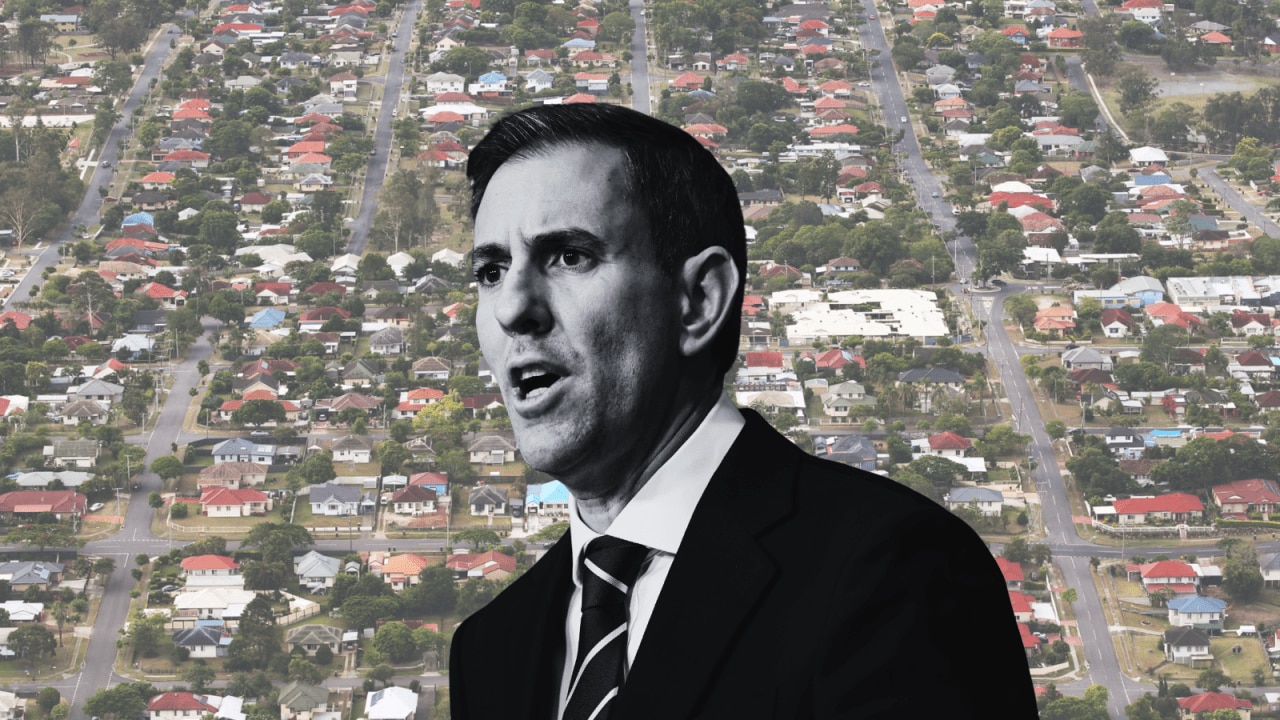
Treasurer Jim Chalmers’ proposed CGT change will scrap the 50 per cent discount and replace it with an inflation-adjusted model with a 30 per cent minimum tax rate.
Labor will also scrap negative gearing for existing properties purchased after the budget speech began, while grandfathering the scheme for current investors.
Property investors who build a new home can do negative gearing.

Mr McGrath said his company’s failure followed seven years in business where his team helped more than 1,800 Australian families purchase 2,800 properties, generating about $540 million in wealth.
He claimed that broader factors like high inflation, interest rate hikes, the war in Iran and a downturn of consumer confidence weighed heavily on Dashdot.
“As a consumer centred business, which relies on everyday Australians feeling confident about their current situation, particularly to the extent that they think and plan for the future, general consumer sentiment has always heavily influenced Dashdot’s business dynamics,” Mr McGrath said.
“Coming into 2026, Australian households were already deep in a sustained cost-of-living crisis that had been building since 2022, and had not eased.”
The three consecutive rate hikes handed down since the beginning of 2026 has wiped out all the cuts handed down last year.
They have also added an extra $272 per month in mortgage payments for a household owing $600,000 on their 25-year loan.
Dashdot’s business model involved charging prospective investors to find and manage their properties across Australia.
It was dealt a blow after Meta’s advertising platform, which Dashdot used to acquire most of its new clients, implemented a new AI-driven system.
The cost of accessing potential clients roughly doubled while revenue more than halved.
“The Meta changes affected digital advertisers in a broad range of industries,” Mr McGrath said.
“For Dashdot, they hit asymmetrically hard, not because the changes themselves were beyond our ability to adapt to, but because they landed at the precise moment our target market was being paralysed by the budget shock and consumer demand was being crushed by the macro cycle.”
Dashdot has appointed Rebecca Gill and Martin Ford from Teneo as its liquidators.