
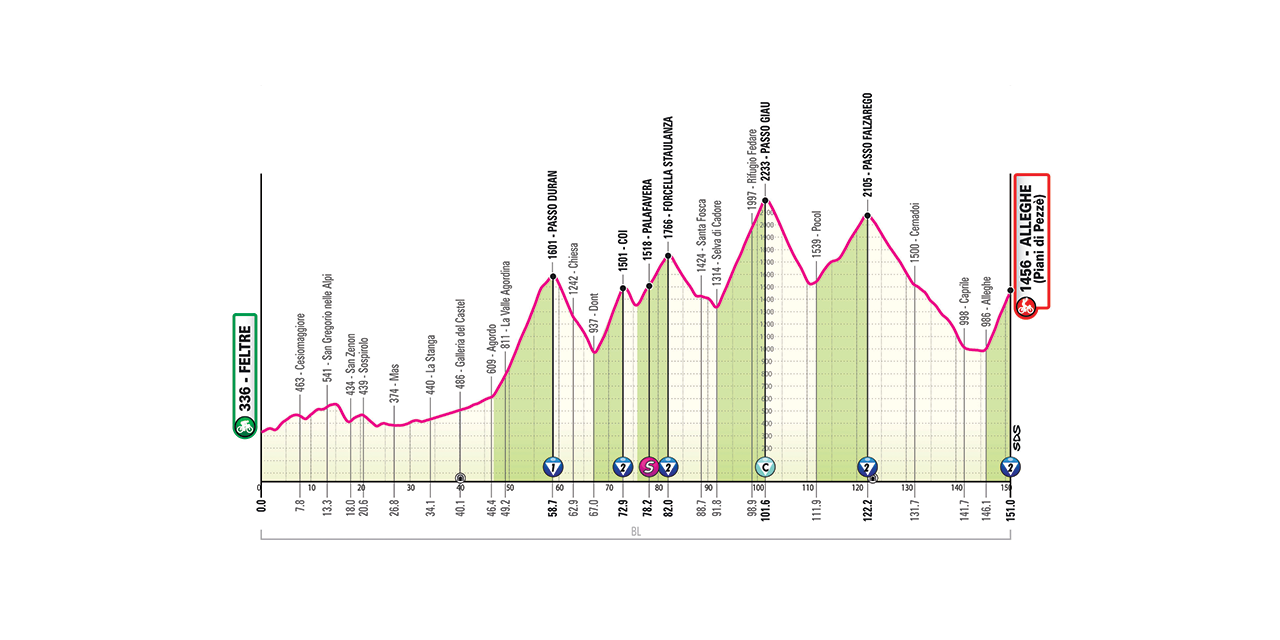
The Route
The stage is not particularly long, but it is brutally demanding. This is a true Dolomite tappone made up almost entirely of climbs and descents, featuring a total elevation gain of 5,000 metres. The riders will tackle, in sequence, the Passo Duran (with ramps reaching 14%), the Coi (maximum gradient of 19%) and the Forcella Staulanza (maximum gradient of 10%).
This year’s Cima Coppi: Passo Giau
As if that were not enough, the riders must also face the Cima Coppi of the 2026 Giro d’Italia. The Passo Giau, at 2,236 metres above sea level, is the highest point reached by this year’s race. The climb stretches for 9.9 km at an average gradient of 9.3%, with brutal ramps of up to 14%, concentrated mainly in the opening section. A long descent then leads into the Passo Falzarego, where the Giro rises above 2,000 metres for the second time of the day, before the final run to Alleghe (Piani di Pezzè) at 1,465 metres.