
NEED TO KNOW
A meteor exploded over Massachusetts and New Hampshire on Saturday, May 30
Residents reported a loud boom and ground tremors as the meteor fragmented 40 miles above the Earth’s surface
The fireball was a natural object unrelated to meteor showers or space debris re-entry, according to NASA’s Jennifer Dooreen
A meteor has rocked the northeastern United States.
The fireball was detected over northeastern Massachusetts and southeastern New Hampshire at around 2:06 p.m. local time on Saturday, May 30, according to CBS News, ABC News and Reuters.
The meteor crashed through the Earth’s atmosphere at a speed of 75,000 mph, creating a blast equivalent to 300 tons of TNT, the outlets reported, citing the National Aeronautics and Space Administration (NASA).
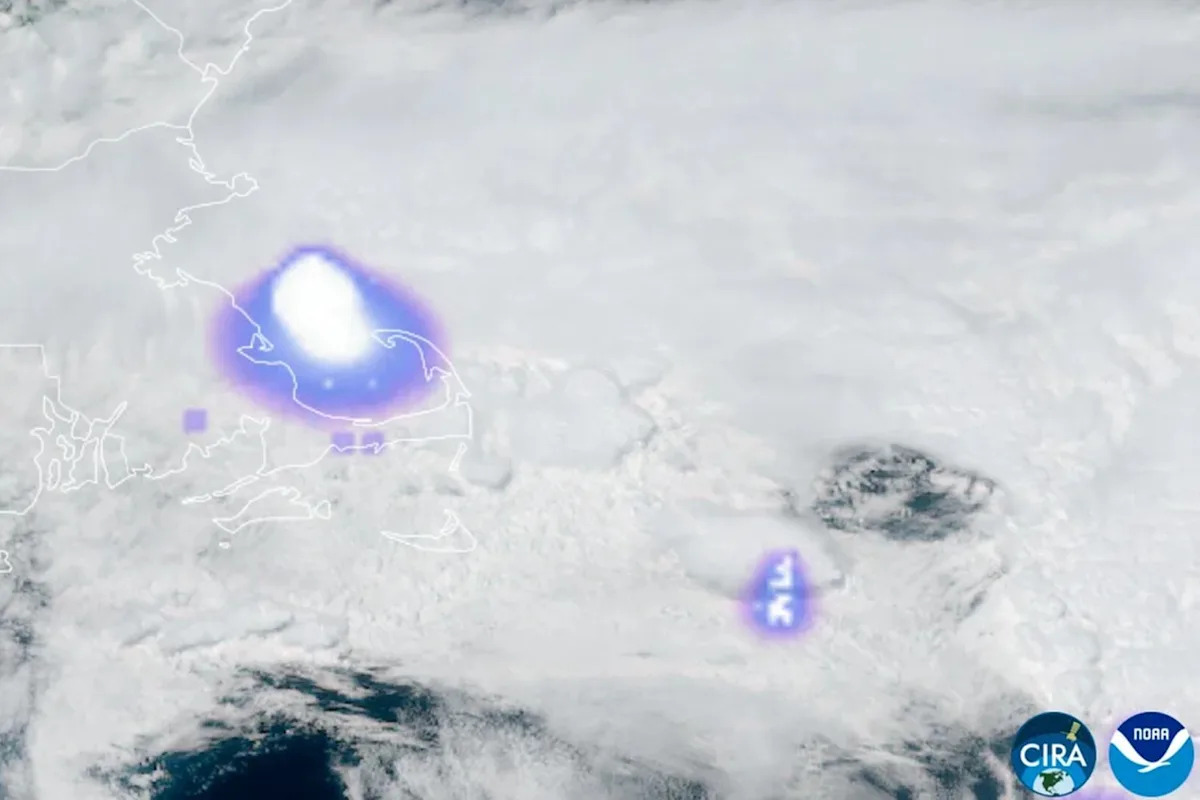
NASA Space Alerts wrote on X, “Eyewitnesses in New England and the National Oceanic and Atmospheric Administration’s GOES-19 satellite reported a bright fireball on Saturday … accompanied by a loud noise. The meteor appears to have fragmented at an altitude of 40 miles over northeast MA and southeast NH. The energy released at breakup is estimated to be equivalent to about 300 tons of TNT, which accounts for the loud noise.”
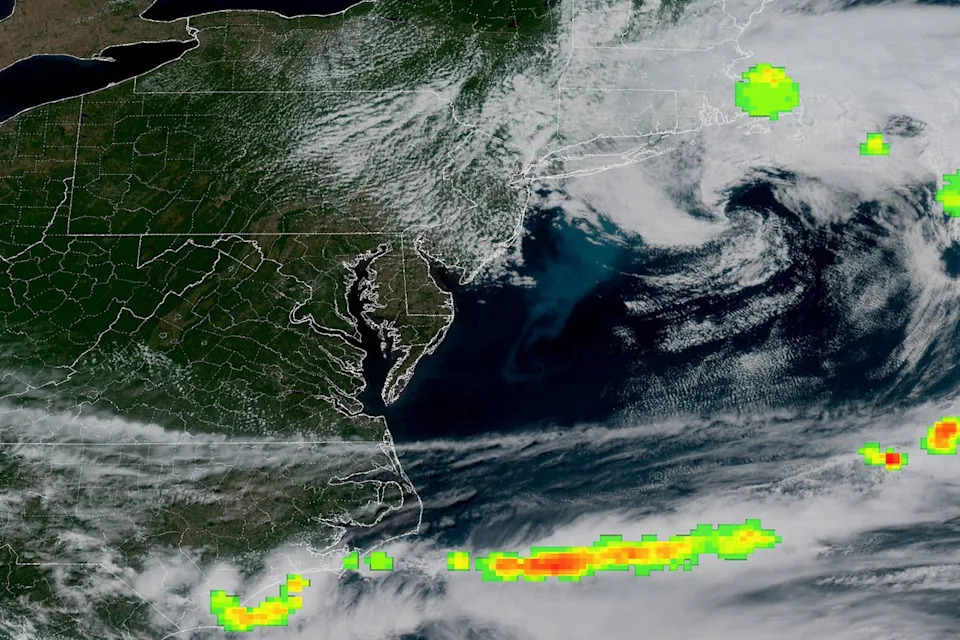
A meteor streaking toward Earth exploded high above the northeastern United States on May 30
Credit: NOAA Satellite and Information Service
Never miss a story — sign up for PEOPLE’s free daily newsletter to stay up-to-date on the best of what PEOPLE has to offer, from celebrity news to compelling human interest stories.
Satellite lightning data indicates that the meteor entered the atmosphere over the South Shore near Boston before spreading to multiple locations, stretching as far as Rhode Island, according to CBS News.
The Massachusetts Executive Office of Public Safety and Security received several residents accounts of the fireball with “an audible boom and ground tremors,” per ABC News. The Watertown Police also shared on Facebook that they received “numerous reports from residents of hearing a loud boom sound” over the eastern part of Massachusetts.
The United States Geological Survey (USGS) described the fireball as a suspected bolide — a bright meteor that exploded in the atmosphere.
“Unlike earthquakes, which occur at discrete locations in the earth, sonic boom events occur along a linear path in the atmosphere,” the USGS said. “Therefore, the location provided is an approximation. While recorded on seismic sensors, traditional earthquake magnitudes are not appropriate for measuring atmospheric events. No magnitude is assigned.”

NASA logo (stock image)
Credit: STEFANI REYNOLDS/AFP via Getty
The fireball was a natural object, not associated with any currently active meteor shower, and it was not a re-entry of space debris or a satellite, UK news outlet The Guardian reported, citing NASA’s Jennifer Dooreen.
“What you hear is the air compression of it moving really fast, creating those pressure waves, and occasionally, sometimes you’re also hearing the stone itself break apart from the forces that it’s going through,” Shauna Edson, an astronomy educator for the Smithsonian National Space and Air Museum, told CBS affiliate WBZ-TV.
“How bright it was, how fast it was moving, the angle it was coming from, and how long it stayed bright for, that gives us a lot of information,” Edson continued. “Maybe it’s part of a broken-off piece of a lone asteroid. Maybe it’s just one of these smaller space things that’s been floating around that we don’t associate with something we know the name of.”
PEOPLE has reached out to NASA for comment.
Read the original article on People