

MEN Night Editor Tom Burnett is one of the ever-swelling ranks of people suffering with gout. And those numbers are only set to rise
Tom Burnett Content Editor
15:19, 31 May 2026

Gout often attacks the big toe first
On Boxing Day 2017 I woke up and discovered I could barely walk. That was unexpected.
There was a strange pain in the back of my knee and it was oddly swollen. At first I thought I’d slept on it funny and that it would wear off. But it didn’t.
It got worse throughout the day. It became more painful to walk and my knee lost all flexibility to the point it felt like it was made of stone while also on fire, which is a bit of an odd combination I admit.
Eventually, in a lot of pain, I found myself in A&E. They suggested it might be gout. I got some anti-inflammatories and after a few days it wore off.
Click here to get the biggest stories straight to your inbox in our Daily Newsletter
I hoped it was a one off thing. Unfortunately it flared up again about six months later and, after some blood tests, my doctor diagnosed that they were right – it was in fact gout.
I have to admit that up until this point I didn’t know much about it. My knowledge of it basically consisted of the fact Prince Doran had it in Game of Thrones and it was known as the ‘Rich Man’s Disease’.
It was the sort of disease medieval kings had in history books. Not 29-year-old journalists from North Staffordshire. It was a very painful lesson to learn.
What is gout?
Gout is a form of arthritis and causes swelling and stiffness in joints. It’s caused by an excess of uric acid in the blood.
It can affect all kinds of joints but, bizarrely, affects a lot of people’s big toes – to the point it is impossible to sleep with even the thinnest sheet on top of an affected joint because of the sheer pain.
Often called the Rich Man’s Disease due to its association with rich foods, attacks can also be triggered by a number of factors.
It often features on lists of the most painful conditions a person can have. I don’t know if that’s true, but what I do know from agonising and sleepless nights is that I wouldn’t like to feel what was worse.
Excruciating doesn’t cover it.
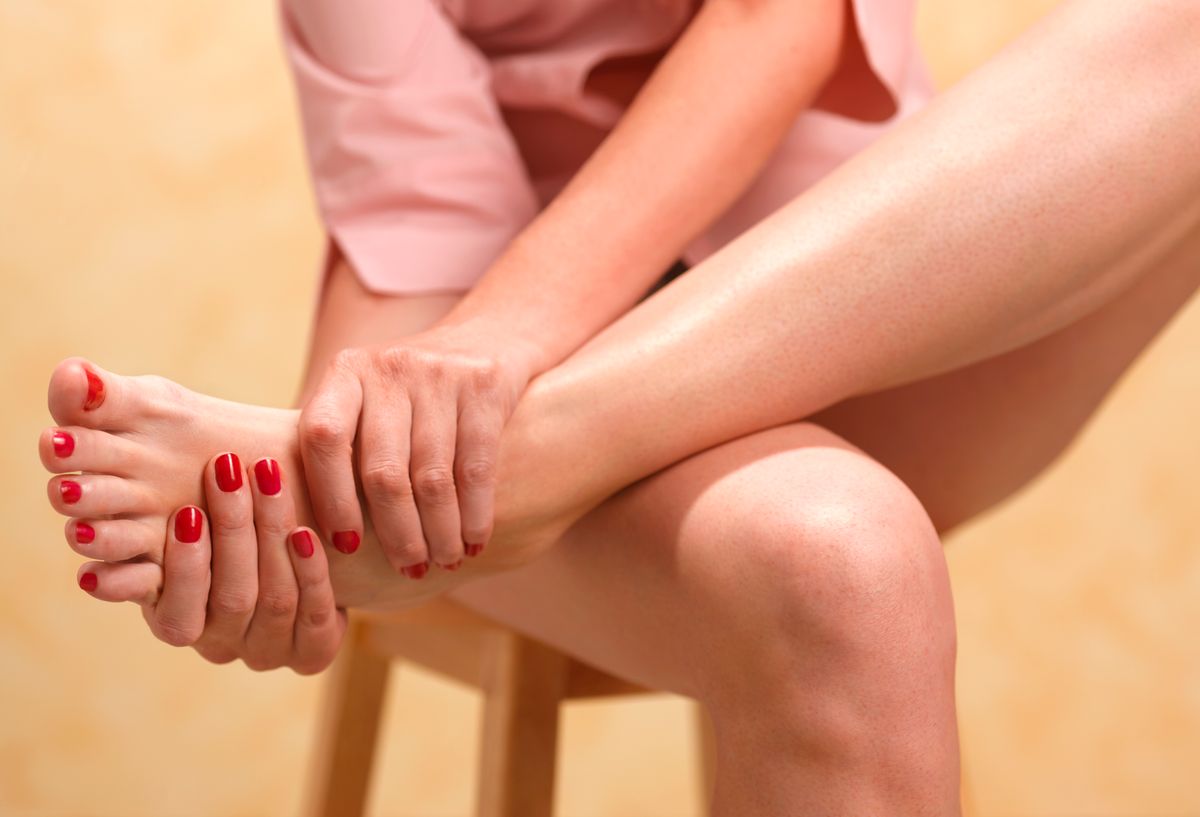
Gout affects approximatively one in 40 people in the UK and that is set to increase(Image: GETTY)
It’s treatable, and lifestyle adjustments can help decrease the risk of it coming back – I’ve had fewer incidents since I lost a load of weight and seriously cut back on my drinking. But you can never be sure it isn’t coming back and it runs in some families (my grandmother had it).
As a result I always carry my medication with me whenever I am away from home for the night on the off chance it flares up while I am away. I also always carry a foldable cane in my backpack just in case (I’m not detracting from the fact there are people with far worse, far more permanent mobility problems).
Stigma:
As well as excruciating, there’s also a certain stigma attached to gout. It’s associated with a poor diet and excessive drinking, although these aren’t the only factors (although I will admit my diet has occasionally included a few more meal deals than I imagine the British Medical Association recommends).
Daft as it sounds now I am writing about it for the Manchester Evening News, I used to sort of give vague answers if people saw me limping. I’d say I’d hurt my ankle or knee or something.
During one particularly bad attack I didn’t leave the house for about a fortnight as I didn’t want to run into anyone I know while I was hobbling around on a stick.
I’m far from the only person with gout who has felt this way. I’ve seen it described as a ‘misplaced sense of shame’ and I’d say that about sums it up.
I did overcome the odd fear of going outside limping though. I had an attack shortly before I was due to take a Flixbus from Cambridge to Paris for work.
I can be quite stubborn when I want to be so, in a fair bit of pain (waiting for the medication to kick in), I limped my way to Cambridge and across to France. Admittedly going down the Paris Catacombs – far from the most accessible attraction in the city – was not a great idea, but I’d booked it so I did it before hobbling back to the Metro to get the Eurostar home.
So, why am I talking about this now?
I’ve never put pen to paper about gout before. Partially because of that lingering (unjustified) embarrassment and also because I was not sure anyone would really care.
What changed my mind was when I was sitting on a train to Manchester Piccadilly the other week and overheard two lads a few years younger than me talking about it. One of them had just had his first attack and was trying to articulate to his mate exactly how painful it was (no easy task).
It got me thinking that it’s not a condition that we talk about enough, and it sometimes gets dismissed as some kind of medieval or Victorian throwback in the same league as cholera and typhoid in the western world.
Get MEN Premium now for just £1 HERE – or get involved in our WhatsApp group by clicking HERE
But sadly it’s not a remnant of the past. In fact gout is on the rise, with more and more people suffering from it. And that figure is only set to increase, with a 2024 article in the Lancet saying 98.5million people worldwide are projected to suffer from it in 2050.
So, there’s going to be more conversations about it whether people like it or not. There’s no one who would like to say ‘Out with Gout’ more than myself, but that’s not happening anytime soon.
There’s not much to be done if it gets you – other than go to the doctor and get the medication (honestly, it works wonders). But all I’d say is that there’s no shame in it if you do find yourself hobbling about. Don’t be afraid to talk to people about it or let you stop doing whatever you want to do.
It’s a miserable enough condition when it strikes as it is. Don’t make it worse for yourself.