
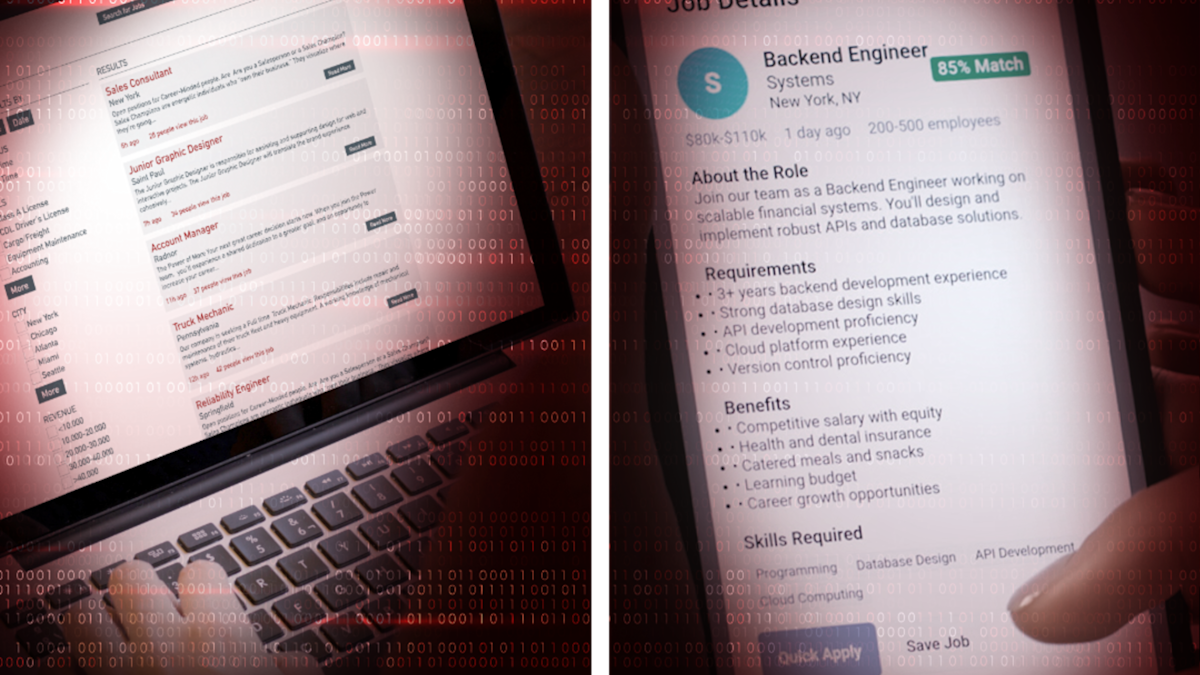
Exclusive: Australian workers could be missing out on legitimate jobs by mistaking them for scams, as a surge of fake employment ads swindle jobseekers out of millions.
More than two-thirds of Australian professionals have decided against applying for a role they were interested in because they were not confident it was a genuine job, LinkedIn’s Job Search Safety Pulse report found.

Australian jobseekers are missing out on real opportunities amid a surge of online employment scams. Supplied/LinkedIn
A further 37 per cent of Australian workers say this has happened more than once – revealing a generation of fatigued and overly cautious jobseekers.
This trend of extreme caution is not unfounded.
A total of $24.4 million was lost nationally to job and employment scams in 2025.
This year is shaping up to be just as financially devastating, with $4 million already stolen by scammers posing as employers between January and March.
Scammers now have advanced tools at their disposal and can accurately mimic legitimate job advertisements.
LinkedIn career expert Brendan Wong said job scams can fool even the savviest of candidates, as criminals look to take advantage of the tough local job market.
“They are getting very sophisticated in how they’re able to create very legitimate-looking profiles and companies, and just act in a way that a normal recruiter would behave,” Wong told nine.com.au.
“It’s a reminder to trust your instincts.
“If there’s a gut feel, then that’s when it’s probably a good idea to just double-check and confirm things, and not proceed if it just doesn’t look right.”

LinkedIn career expert Brendan Wong. Supplied/LinkedIn
Wong said there are two key red flags that often expose a job scam.
If a candidate is asked to pay a fee, this should ring alarm bells.
And if a potential employer is asking for sensitive information, such as passports or bank details, suspiciously early in the process, this could be a warning sign.
Being rushed into accepting a job may also be a hallmark of a scam.
“Often they’ll try and get a person off-platform onto another social media platform, like WhatsApp,” Wong said.
Wong added that candidates should ensure they have at least met a real-life person on a Zoom call and confirmed the employer does exist before signing anything.

Wong said there are two key red flags that often expose a job scam. Getty Images/iStockphoto
It is important to be wary.
However, hypervigilance is costing some prudent jobseekers real opportunities.
“That would definitely be a risk, because you’ve got people who are just unsure if a job is legitimate, and so they are deterred from applying altogether,” Wong said.
“And for an employer it does mean that they may have fewer candidates.”
While there can be bad actors who “fall through the cracks”, Wong said LinkedIn and other reputable job sites always ensure that an advertisement is verified before it lands on their platform.
The professional networking site said it uses a three-tiered defence system to identify and stop employment scams or fake job ads being listed.
The vast majority of scams are blocked before they reach LinkedIn members.
The research found that young Australians entering the workforce for the first time are most likely to be wary of scams.
LinkedIn’s research discovered that 79 per cent of Gen Z workers have decided not to apply for a job because they weren’t confident it was legitimate.
Another 72 per cent say they have spotted a job they suspected was a scam.
“Gen Z jobseekers are also more prone to falling prey to tactics, that’s why it is important to be educated in what to look out for,” Wong said.
“Do the research, make those contacts, and do checks and balances before proceeding with any application.”