
 Screenshot
Dementia is devastating, now Australia’s number one killer.
In Western Australia, much is being done. Alzheimer’s WA chairman and head of research and partnerships,
WA Professor Warren Harding, joins CEO Ella Dachs to tell the full story in the second part of this exclusive
Have a Go News interview.
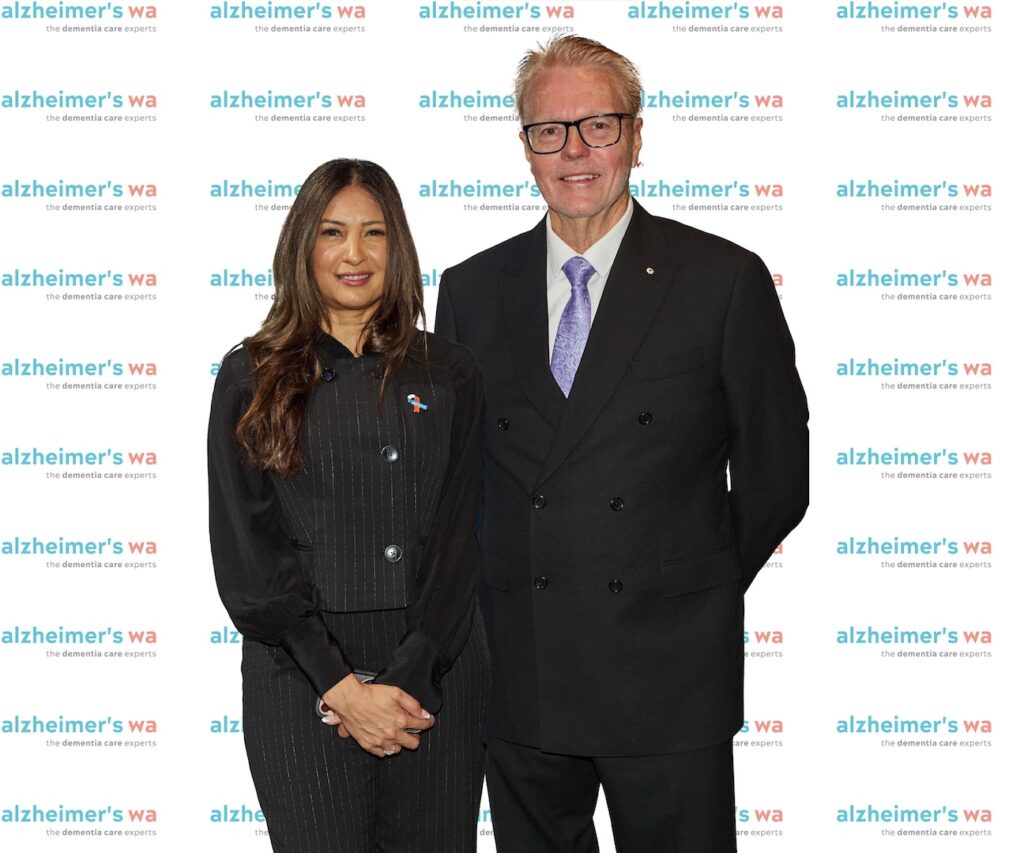 Alzheimer’s WA CEO Ella Dachs and AM – Chair, Professor Warren Harding
Q: What are your expectations in dealing with rising diagnosis rates and WA’s population growth?
Ella Dachs
A key message is that dementia is not a normal part of ageing and it is not just an older person’s disease. We need broad community understanding and strong government leadership to match the scale of impact.
Professor Harding
Globally, dementia has an economic impact of around $2.8 trillion and affects more than 100 million people, a figure set to double by 2050. Without coordinated planning, the social and economic impact will be profound.
We need immediate investment in early detection, workforce development, prevention and community-based care.
Q: How do you communicate change to people diagnosed, carers and families?
Ella Dachs
Clear, compassionate communication sits at the heart of everything we do.
We provide dementia-language guides, webinars, community education sessions and culturally tailored outreach, backed by an experienced communications and marketing team.
Just as importantly, we listen with empathy. We co-design person-centred services with people who have lived experience to ensure they are practical, respectful and genuinely useful.
We continue to advocate for stronger state and federal public health campaigns to raise awareness and promote prevention.
Q: Are you able to keep up with ongoing research and advances?
Professor Harding
While Alzheimer’s WA is not a purely research organisation, we are deeply connected to national and international research communities.
My work keeps me engaged with global trials in early detection, biomarkers and innovative care models.
We are exploring new approaches and emerging tools such as eye-tracking and AI-supported assessments. Translating research into practice requires ongoing investment and strong partnerships between clinicians, governments and service providers.
Our work with Foresight Medical Solutions, a WA company exploring early detection using eye pupil light response is very exciting.
We are also exploring new models of dementia care and innovation exploring the testing of the Apple Pro Vision for eye flicker and reading; as well as using wearables for client safety and evaluating geo mapping.
Q: What are the first steps if memory issues are suspected?
Ella Dachs
The first step is to make an appointment with your GP for an initial cognitive assessment and referral to a specialist if needed. Too often, diagnosis occurs too late, limiting options for intervention and planning.
We encourage people to contact Alzheimer’s WA early on 1300 66 77 88.
Our friendly team can help reduce anxiety, provide tailored advice, develop person-centred care plans and arrange visits to our respite houses in Shenton Park, Woodvale, Mandurah and Albany.
We also run Family and Friends education programs, helping carers understand dementia and look after their own well-being.
Q: What do you tell people asking about cures and treatment progress?
Professor Harding
We are cautiously optimistic. There are promising developments in blood biomarkers, monoclonal antibodies and genomics, particularly around the APOE gene. However, progress is incremental.
Equally important is better understanding the carer journey. When carers become overwhelmed, health declines and people enter residential care sooner than necessary. Supporting carers is central to sustaining care in the community.
Ella Dachs
While research continues, we must focus on quality of life now: symptom management, emotional support and practical care for people and families living with dementia today.
Meaningful advances and better diagnosis help. Each person is unique.
Progress is real but incremental. Our focus is on quality of life and supporting families while the research continues.
Q: How important is a well-informed public?
Ella Dachs
An informed public reduces stigma and encourages earlier diagnosis.
Community education empowers carers and improves inclusion.
We value the role of Have a Go News and community events like our annual Walk to Remember in raising awareness. Do visit our website and join our next annual event to promote awareness for this important cause.
Professor Harding
We need all tiers of government to align around urban planning, community design, better housing and funding to enable people to age in place, with dignity and identity where they lived, their children work and great grandchildren go to school.
We see some very progressive examples in Netherlands and other countries trialling Compassionate Communities approaches and ageing in place such as Hogewyck, outside Amsterdam.
Q: Clearly, people are not alone.
Professor Harding
Dementia touches so many lives in WA, not only the people diagnosed but their families and the many carers who give so much. You are not alone, reach out for help, and together we can change the journey.
A united response, from governments, communities, health services and supporters, is essential to ensure compassionate, timely and dignified care now and into the future.
If you or someone you love is impacted by dementia, contact Alzheimer’s WA on 1300 66 77 88.