
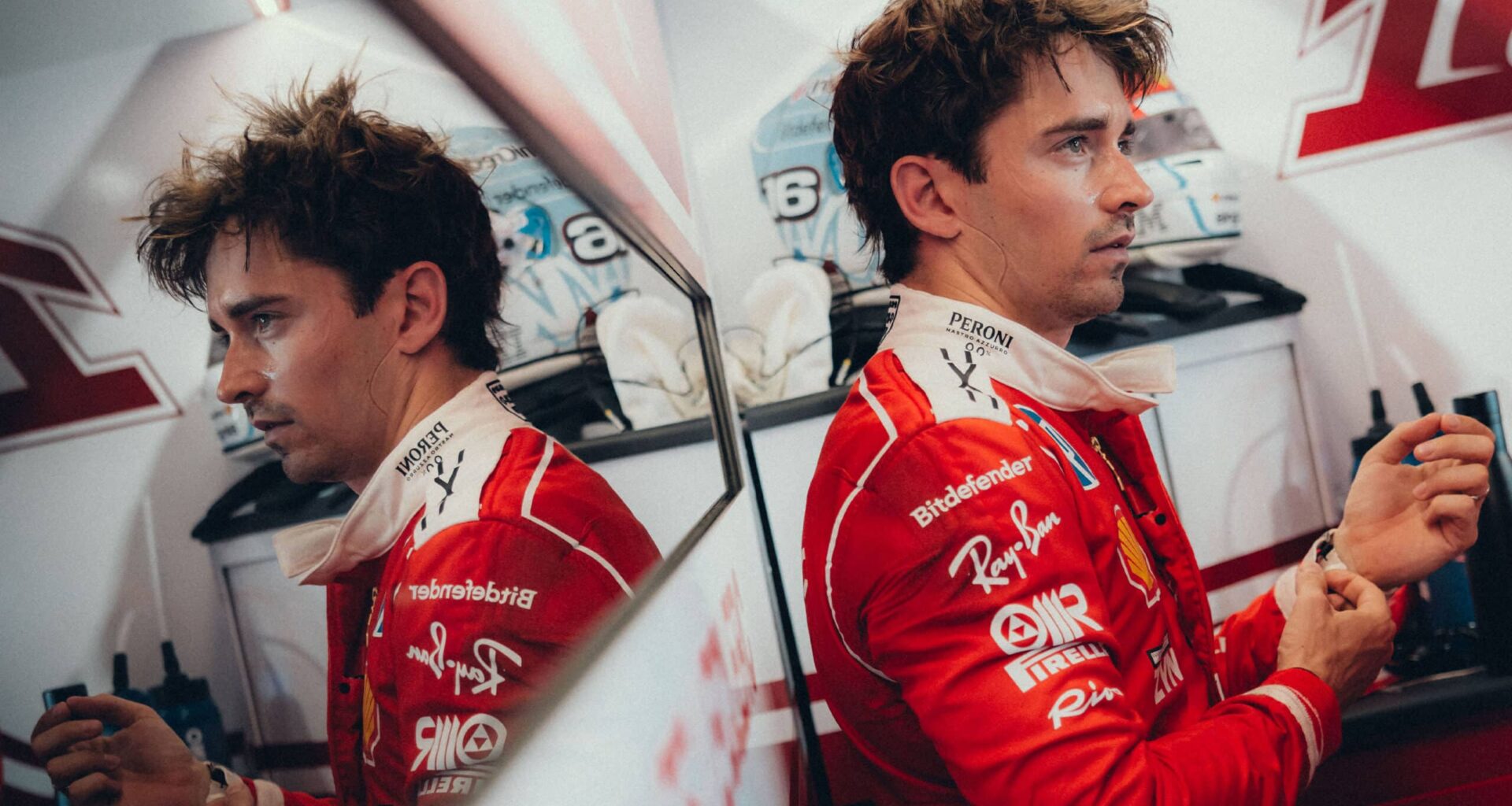
Has Charles Leclerc passed the point of no return in his partnership with Ferrari? Has he been there so long that the latest contract extension – which takes them to at least the end of 2028 together – means he is now all-in for the rest of his F1 career? He will be 31 years old by the time this contract runs its course and although it’s perfectly feasible he could switch teams after that, it’s also perfectly feasible he will have been at Ferrari for a decade without winning a world title.
Leclerc, without question, has been among the outright quickest – often the very quickest – driver in F1 for all of his Ferrari career. Yet he has won just eight races in his eight seasons there so far. To put that in perspective, Kimi Antonelli won half as many races as that between March and May of this year.
That’s not a reflection of their relative levels, but just confirmation that the car and team are the dominant part of any package and that Ferrari has underperformed for all of Leclerc’s time there. It’s been a tumultuous era behind the scenes, the team reeling from the recent death of its boss Sergio Marchionne at the time of Leclerc’s first season there in 2019, with an internal power battle in the wake of that and Leclerc serving under three team principals so far. He’s been there through the awkward ending of the Sebastian Vettel partnership and the sometimes-awkward beginning of the Lewis Hamilton one, both disruptive of the team’s energy. Yet throughout it all, Leclerc has steered clear of the politics, kept his head down and given his formidable best.
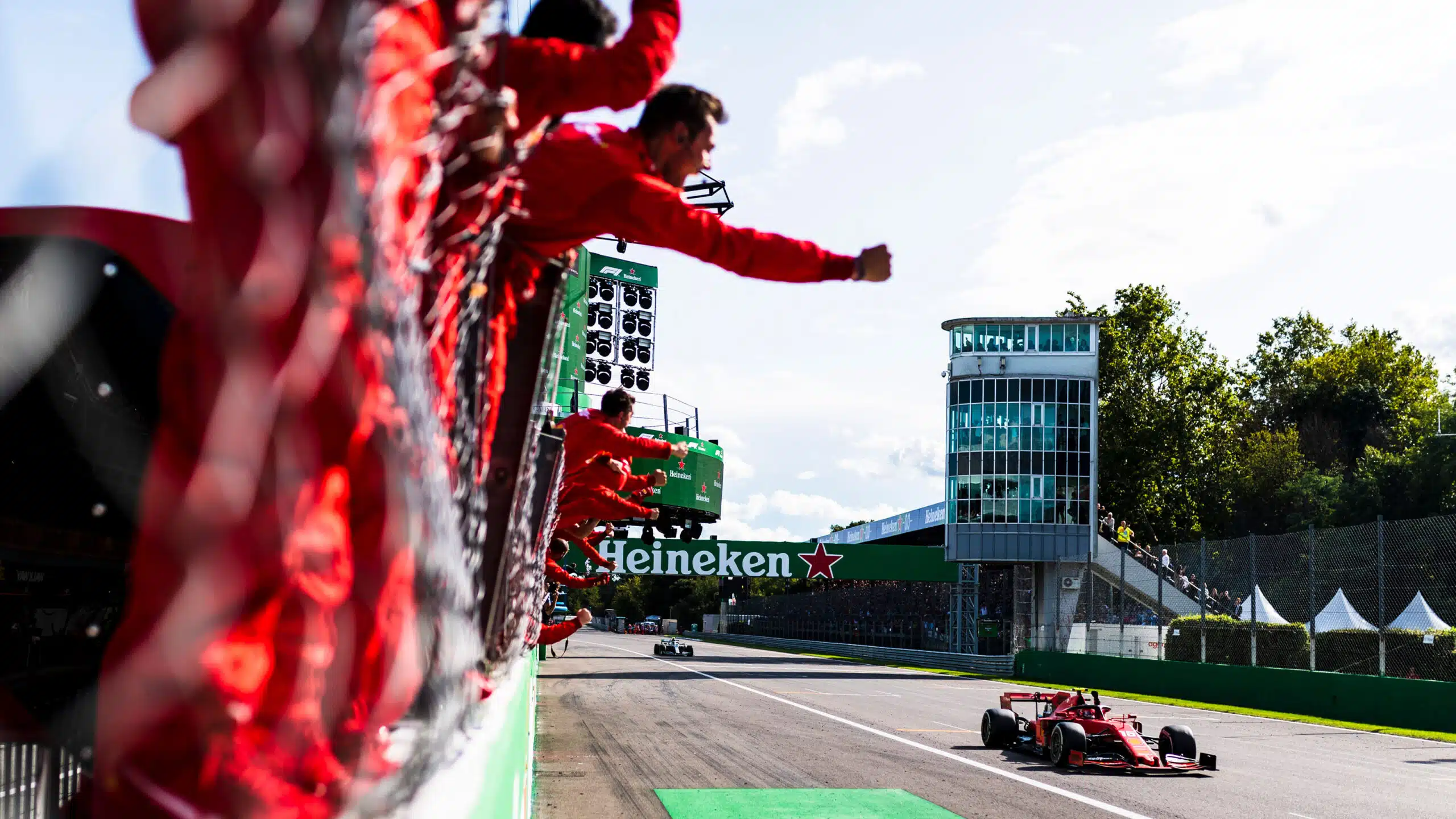
Victory at Monza in 2019, in a trick Ferrari
Ferrari
Like a powerful water hose free of its moorings, Ferrari flailed about in a wild bid for glory in 2019, one which blatantly did not meet the regulations and for which it was heavily penalised in 2020 and ’21, those seasons effectively competitive write-offs. Only since 2022 has Leclerc been able to deploy a properly representative Ferrari, one which gives an accurate indication of where the team is really at – and it’s clear that although it remains a top team, there are structural faults limiting its full potential. Mercedes, Red Bull and McLaren have all, in that time, demonstrated what a top team firing on all cylinders looks like, with all its departments aligned under a common vision.
But although Leclerc has never had that, the current team is probably the strongest it’s ever been in his time there, with a creative technical team being given its head as team boss Frederic Vasseur does his best to steer the ship between the many hidden hazards. Perhaps it’s that which has convinced Leclerc to stay; the hope that this direction of travel is going to come good and one day soon he’ll have a car which can win races at every track, not just at Monaco and a random few others scattered through the season.