
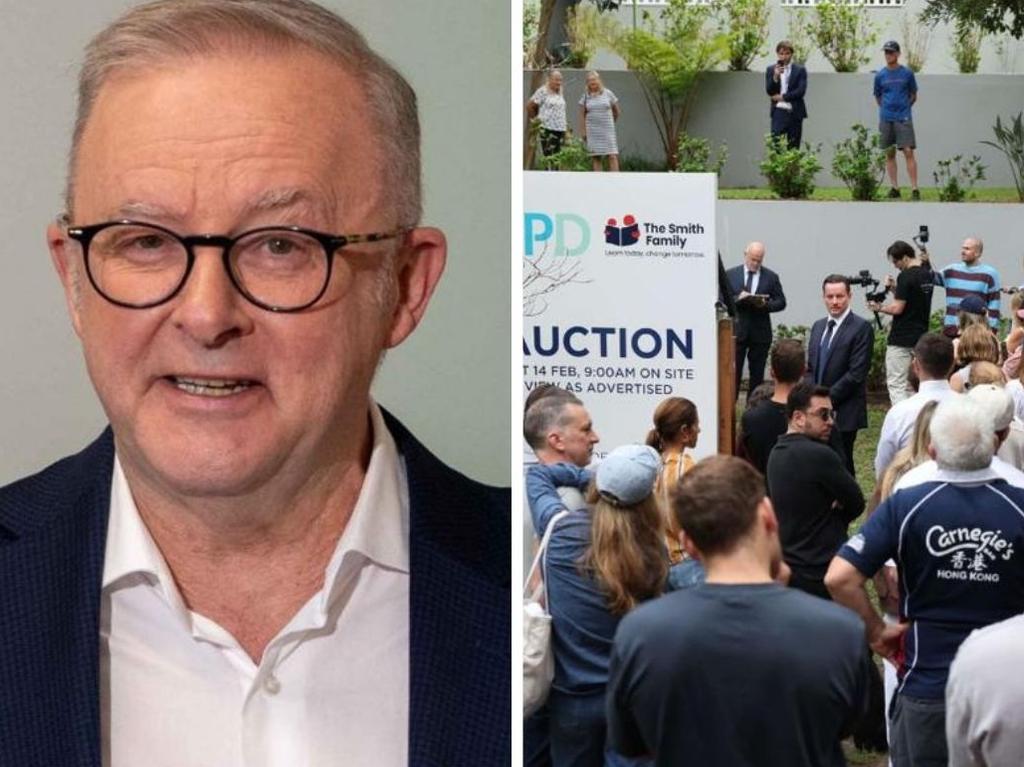

Home prices have been falling in most of Australia, while continuing to grow in cheaper areas. Picture: Rohan Kelly
Continued high migration and recent tax reforms could fuel a boom in prices across the bottom end of the housing market, one of the country’s top property investors has claimed.
Home prices in much of the country are currently falling, but Nathan Birch, a 41-year-old who owns just shy of 400 homes, said a different dynamic was playing out in the country’s cheapest areas.
The founder of investment group B.Invested said competition in this market was heating up because of rampant demand from recent overseas arrivals who had recently got permanent residency.
Mr Birch pointed to ABS stats showing the nation recorded its highest-ever intake of net permanent and long-term arrivals over January, surging past 57,000.
Net permanent and long-term arrivals peaked in January.
With India recently overtaking the UK and China as the primary source of migration, projections suggested another 260,000 to 300,000 migrants will enter the country over the next year.
As these arrivals transition to permanent residency, Mr Birch estimated 1.5 million new first-home buyers will be unleashed into a market where cheap listings are already scarce.
MORE: Migrant, in Aus as student, has 56 homes
“It’s supply and demand,” he said. “We have lots of people who want to buy property and not enough stock. We haven’t even seen the start of it.”
Mr Birch, a high-volume corporate buyer and buyer’s agent who built much of his portfolio by securing properties under the $500,000 mark, said he has seen the results of higher demand from migration play out first hand.
“I am getting gazumped on those $400,000 to $500,000 deals,” he said, noting that buyers were overpaying to secure homes in cheaper suburbs in some instances.
MORE: New country rivals, India, China in Aus home buy up
Nathan Birch warned that the bottom end of the market was likely boom, even as the rest of the market went into a correction.
He rejected claims that migration was only putting pressure on the rental market, noting that high numbers of overseas arrivals on student visas increased purchaser demand down the track.
“Someone who is a student, they are not going back. Not many people are coming here to get $50,000 of student debt, intending to go back, they are intending to stay.”
Mr Birch explained that migration could have a particularly potent effect on prices in the current climate due to a mix of outside forces.
Recent arrivals, after gaining permanent residency, typically targeted housing in cheaper outer suburbs – the same areas first-home buyers and investors were being squeezed into due to higher interest rates and recent tax reforms, including restrictions on negative gearing.
This increased competition was not being matched with an adequate pace of home building, putting upward pressure on prices, Mr Birch said.
MORE: Albo ‘promise’ in ‘tatters’ amid migration bombshell
Treasurer Jim Chalmers’ announcement of cuts to negative gearing could channel new investors into suburbs offering higher rental returns. Picture: NewsWire / Martin Ollman.
He added that the government’s decision, announced in the May Budget, to restrict negative gearing to new properties would pit investors directly against new arrivals and first-home buyers.
The reforms meant investors would be incentivised to target homes offering higher rental returns, which tended to be located in cheaper outer suburbs that often attracted new migrant buyers.
Government first-home buyers incentives were an additional pressure point, he said.
“With the Albanese Government’s 5 per cent deposit first-home buyer scheme set to sweep in migrants from overseas who can become permanent residents or citizens in as little as three years, property prices will rise to become even less affordable – if you’re thinking to invest, my advice is do so now.”