
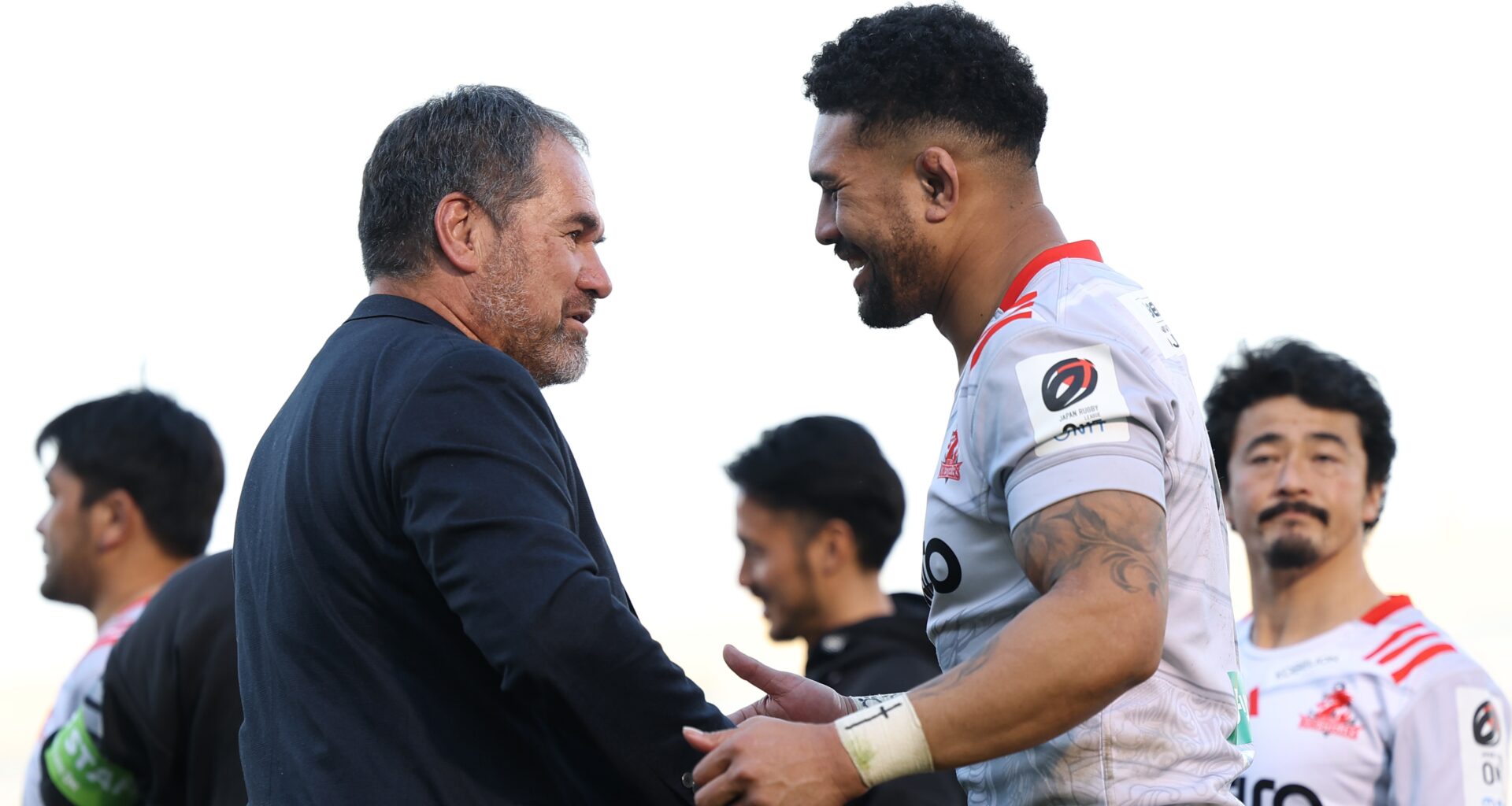
Japanese rugby is no longer a fringe competition. It is rapidly evolving into one of the most competitive environments in the global game.
Speaking on Sport Nation Mornings, Rugby analyst Matt McIlwraith said the growth of Japan’s League One has been driven by both quality and depth.
“The standard of the league itself has risen significantly and the competitiveness of the teams.”
That competitiveness is underpinned by strong international influence, particularly from New Zealand and South Africa, both on and off the field.
“There’s a strong Kiwi influence and a strong South African influence,” McIlwraith said.
“It’s not just the players, it’s the coaches too.”
McIlwraith says that the coaching environment is a major factor in lifting standards, with communication challenges forcing growth.
“You’ve got to talk to half your team through an interpreter.
“You do need to learn to be very concise with your messaging and being very aware of whether the players have understood you or not.”
The improved quality is now clearly visible in player transitions, with League One talent stepping seamlessly into Super Rugby.
“The best example that New Zealanders can see is Warner Dearns,” McIlwraith said.
“He’s played his whole career in League One and now he comes to the Hurricanes and is one of the best players in Super Rugby.
“That’s a reflection of the standard.”
There is even a belief that Japan’s top sides could already compete with the best in the southern hemisphere.
“They would be very competitive in Super Rugby. They’d certainly be challenging for a top six place.”
Another major benefit is the way the Japanese system manages player workload, allowing athletes to extend their careers while maintaining performance.
“The schedule is not as hard.
“It gives them the opportunity to get their bodies right.”
As the competition strengthens, so too does interest in linking it with Super Rugby, though McIlwraith believes Japan will protect what it has built.
“They’ve got a very good league themselves. I don’t think that they’d want to tamper with that at all.”
Instead, a hybrid model could emerge, with cross border fixtures seen as a more realistic option.
“There’d certainly be scope for some sort of collaboration,” McIlwraith said.
“The top two teams from each competition playing semi finals and a final.”
All of this forms the backdrop for Dave Rennie’s arrival as All Blacks coach, fresh off a title win with the Kobe Steelers.
McIlwraith says Rennie’s blueprint is clear.
“Dave’s very big on structure and he’s very big on work ethic.”
Defensive improvements will likely be a cornerstone of his approach.
“They (Kobe) were conceding four and a half tries a game before he arrived,” McIlwraith said.
“He got that down.”
Selection could also take on a different shape, with leadership playing a central role in how his squads are built.
“He’s going to build a senior leadership group and then everything works around that.”
That may mean players are chosen not just for talent, but for what they contribute to the wider group dynamic.
“Not necessarily considered by the public the best in their position, but are on the side because of the leadership they bring.”
Japanese rugby’s rise is no longer theoretical. It is happening in real time, with growing depth, smarter systems and increasing global relevance.
And as McIlwraith summed up, the ceiling is still a long way off.
“There’s certainly a lot of potential there and it’s coming forward at a great rate.”
Listen to the full interview below: