
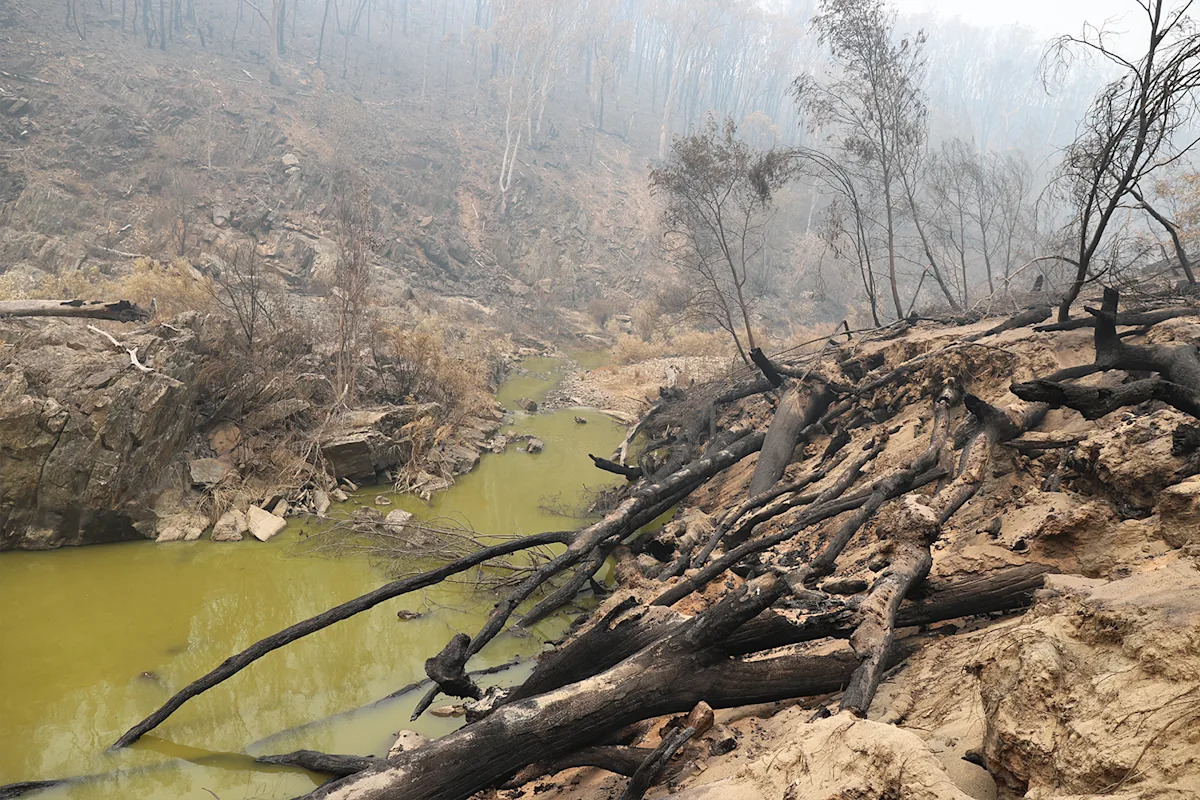
Harrowing photos highlight the wretched state of Australian rivers, where at least 36 species of spiny crayfish (Euastacus) are facing extinction.
Among those listed on the Commonwealth’s threatened species list are the 2.5kg Murray cray, the second-biggest freshwater crayfish in the world.
One image shared by the World Wide Fund for Nature (WWF-Australia) shows Manus Creek in southern NSW, which turned a mustard colour and became uninhabitable after the 2019/2020 Black Summer Bushfires.
Before this catastrophic event, only three Euastacus species were listed under the Environment Protection and Biodiversity Conservation Act as threatened species.
Another photo, taken last year, shows a stretch of creek in the Whian Whian State Forest in NSW dried up after drought and fire.
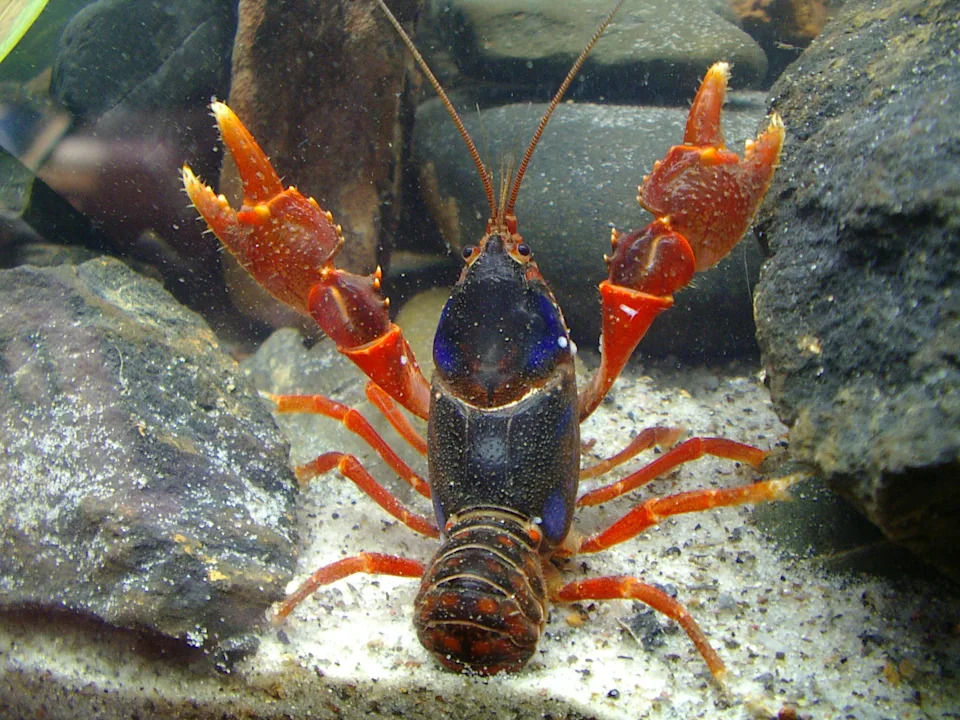
A critically endangered Euastacus yigara in a defensive pose.
(Rob McCormack)Fears for species that thrived for millions of years
WWF-Australia is warning that extreme weather events are intensifying due to climate change, putting the future of freshwater species in doubt.
Covered in spikes and armour, Euastacus crayfish originally evolved when Australia was wetter and cooler, making them “living relics from a time long ago”, but they are struggling to adapt to the rapidly changing climate.
“Spiny crayfish have been around for millions of years. We can’t let these overlooked and underappreciated creatures disappear on our watch,” WWF-Australia’s Dr Stuart Blanch warned.
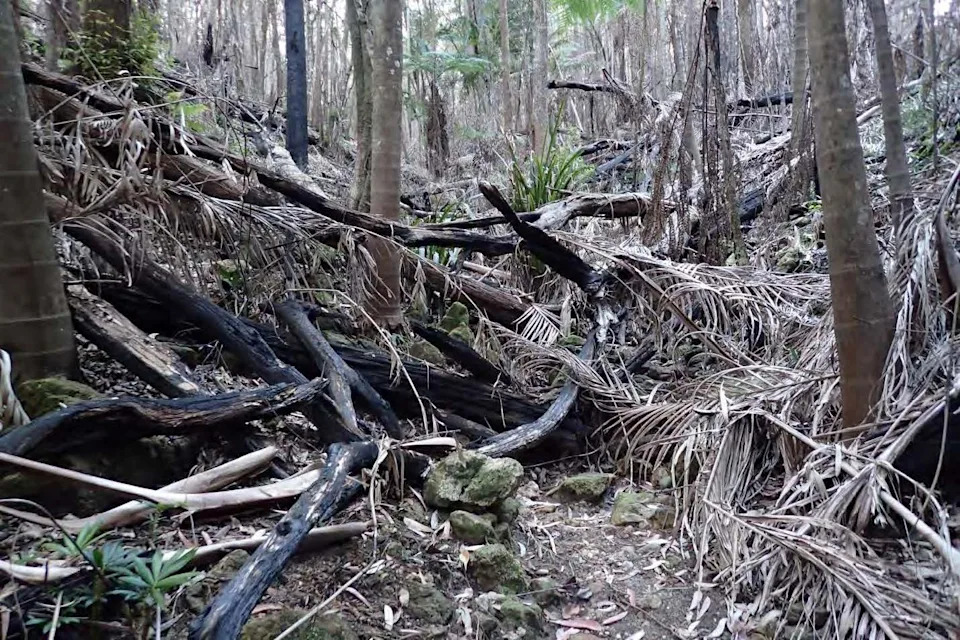
A creek that was once home to spiny crayfish in Whian Whian State Forest is pictured dried up in 2025.
(Rob McCormack)
Have you photographed an endangered species in the wild? Contact newsroomau@yahoonews.com
Scientists predict some of the 36 endangered crayfish could be extinct within 10 years. The status of three more species is unknown as they are currently being assessed.
Invasive pathogens also remain a threat to freshwater wildlife.
Where spiny crayfish are found
Spiny crayfish currently live from South Australia to Far North Queensland, helping to keep water clean by eating rotting vegetation and animals.
They need clear, cool, free-flowing streams or rivers to survive, and good examples of this habitat are becoming increasingly rare.
Why studying these odd crayfish is important
WWF-Australia and the federal government-funded Saving the Spinys Project have been working on assessing the health of spiny crayfish populations so they can be better protected.
RELATED
Some recommendations include preventing the harvest of multiple species, with exceptions made for the Murray cray.
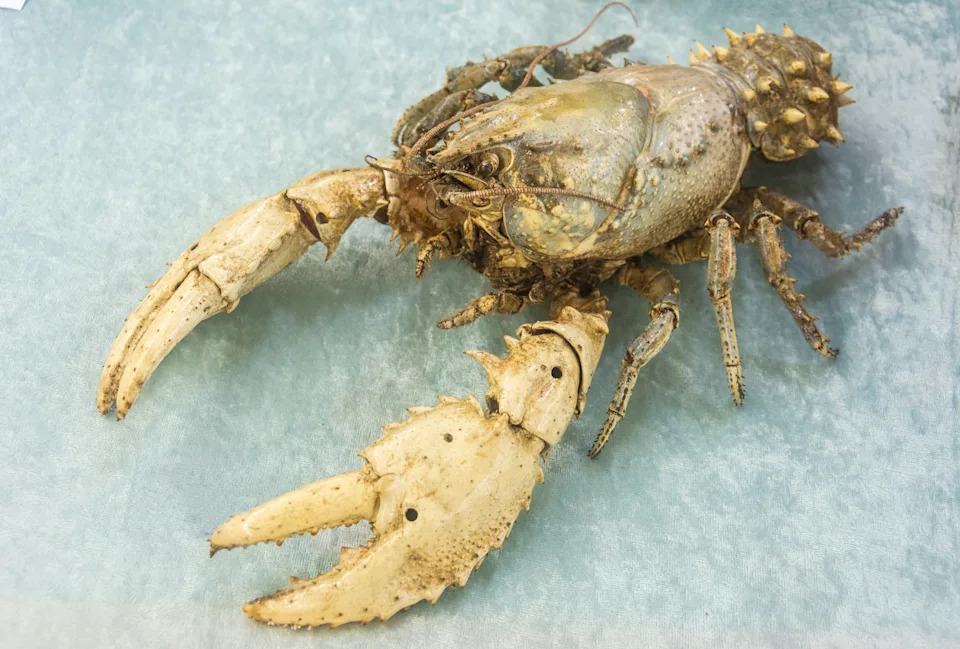
Murray River crays (Euastacus armatus) are the second-biggest freshwater crayfish in the world
(Getty)
Another group working to protect spiny crayfish is the privately funded Australian Crayfish Project. Its founder, Rob McCormack, highlighted the importance of research into these elusive creatures.
“There are currently 56 recognised Euastacus species, with many additional species known but not yet formally described, and likely many more still to be discovered,” he said.
“Undescribed species are effectively invisible in environmental planning and assessment processes, and may decline or become extinct without ever being recognised.”
You can also follow us on Facebook, Instagram, TikTok, X and YouTube.