
As part of our Language of Soccer World Cup series, The Athletic is speaking to supporters of all 48 nations competing at the 2026 edition to capture their unique football culture, distilled into a single phrase. You can read the articles in one place here.
Pasion Inquebrantable – Unwavering passion
Panama is a small country with a proportionately large sporting footprint.
Roberto Duran, the Central American nation’s most famous son, is one of the greatest boxers in history. Duran held world championships in four weight classes and was named the Fighter of the Decade for the 1970s by American sports publication The Sporting News. He was the first sportsperson to fly the Panama flag before an international audience, paving the way for generations of athletes to follow.
Around the same time as Duran was duelling with Sugar Ray Leonard in the 1980s, Rolando Blackman, born and raised in Panama City, was becoming an NBA All-Star with the Dallas Mavericks. They have had success in track and field, too, with long-jumper Irving Saladino becoming the first Panamanian to win an Olympic gold medal in 2008.
Panama is now best known for producing Major League Baseball stars, with legendary New York Yankees pitcher Mariano Rivera standing head and shoulders above the long list of Panamanians who have graced an American ballpark.
But despite a strong sporting heritage, Panama struggled to translate their success to the football pitch. They have been a member of FIFA since 1938 and are a founding member of Concacaf, the football confederation presiding over Central and North America, but Panama were on the outside looking in for football’s greatest show.
“Before 2018, everybody would have their World Cup team,” says Mike Ho, who, like everyone in this piece, is a lifelong fan of the Panama national team. “Most people were Brazil or Argentina — it was always Brazil for me.”
Then, against the odds, Panama finished above the United States and Honduras in World Cup qualifying to book their spot in Russia eight years ago. No longer did they need to decide between Neymar and Lionel Messi — for the first time, they had their own World Cup heroes to back with ‘pasion inquebrantable’, their unwavering passion.
“When we qualified for the World Cup in 2018, the whole city went to the Calle Cincuenta, which is a famous long street here in Panama City, and it was all packed,” says Mike. “Everyone was there celebrating, wearing red, waving the flags.
“It’s not the same to support your country as to support other countries. So when we went to the 2018 World Cup, it was something amazing — as a nation of five million people, we could all experience that joy.”
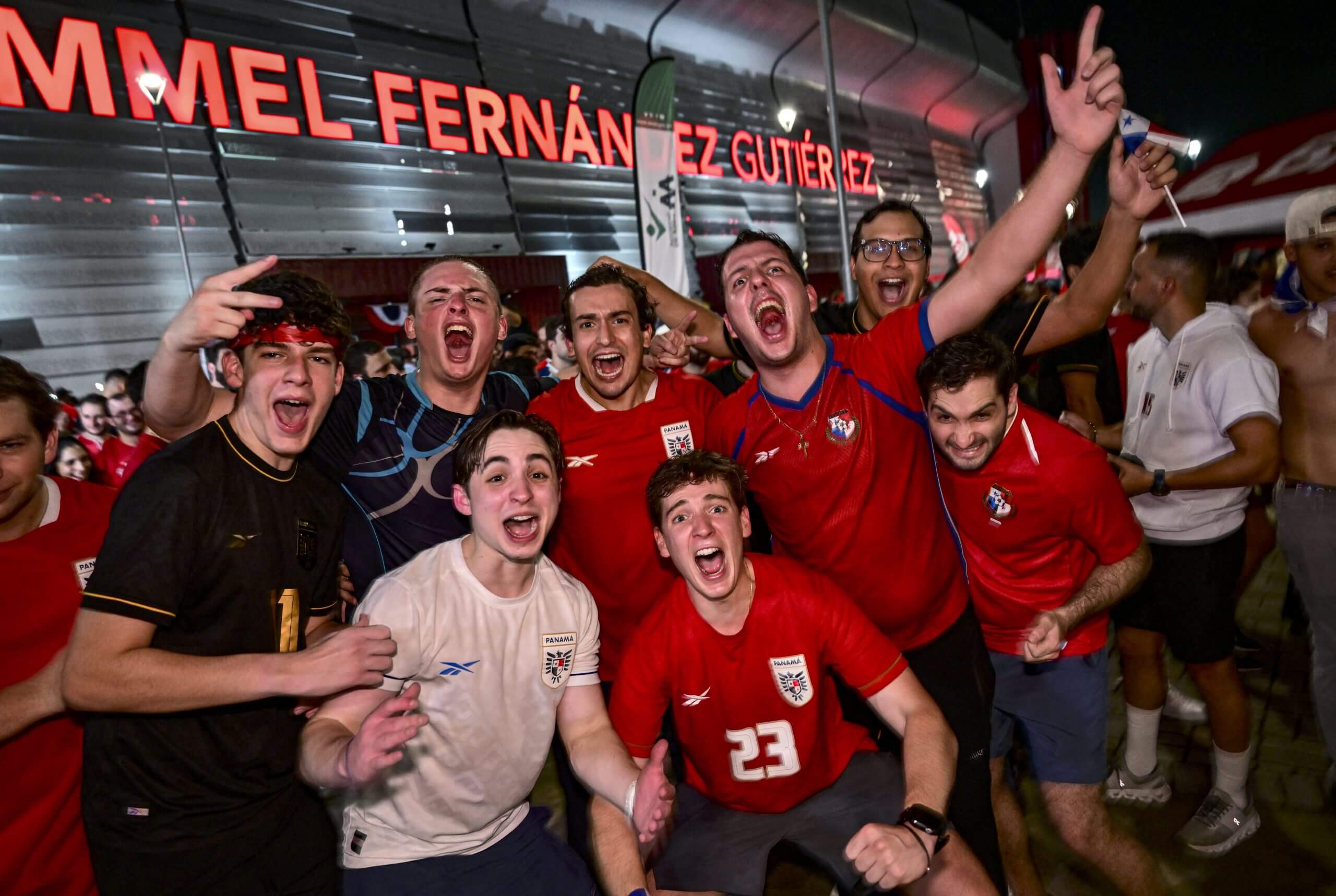
Panama fans celebrate their team qualifying for the World Cup (Martin Bernetti/AFP via Getty Images)
Panama finished bottom in a group with England, Belgium and Tunisia, shipping 11 goals across their three matches. A 6-1 defeat by England in their second match could have been cause for embarrassment — they were 5-0 down at half-time — but it will live long in the memory for the Panama supporters for different reasons: the day they scored their first World Cup goal. For that moment, goalscorer Felipe Baloy, who threw his body forward to convert Ricardo Avila’s free kick past Jordan Pickford on the slide, is an icon in Panama. And they are raising their expectations this time around as the World Cup, held in the United States, Canada and Mexico, comes closer to home.
“We’re going step by step,” Mike adds. “We’ve had the first goal. Now it’s the first point, and then the first win. But if we pass through the group, we’re going to celebrate that for the whole tournament.”
While individual stars like Duran and Rivera have helped place the country on the sporting map, supporting ‘La Sele’ has quickly become the nation’s favourite pastime.
Led by Spanish coach Thomas Christiansen, described as “the difference” by fan Carlos Angulo, Panama are now an intensely competitive outfit backed by a strong defensive unit. They have finished as runners-up in the Concacaf Gold Cup (2023) and Nations League (2025) since Christiansen, the former Leeds United head coach, took charge.
In the face of protracted social, economic and political instability, the national team has served as relief for a population searching for something to cheer about.
“Here in Panama, we have a lot of things going on, but when La Sele plays, religion, race, politics, it all disappears,” says Fatima de Freitas. “It’s like a safe place. The team unites as a country, and we stay until the end — it’s when we are at peace. When they play, our managers at work are like, ‘Very good, you can go home early!’ It’s joy, fun, loudness, red, white and blue flags everywhere in the taxis. If I have a jersey, I will give it to you. That’s how it is.”
Matchday in Panama is a blissful assault on the senses. The smell of carimanolas and empanadas sold by street vendors, and the sight of the Panama flag’s vivid red, white, and blue, mixed with the national dress: pollera, sombrero pintado, and cutarras. If you somehow don’t hear the drums, maracas and platillos (cymbals), you can’t escape their passionate pre-match rendition of the unofficial national anthem: Patria, by salsa artist Ruben Blades.
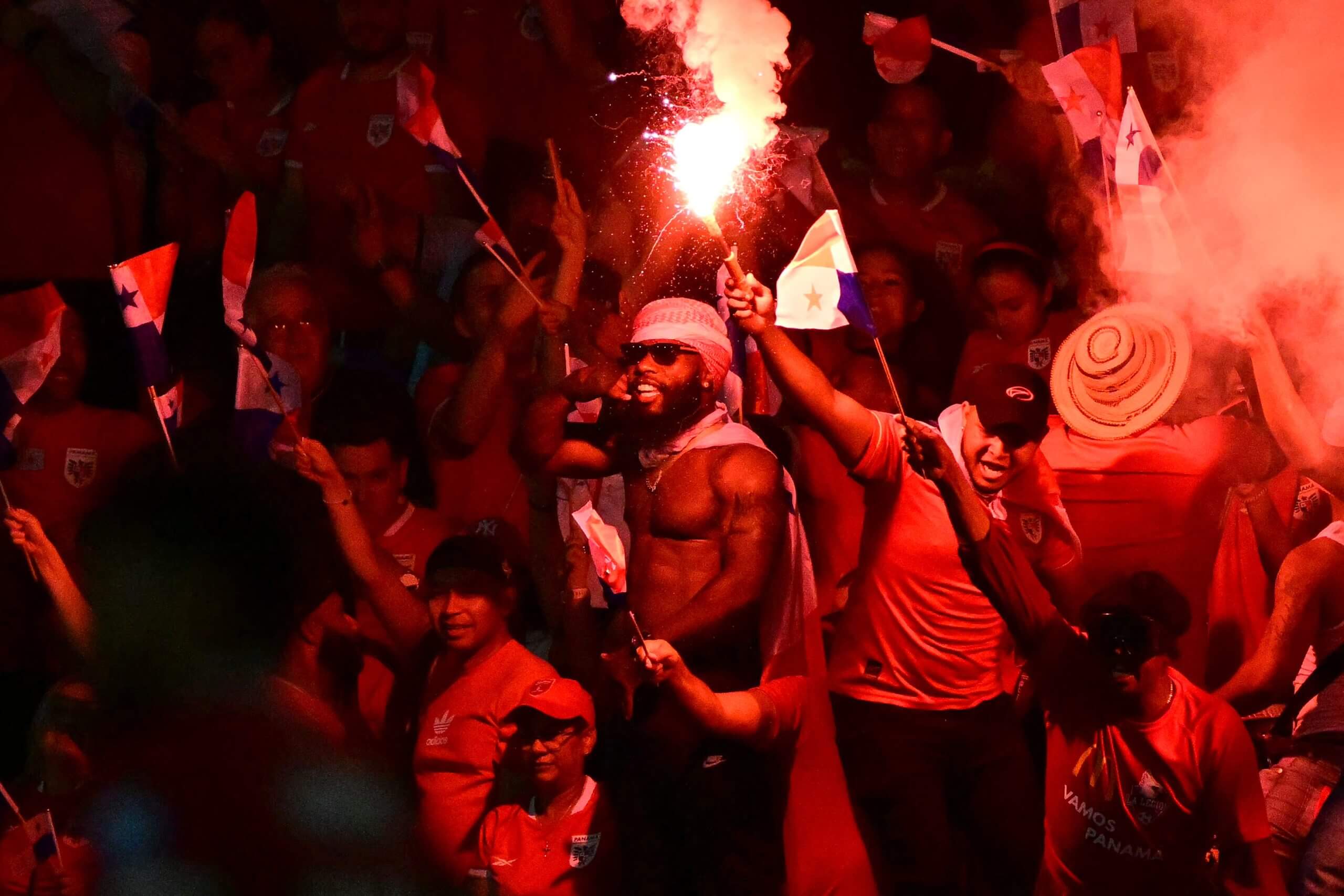
Panama fans light flares during a qualifier against El Salvador in November (Martin Bernetti/AFP via Getty Images)
Panama are heading to their second World Cup ready to cause an upset. Progressing through a group with England, Ghana and Croatia will not be easy, but their recent record in Copa America (reaching the quarter-finals in 2024) and Gold Cup is evidence they can compete against the best. And on their way to their recent success, they have developed spicy rivalries.
“I would say our biggest rivalry is with Mexico,” says Alexis Arroyo. “Costa Rica, they used to be our biggest rivals, mainly because they were such a good team. But we’ve passed that point, and we’re better now. We beat them the times we’ve played lately. Mexico. It’s not really a soccer rivalry — it’s more personal.”
Panama have lost finals to Mexico in the Nations League and Gold Cup — results that have not been forgotten.
“Mexico, or even the United States, they always seem to get the decisions from referees and Concacaf,” adds Kimberly de Freitas. “We used to be very friendly with Mexico. But over the past few years, we have suffered a lot from them.”
So while the Panama fans will be as ready to dance, party and showcase their unwavering passion as anyone this summer, do not underestimate them or their team. After a trial run in 2018, they are ready to show the football world what they are about.
The Language of Soccer series is sponsored by Google.
The Athletic maintains full editorial independence. Sponsors have no control over or input into the reporting or editing process and do not review stories before publication.