


Just two days after launching its first gimbal camera in the United States, Insta360 has answered DJI’s launch-day lawsuits with two countersuits of its own, asserting five utility patents covering gimbal stabilization, directional control, telemetry overlay, and panoramic video. The escalation turns the most closely watched rivalry in consumer imaging into a two-front legal battle fought on American soil, with the Luna Ultra’s continued availability in its most important market now hanging on the outcome.
The sequence of events is unusually fast, even by the standards of a feud that has been building for over a year. Insta360 launched the Luna Ultra in the US on June 10, 2026, its first true handheld gimbal camera and a direct challenge to DJI’s long-dominant Osmo Pocket line. On the same day, DJI filed two patent infringement lawsuits in the US District Court for the Eastern District of Texas, targeting both the Luna Ultra and the upcoming Luna Pro, and seeking a permanent injunction that would bar the cameras from the US market entirely. On June 12, Insta360 hit back with two countersuits.
What Insta360 is claiming
Insta360’s countersuits assert five utility patents covering technology used in gimbal and 360-degree cameras. The company says DJI infringed patents relating to gimbal stabilization, gimbal directional control, camera smooth stabilization, telemetry overlay, and panoramic video stabilization. According to Insta360, these technologies are incorporated into several major DJI products, including the Osmo Pocket series, the Ronin and RS gimbal series, the Osmo Mobile series, and the Osmo 360.
That last product is worth flagging. The Osmo 360 was DJI’s first entry into the panoramic camera segment, a category Insta360 has historically dominated, so seeing it named in a stabilization and panoramic-video patent claim is pointed. Insta360 frames the move as a defense of its core business rather than an opportunistic strike.
“At Insta360, we prefer to let our products do the talking. But we are not afraid of a legal battle when challenged,” said JK Liu, Founder of Insta360. “We are fully committed to protecting our innovations and will take decisive action to defend our intellectual property from infringement.”
 DJI sued Insta360 over Insta360 Luna Ultra’s design, and now they are hitting back with their own lawsuits. Image credit: Insta360DJI’s launch-day move
DJI’s two lawsuits, also filed in the Eastern District of Texas, target the Luna Pro and Luna Ultra directly. In its filings, DJI argues that the Luna line consists of handheld gimbal cameras with integrated optics built on the same product architecture it pioneered with the Osmo Pocket, and that Insta360 markets the cameras expressly as competitors to that line. The company points to specific design elements it claims as patented, including the long handheld body, the rotating display, the control area with a scroll wheel, and the gimbal arm connection, language that closely echoes the Osmo Pocket 3.
DJI is seeking a permanent injunction, damages described as no less than a reasonable royalty, profit disgorgement, and enhanced damages for what it characterizes as willful infringement, in both cases. The timing suggests DJI had been preparing its complaints since at least the 2026 NAB Show, where Insta360 publicly demonstrated the Luna cameras, and was waiting for the products to go on sale in the US before filing.
Why the US market is the real battleground
The stakes here are sharpened by a fact we covered in our Luna Ultra launch coverage: DJI’s new pocket cameras, including the upcoming dual-lens Osmo Pocket 4P (not formerly released yet) that the Luna Ultra is really squaring off against, are not sold in the United States. That gives Insta360 a clear run at one of the most important markets in the world while DJI’s own competing hardware remains in limbo, available only through grey imports. A US injunction against the Luna line would neutralize that advantage at a stroke, which helps explain both the aggression of DJI’s filing and the speed of Insta360’s response.
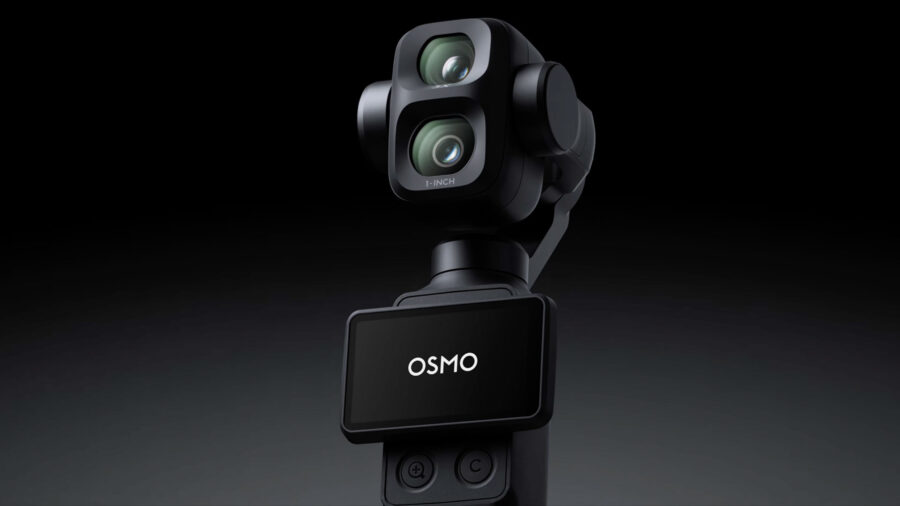 DJI Osmo Pocket 4P teased. Source: DJI
Insta360 categorically rejects DJI’s infringement claims, emphasizing what it calls the Luna Ultra’s unique engineering footprint. The company says development of the camera began in 2020, predating any reactive response to the Osmo Pocket, with earlier products including the ONE R, the Link Series webcams, and the Flow Series gimbals helping shape its technology and design direction.
“Luna Ultra is the result of years of independent R&D, not a response to any competitor’s product,” Liu added. “DJI filing lawsuits on the same day we launched Luna Ultra speaks volumes, exposing their fear of competition from a highly competitive product.”
A rivalry that keeps escalating
This is not the first courtroom clash between the two companies in 2026. As we reported in March, DJI sued Insta360 in China over six patents covering drone flight control, structural design, and image processing, alleging the technology had been developed by former DJI employees. That action surfaced just days before DJI launched the Avata 360, its first 360-degree FPV drone, into a niche pioneered by Insta360’s Antigravity A1. The competitive dynamic has intensified across every category both companies touch: DJI entered the 360-degree market with the Osmo 360 against Insta360’s X5, then released the Osmo Nano against the Insta360 GO Ultra, while Insta360 pushed into drones with Antigravity. We unpacked the broader stakes of the dispute on Focus Check ep110.
Patent litigation has become a structural feature of this corner of the market. Earlier this year, GoPro lost its patent case against Insta360 at the ITC, with the exclusion order applying only to older, discontinued Ace series models while Insta360’s current lineup remained on sale. The pattern suggests that for all the legal noise, US courts have so far been reluctant to pull popular cameras off the shelves, which may temper expectations around DJI’s injunction request.
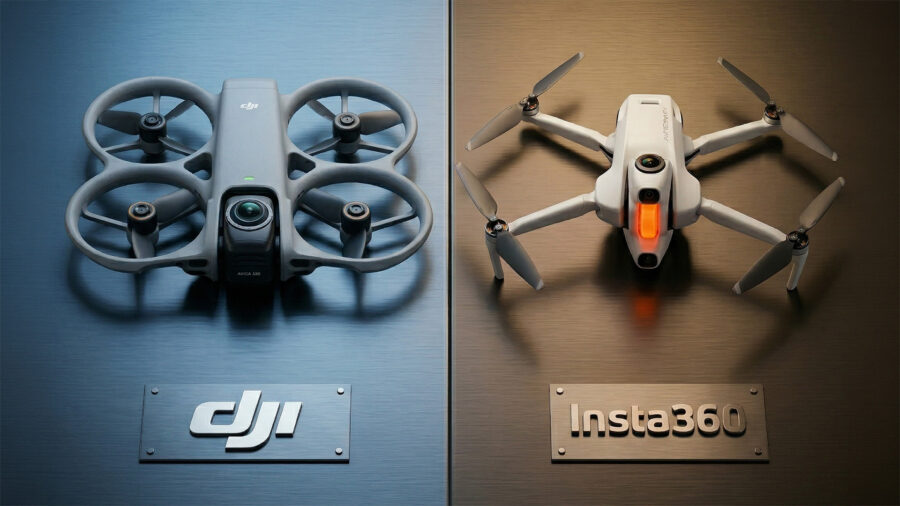 DJI and Insta360 also go head-to-head in court around their 360-degree-drones (Insta360 under the Antigravity brand). Image credit: CineDEarly sales and what happens next
Insta360 reports that initial consumer response to the Luna Ultra has been strong, with significant demand in North America and a ranking as the top seller in Amazon’s US camcorder category over its first 24 hours of availability. The company says it remains committed to defending its IP portfolio while ensuring continued product availability for creators worldwide.
For working filmmakers, the immediate practical impact is limited. The Luna Ultra remains on sale in the US, and a permanent injunction, if it ever lands, would come only after a lengthy legal process. The more consequential question is strategic: whether Insta360’s counterclaims, several of which touch DJI’s flagship Ronin and Osmo Mobile lines, give it enough leverage to push the whole conflict toward a cross-licensing settlement rather than a courtroom verdict. That is the outcome that has historically ended disputes like this one, and it would let both companies get back to competing on product rather than legal strategy. We will continue to follow the cases as they develop.
With both companies now suing each other in the same Texas court, this has become a genuine patent standoff. Do you see it ending in a US sales ban, a cross-licensing deal, or something else? Don’t hesitate to let us know in the comments below!