
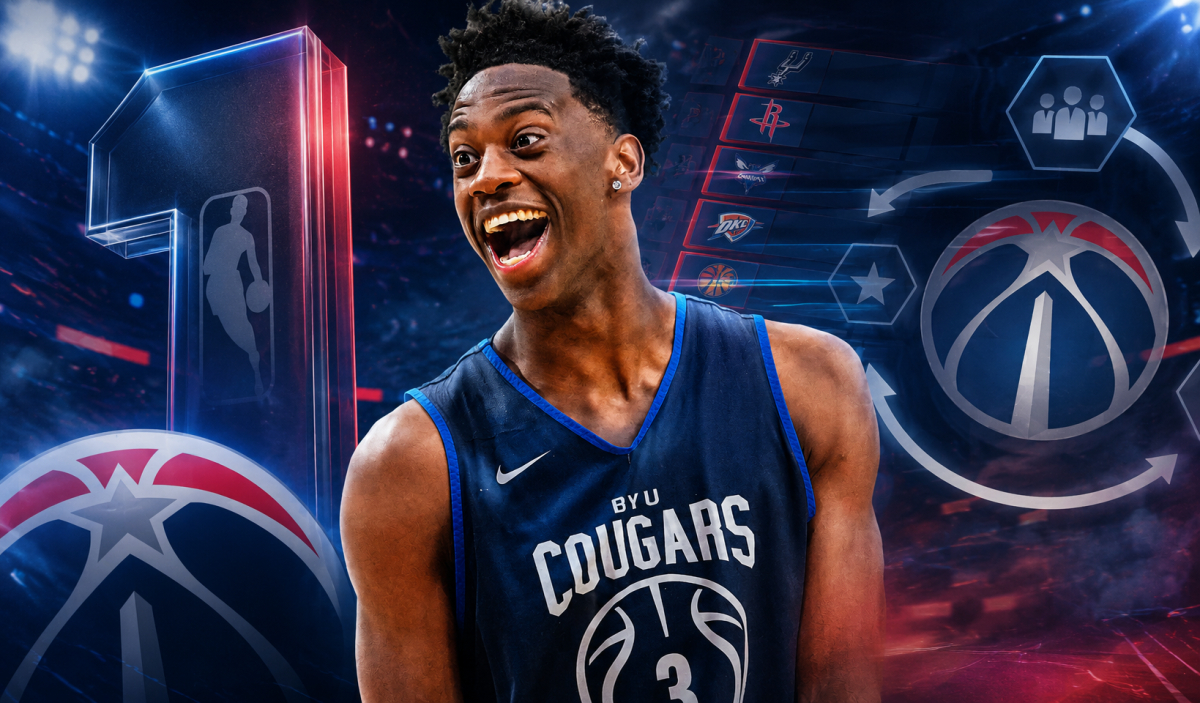
The NBA Draft is an event where the dreams of 60 young men become true overnight. It’s also a night when the fortunes of NBA franchises change. For better or worse. But over the last decade, it has become something much more significant.
The draft is a means of building a team (don’t forget to trust the process), and draft picks have become valuable assets.
And while there’s a lot of science behind evaluating young players and projecting their future potential, assessing and placing particular value on a draft pick is a whole other ballgame.
Teams constantly include future draft picks in trades. OK, if the draft pick is in the upcoming draft. It means we kind of know what players will be available and who’s coming out of college.
We can also go out and see them play in person and do our scouting reports. But imagine a trade in which you send a player, and in return, you get a draft pick that will happen three years from now.
Or take, for example, a trade proposed by Bleacher Report ahead of the 2026 NBA Draft:
Washington Wizards receive:
No. 3 pick 2027 first-round pick via Cleveland, Los Angeles Lakers, Minnesota, or Utah 2030 first-round pick via Orlando
Memphis Grizzlies receive:
Is it a good deal? Should Washington take it? There is a really high probability it won’t happen, but that’s beside the point. The question is how to place a tangible value on draft picks.
Here, we can take a page from the Analytics book by Stephen Shea and Christopher Baker. They have developed a statistical category that objectively answers an age-old question: Is he a good basketball player?
According to their metric (EOP+), the ten best (from 1977 to 2010) NBA players are:
Place Player EOP+ Score 1. LeBron James 28.92 2. Michael Jordan 26.73 3. Shaquille O’Neal 25.78 4. Chris Paul 25.38 5. Dwyane Wade 25.35 6. Magic Johnson 24.88 7. Allen Iverson 24.38 8. Kobe Bryant 23.35 9. Charles Barkley 23.04 10. Karl Malone 22.9
Even if we aren’t fans of every player on this list, we can say it’s a pretty accurate one.
So by using the same metric, they’ve looked into 36 years of NBA Draft history and calculated the career performances of every pick. And here’s a look at all lottery picks:
1st pick – 16.45 8th pick – 9.67 2nd pick – 12.21 9th pick – 10.09 3rd pick – 13.76 10th pick – 10.33 4th pick – 12.52 11th pick – 8.33 5th pick – 12.27 12th pick – 7.73 6th pick – 9.27 13th pick – 8.79 7th pick – 11.56 14th pick – 8.08
Evidently, the No. 1 pick is significantly better than the rest, while there’s not much difference between the 2nd and the 5th picks.
So let’s go back to that Bleacher Report trade mentioned earlier. The No. 3 pick may still produce a quality player, maybe even a star, but historically, it still does not carry the same value as the No. 1 pick.
The two future first-round picks make the offer more interesting, but their real value depends on where those selections eventually land.
A future pick from a strong team could end up in the late first round, while a future pick from a struggling team could suddenly become one of the most valuable assets in the league.
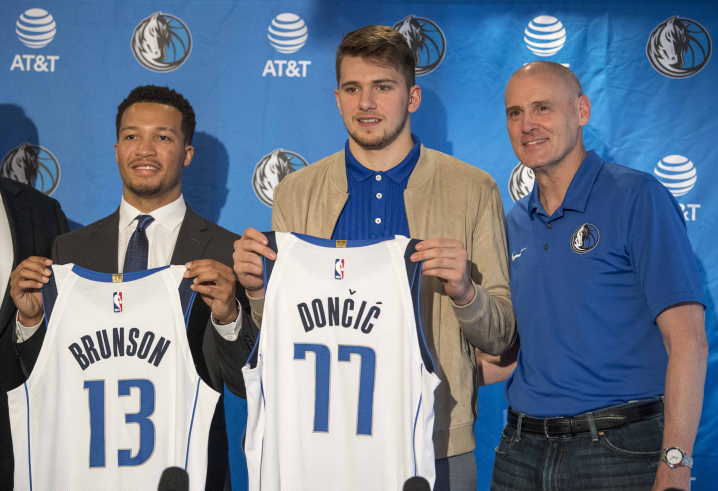
Credit USA Today-Scanpix
Further, Shea and Baker calculated the probability of landing a star player with each pick. What is a star player? A player whose career EOP+ is above 15. An example? Manu Ginobili (15.02).
So what are the chances of drafting Ginobili with each pick?
1st pick – 59% 8th pick – 6% 2nd pick – 26% 9th pick – 18% 3rd pick – 38% 10th pick – 15% 4th pick – 24% 11th pick – 12% 5th pick – 32% 12th pick – 3% 6th pick – 9% 13th pick – 6% 7th pick – 24% 14th pick – 6%
As you can see, there’s almost a 60 percent chance of landing a star player with the No. 1 pick. After that, the likelihood of such a scenario decreases drastically.
Again, let’s discuss the proposed Washington-Memphis trade in a new light.
We can see that the No. 3 pick gives Washington a much better chance of landing a star than most lottery selections, but it still trails the No. 1 pick.
The added future first-rounders improve the package, yet they also bring uncertainty. Unless one of those picks turns into a high lottery selection, Washington would still be giving up the best historical chance of drafting a franchise-changing player.
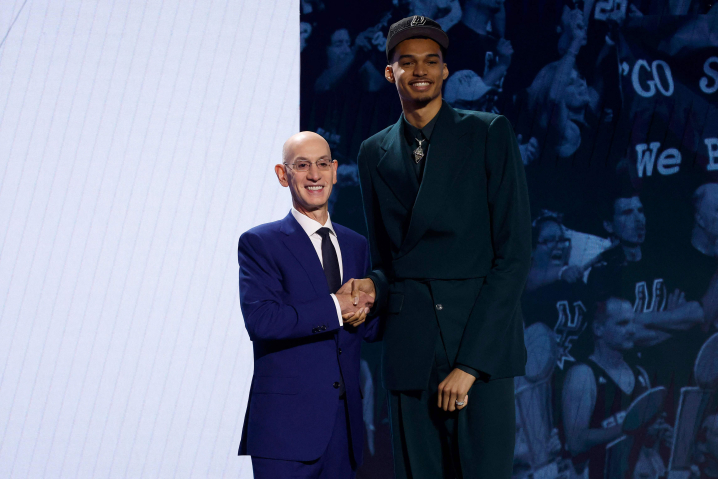
Credit Getty Images via AFP – Scanpix
As mentioned earlier, that particular trade is probably not going to happen. But there will be other trades.
During this year’s draft, in the offseason, and at the next trade deadline. Some of them will definitely include draft picks, and the cycle of wondering “what if” will continue. Only this time, it could hopefully be a bit more enlightened.
If you like our content, please click here and add us as your preferred source. It helps us a lot, and we are committed to delivering you the very latest basketball news.