
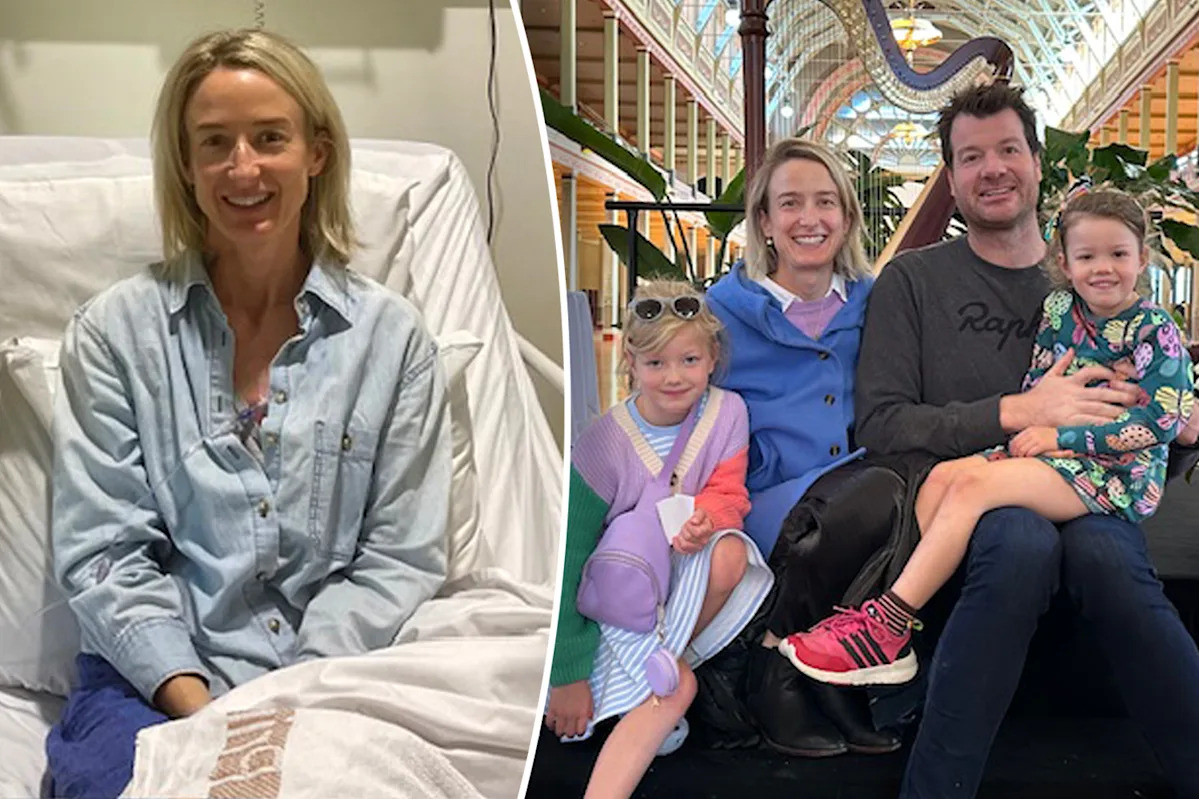
Adrienne Hunter was 45, raising two young daughters and juggling study when she developed two symptoms many busy mums would dismiss — fatigue and low iron.
Bowel cancer never crossed her mind.
“I didn’t think it was possible,” the Melbourne mum told Yahoo Lifestyle.
“Back then, I thought bowel cancer was something older men with poor diets had.”
Like many women, Adrienne put the symptoms down to a hectic stage of life.
At no time did her doctor suggest a colonoscopy, and she wasn’t concerned enough to push for further testing.
It wasn’t until a third symptom appeared that the midwife returned to the GP.
“I’d had some blood in my poo and on the toilet paper, but it wasn’t painful, and I ignored it,” Adrienne said.
“I’d had two babies and assumed it was haemorrhoids.
“The GP was in no huge rush either, but said, to be sensible, I should have a colonoscopy.”
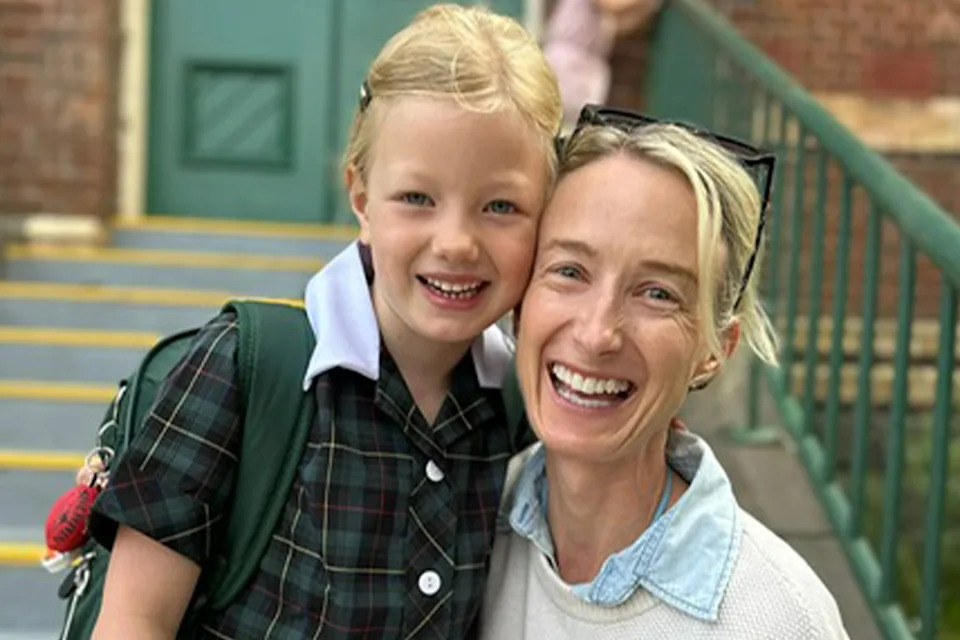
Adrienne said she was wearing her colostomy bag and trying to keep life as normal as possible after her surgery.
(Adrienne Hunter)Waking up to cancer
More than a year after her symptoms first appeared, Adrienne finally underwent a colonoscopy in October 2023.
“When I woke up, it had taken longer than it should, but no one mentioned cancer,” she said.
Before her follow-up appointment, she received a phone call asking her to bring someone with her.
RELATED
“That’s when I thought, ‘this doesn’t sound good’,” the Aussie mum said.
Adrienne took her husband, Laurence, to the appointment, but said much of the conversation is now a blur.
“All I remember was the specialist doing a squiggly drawing to show where a tumour was,” she said.
“I heard the word cancer, and the rest of the appointment was a blur.”
Then her mind shifted to her children, Lucinda and Amelie, who were just five and four years old when her symptoms began.
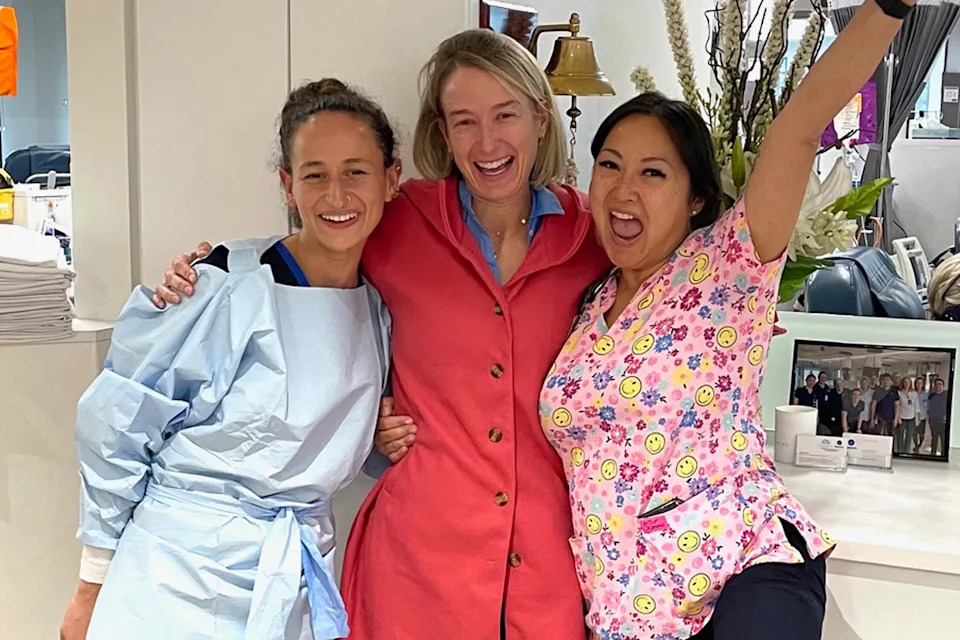
Adrienne celebrates her final chemotheraphy session.
(Adrienne Hunter)
“My thoughts went straight to my daughters,” she said.
“It was absolute terror — I was thinking I didn’t have long with them and what’s the least amount of time they need with me.”
As she began scans and prepared for surgery, Adrienne learned something she wished she’d known sooner — that bowel cancer is not an old man’s disease.
Bowel cancer is the deadliest cancer for Australians aged 25 to 54, with Bowel Cancer Australia reporting 1,884 Australians under 50 are diagnosed every year.
“I had no idea,” she said.
“As it turns out, friends were having colonoscopies, but nobody was talking about it,” she said.
“I was comfortable talking about things like periods, but I found it much harder to talk about bowel habits.”
A fight on her hands
Adrienne underwent surgery in October 2023, which removed the tumour as well as her rectum.
She required a temporary stoma bag and, after doctors discovered the cancer had spread to her lymph nodes, six months of chemotherapy.
“It was stage three, but the doctors were still very positive,” Adrienne said.
Had she reached stage four, the cancer would have been deemed terminal.
She now knows how fortunate she was to have received a diagnosis when she did.
“I was trying to keep life as normal as possible for my children, who were at school and kindergarten,” she said.
“There were days when I was out doing ordinary things with a chemotherapy infusion bottle hidden under my clothes.”
Despite the challenges, her daughters helped her navigate the experience with humour.
“The good thing with young kids is that they were fascinated with poo,” she said.
“They called my bag mummy’s tummy bummy, and it normalised it for me too.”
‘Don’t assume you’re too young’
Following chemotherapy, Adrienne was found to have no evidence of cancer.
Two years on, she has continued to receive clear scans but remains under regular monitoring.
“It’s always on my mind now, and I am super vigilant about health, but I’m living a full life,” she said.
Adrienne now works with Bowel Cancer Australia to urge Australians not to ignore symptoms.
She has shared her story as part of Kleenex’s Poo Check campaign, which supports Bowel Cancer Australia and aims to get Australians to talk more openly about bowel health.
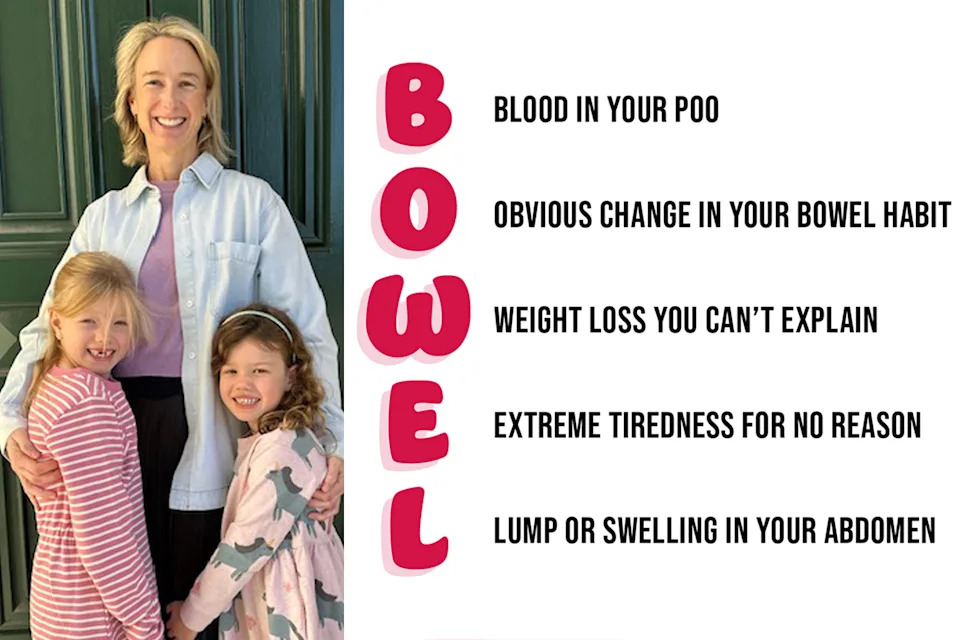
Adrienne was studying and caring for her two daughters, Lucinda and Amelie, when she started to notice symptoms of her bowel cancer.
(Adrienne Hunter)
The initiative encourages people to pay attention to what’s in the toilet bowl and on the toilet paper, helping raise awareness of symptoms that could signal something more serious.
With bowel cancer rates rising among younger Australians, advocates hope normalising conversations about poo could help more people seek medical advice earlier.
“There’s been a startling increase in bowel cancer,” she said.
As a midwife, she is particularly passionate about encouraging women not to dismiss changes in bowel habits as a normal part of pregnancy or life after childbirth.
“I’m conscious to talk to women about not assuming changes in bowel function are because of pregnancy or being postpartum.
“It’s important to be aware of bowel cancer symptoms.”
June is Bowel Cancer Awareness month. For more information, click here. https://www.bowelcanceraustralia.org/
Want the latest lifestyle and entertainment news? Make sure to follow us on Facebook, Instagram, and TikTok.