
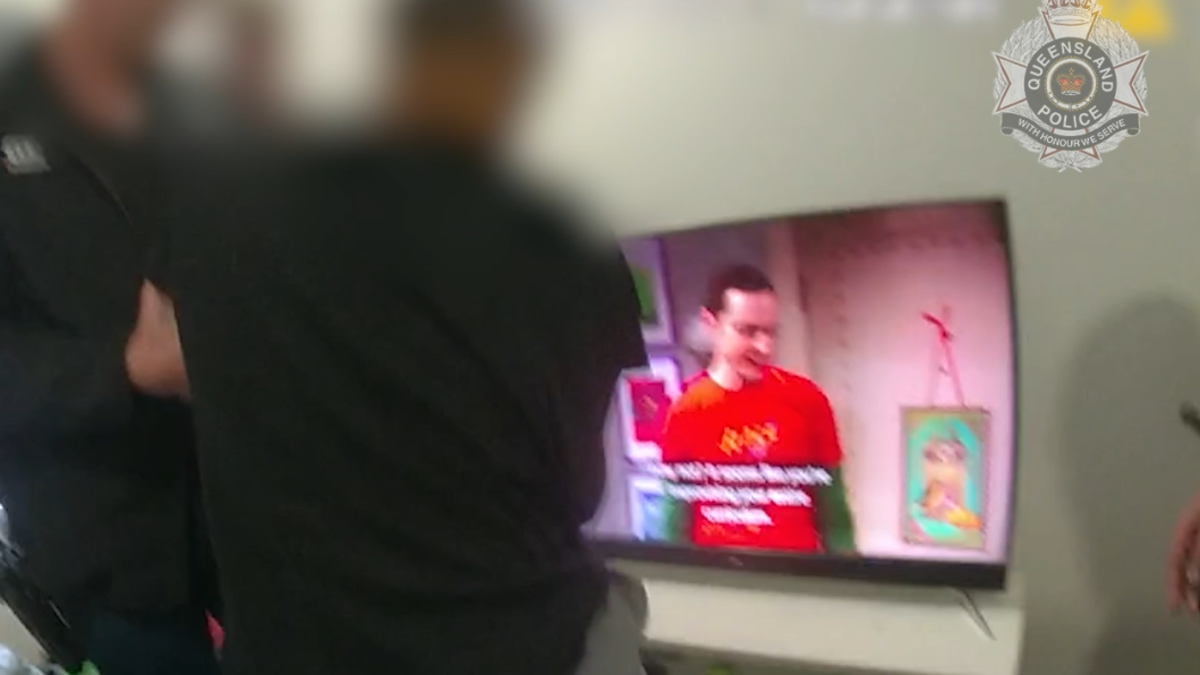
Exclusive: A 16-year-old boy lies in bed, crashed out in his clothes while re-runs of The Big Bang Theory play on a large TV in the too-small room.
Usually an unremarkable scene, except today it’s not his mother who will rouse him and nag him to get ready for school.
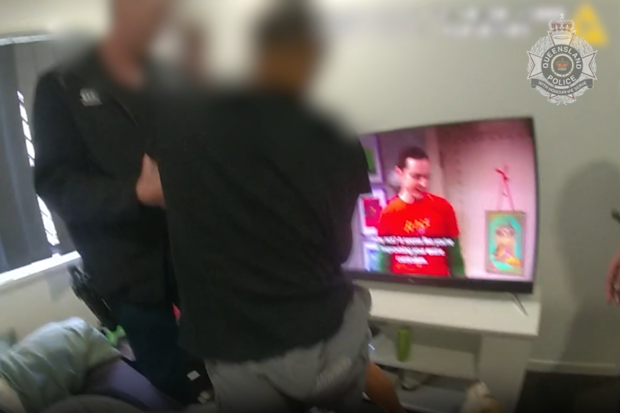
A 16-year-old boy is arrested at a home in Thornlands. Queensland Police Service
Today it’s police officers who surround him, handcuff him, and read him his charges.
The boy is alleged to have broken into homes and stolen cars on a three-week spree across South Brisbane in May.
He was charged with six counts of unlawful use of a motor vehicle, and at least eight break and enter-related offences – crimes punishable with a lengthy imprisonment under Queensland’s “Adult Crime, Adult Time” laws.
He is just one of the 1238 juvenile offenders charged in the first 90 days of Operation Yankee Forge, a six-month, statewide crackdown on high-harm, high-volume offences and targeting repeat offenders, which has just passed its half-way mark.
According to Police Minister Dan Purdie, “every one of these arrests means fewer dangerous offenders on our streets, fewer homes and businesses being broken into”.
For a while, perhaps.
But even those who are sentenced to youth detention are eventually released, and when they are, nine in ten (94 per cent) of them are back committing crime within a year, according to the latest statistics from the Department of Youth Justice.
Last year, the Queensland government announced it would attempt to fix the revolving door of youth detention.
It committed to fund an “unprecedented” 12 months of rehabilitation for every child leaving youth detention across the state with a program called Staying on Track, which would replace the former 72-hour post-release support program.
The program pairs youths with mentors who visit them in detention, and connect with their family and community, to plan for their release, which can include school or employment as well as community engagement.
‘You have to give them something worth giving up crime for’
Selena Walters, who founded Fearless Towards Success, an organisation delivering the program in Ipswich, told nine.com.au locking kids up did little to deter them from crime once they were released.
“If you want to punish these kids, fair enough, punish them, but if you don’t support them when they get out, they’ll be back in your homes, back in your cars, and it won’t make any difference,” Walters said.
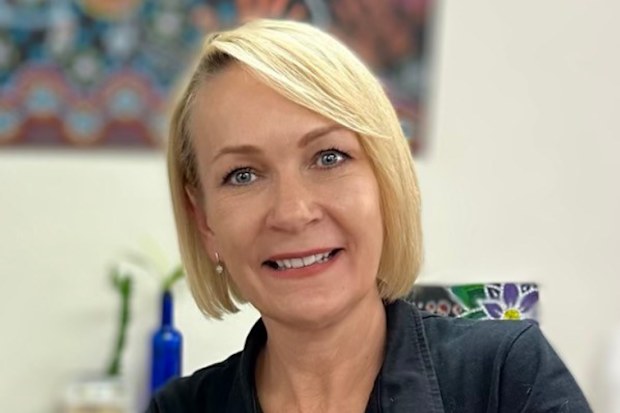
Selena Walters, founder of Fearless Towards Success belives locking kids up is futile without mentorship. Fearless Towards Success
“You can’t just keep slapping around the most marginalised kids and those from majority low socioeconomic areas.”
She said about a third of kids in youth detention have at least one parent in jail and more than half have witnessed or been a victim of domestic violence.
Most of them stopped going to school in Year 7 or 8.
“This is not normal youth work,” she said.

Queensland Premier David Crisafulli and Youth Justice minister Laura Gerber at the launch of Staying on Track at Fearless Towards Success in Ipswich. Fearless Towards Success
“You’re a life coach, de-facto parent, you need to be firm with these kids… have good boundaries and make them accountable.
“I say to my staff, you need to give these kids something worth giving up crime for.
“I say, don’t ever promise these kids anything you can’t deliver because you’ll break that trust and that’s what everybody else has done in their life.”
She said two of the children involved in the program are now completing a 20-week paid traineeship and their mentor is helping them save for their first car, in money tins.
“It’s literally things that a parent would do to help guide their own child and support them… things that they’ve never even been taught before.”
She believes kids leaving detention without support often resort to crime to get their basic needs met.
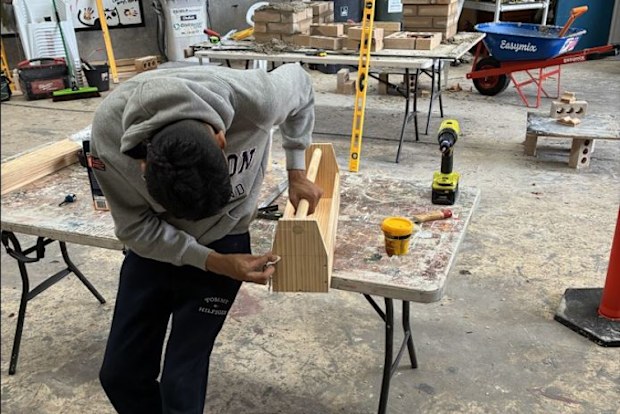
A young person in the Fearless Doing Success program during a trade workshop. Fearless Towards Success
“Imagine everything that your kid asks you for support, these kids just don’t have that person in their life.
“Their parent is in jail or their mum’s on ice because she’s being beaten up by her boyfriend.
“They’re coming out with no ID, no birth certificate… (they) can’t open a bank account, can’t access Centrelink… some don’t even have phones.
“Then overlaying that is all of that peer pressure… those peers who are trying to draw them back into doing the things that they were doing that that got them locked up in the first place.
“So if you’re coming out, and you don’t have all of those things in place and somebody to support you, it’s a no-brainer that within a week, you’re probably back out doing break-ins just to survive.”
Housing a major barrier to rehabilitation
Walters said the kids in her program were engaged and “grabbing the program with both hands” but real challenges remained for many of them in finding safe homes if their family home was no longer appropriate.
She estimated about half of the children in youth detention are also in the child safety system, which the government has admitted is failing Queensland children, exposing them to more abuse and neglect.

A young person in the Fearless Towards Success program working in a car wash. Fearless Towards Success
“In many instances, the residential homes that are housing some of these really complex kids aren’t suitable at all,” Walters said.
The Commission of Inquiry into Child Safety handed down its final report last month, which found the system needs a massive overhaul and is “too heavily” reliant on residential care, community-based housing designed as a last resort when family-based foster or kinship care placements cannot be found.
Queensland has almost as many children in residential care as every other Australian state and territory combined, run by often unlicensed providers with limited oversight.
Walters said other kids who probably should have come under the eye of Child Safety had slipped through the cracks and had no choice but to “fend for themselves” often couch-surfing or staying with peers.
Their criminal past usually makes them poor candidates for rentals, Youth Foyers and other homelessness programs.
“We can do all of this wonderful work, but if you haven’t got somewhere safe and stable to live, how can you ever hold down a job, or do training, or even go back to school?”
It takes a village to rehabilitate a child
Moana Wati is the national practice manager for SHINE for Kids, which runs the Staying on Track program for more than 100 young people in Cairns and Townsville.
She’s a Maori woman whose brother was sent to youth detention and then to adult prison.
She said watching the impact of her brother’s incarceration on her father and the shame it brought, motivated her to pursue this work with family and community at the centre.
“It’s a very confronting thing to go back into community after being put in a detention centre,” Wati said.
“Sometimes we get to do these programs but we’re only working with the young person themselves, and we send them home to families that are not necessarily set up to support them.
“What’s great about (Staying on Track) is that we can work with the caregivers, the family and we can work with community and Aboriginal and Torres Strait Islander organisations.
“You know that adage that it takes a village? I’m watching that working out in real time.”
Wati said one of her Indigenous mentors working with an Indigenous youth coming out of detention had spent months earning the trust of the youth’s grandmother, who is his primary caregiver, and building connections in their local community.
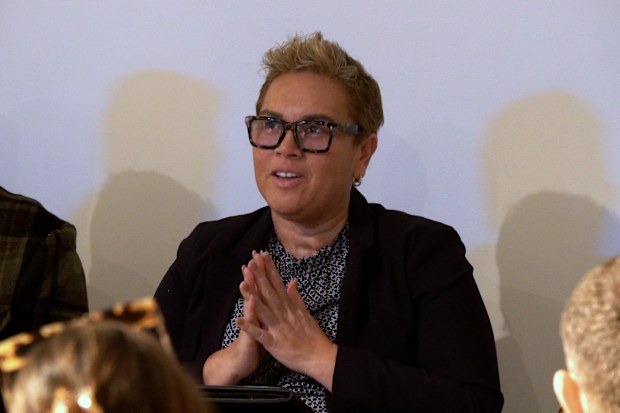
Moana Wati, the SHINE for Kids practice manager, grew up with a brother in youth detention and watched the impact of that on her proud Maori father. Shine for Kids
She said it wasn’t uncommon for grandparents who become primary caregivers to get overwhelmed, exhausted and become distrusting and disillusioned by government services.
“That youth mentor really identified that she (grandmother) was the backbone to that young person’s transition,” Wati said.
“They felt the grandmother went from being quite hostile at times and not very understanding to really working well.
“The young person, who used to be incredibly hard on himself, became very reflective to the point that he was very remorseful for what he had done.”
She said he performed a rendition of Michael Jackson’s hit Man In The Mirror, for both his grandmother and the mentor, having changed the lyrics to tell his own redemption story.
Another young person went with his mentor to the council on the island where he lived to sort out issues with identification documents.
In the time he was there, he won the staff over so thoroughly he was offered a full-time job.
“It’s about being that steady, independent person that’s obviously not part of the family, not government, but being that presence that walks alongside them,” Wati said.
“You really have to be ready for everything and anything.
“That’s why this work is so complex, this cohort of young people and the severity of the things that got them in trouble in the first place, the trauma and the disadvantage is real.
“It’s about working with them, hopefully giving them some hope that it doesn’t always have to be that way, that they can break the cycle.”
The government has committed to fund Staying on Track for five years at a cost of $225 million.