
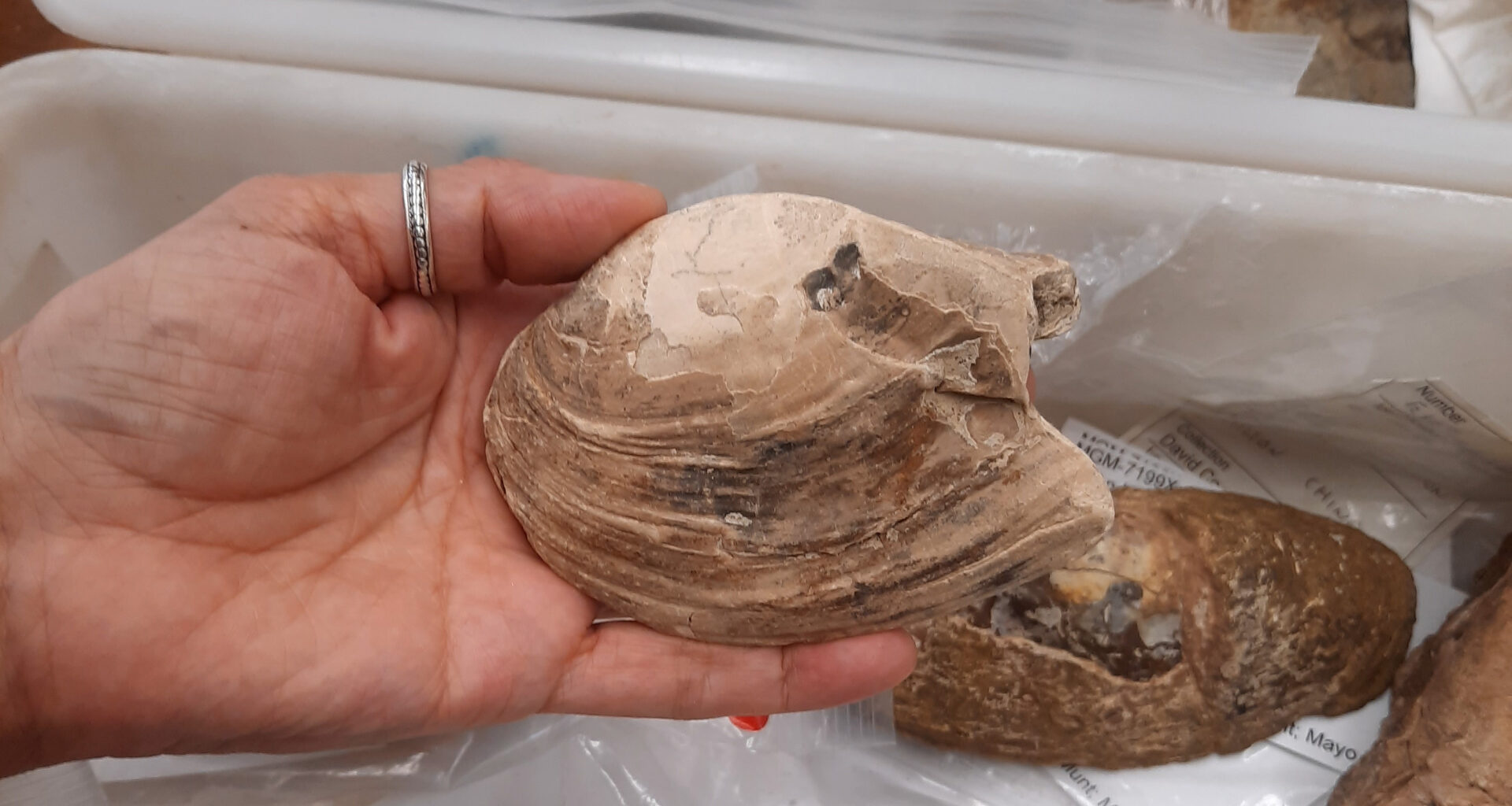
Dr Aleksandra Skawina, a Polish researcher on the team who is a specialist in fossil bivalves, said: “These new fossils demonstrate that this complex reproductive strategy had already evolved by the Early Cretaceous.”
The researchers found evidence of several stages of development, from the earliest embryo-like cells to more advanced larvae. They also discovered clues showing how these ancient shellfish provided calcium to their developing young. Tiny mineral deposits preserved within the gills appear to have acted as calcium stores, helping the larvae build their shells, much like modern freshwater mussels do today.
The study also sheds new light on a mysterious dark material known as “molluskite”, first described in the nineteenth century by the famous British palaeontologist Gideon Mantell.
“We found that this material is actually made up of fossilised soft tissues and reproductive structures that have been exceptionally preserved by minerals,” said Rafael P. Lozano, a geochemist at the Geological and Mining Institute of Spain (CSIC).
Today, freshwater mussels are among the most threatened groups of animals on Earth. These fossils therefore offer a unique window into the origins and long history of a group that plays a vital role in freshwater ecosystems but now faces an uncertain future.
The research was carried out by an international team of scientists from the University of Portsmouth (UK), the University of Warsaw (Poland) and the Geological and Mining Institute of Spain (CSIC). The study is published today in Scientific Reports: Exceptionally preserved embryos reveal maternal care in freshwater bivalves since the Cretaceous | Scientific Reports