
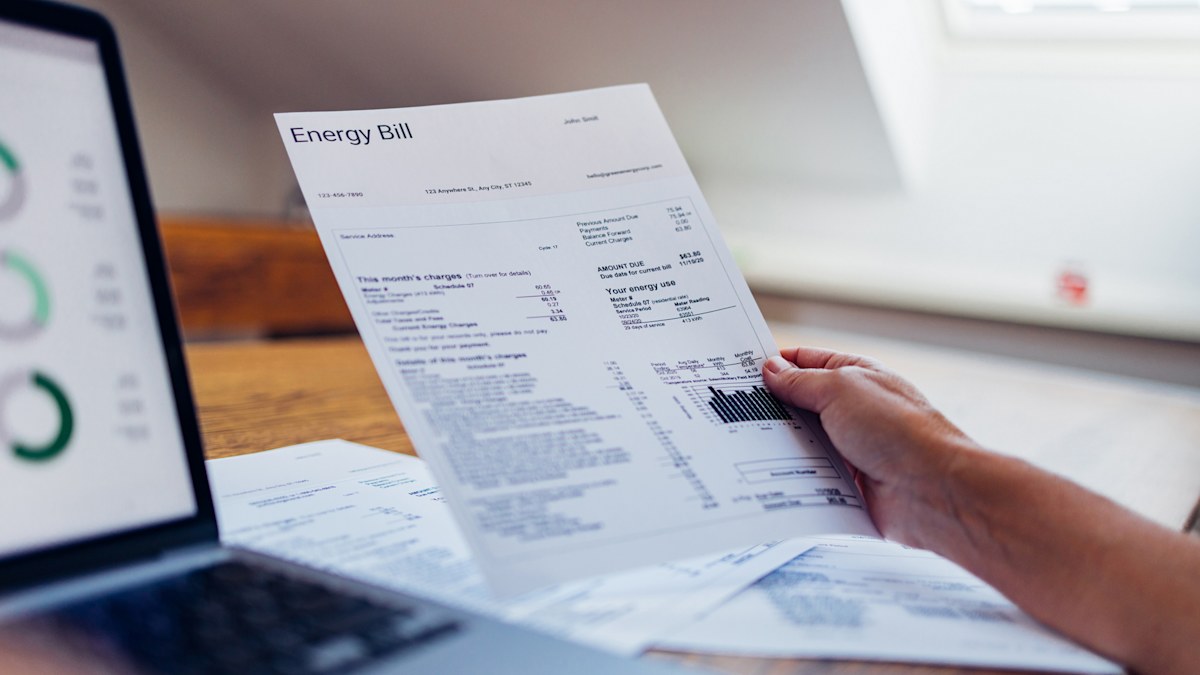
Millions of Australians are being promised cheaper electricity from next month, but some could still see bill increases.
Costs are set to fall for most households and small businesses from July 1, in line with a decrease in the Australian Energy Regulator’s default market offer.

Some Australians could still see electricity bill increases from next month. Getty
The offer sets the maximum price that electricity retailers can charge customers on a standing offer contract in South Australia, New South Wales and south-east Queensland.
However, some retailers have updated their competitive market offers ahead of July 1, which in some cases includes an increase in daily supply charges, the cost a customer pays an energy provider for supplying electricity to their home.
This is alongside some declines in usage charges for customers, depending on the retailer.
Energy Minister Chris Bowen has asked the Australian Competition and Consumer Commission (ACCC) and the Australian Energy Regulator (AER) to investigate the increases.
“We’ve seen some companies, not all, far from it, some companies choose to increase their fixed supply costs while reducing their per kilowatt-hour cost,” Bowen said.
“Now, what I’ve asked the regulators to do is have a look at and ensure that it complies.”
Bowen said energy retailers had assured him that even with increases to daily supply charges, overall retail bills will come down.
“What I’m concerned is that those reductions apply fairly,” he said.
“So, if people don’t use much electricity, they’re obviously more impacted by the increase in fixed costs and less impacted by the reduction in kilowatt-hour costs.”
Bowen said in a letter to the ACCC and AER the change would particularly impact lower usage customers.
“The AER’s determination of regulated pricing 2026-27 found that the underlying costs of procuring electricity were falling across most parts of the electricity supply chain for residential and small business customers,” he said.
“I would expect then that households and small businesses should be experiencing a decline in costs overall.
Electricity costs are set to fall for many households and small businesses from July 1. Nine
“I wish to raise these concerns with you and would welcome joint advice from the AER and the Australian Competition and Consumer Commission (ACCC) to inform my response to the changes in pricing structures.”
Bowen referenced the retail pricing provision in the Competition and Consumer Act 2010.
He said this required electricity retailers to make reasonable adjustments to their prices if they experience sustained and substantial reductions in their underlying costs of procuring electricity.
“These costs include wholesale costs, networks costs, and environmental costs.
“Retail costs and margins are not included in these underlying costs of procuring electricity.”
The change comes as Australians continue to face cost-of-living pressures.
Today money expert Joel Gibson said there were still ways to avoid price hikes.
“This is taking people by surprise because the messaging has been government default offers are coming down, electricity wholesale prices have come down and it should be cheaper from July, but it’s not necessarily the case for everyone,” Gibson said.
“There will be a sentence somewhere in that letter that should tell you how your new plan compares to what’s called the electricity reference price.
“It will say ‘your new plan is X per cent above, or Y per cent below the reference price’, that is the key sentence because you want to be below the reference price from July and, ideally, 10 per cent below, is, I think, where the best plans will land.”
Gibson said if consumers wait until July to see what direction their energy bill is headed, they can then switch providers if theirs is one of the ones on the rise.